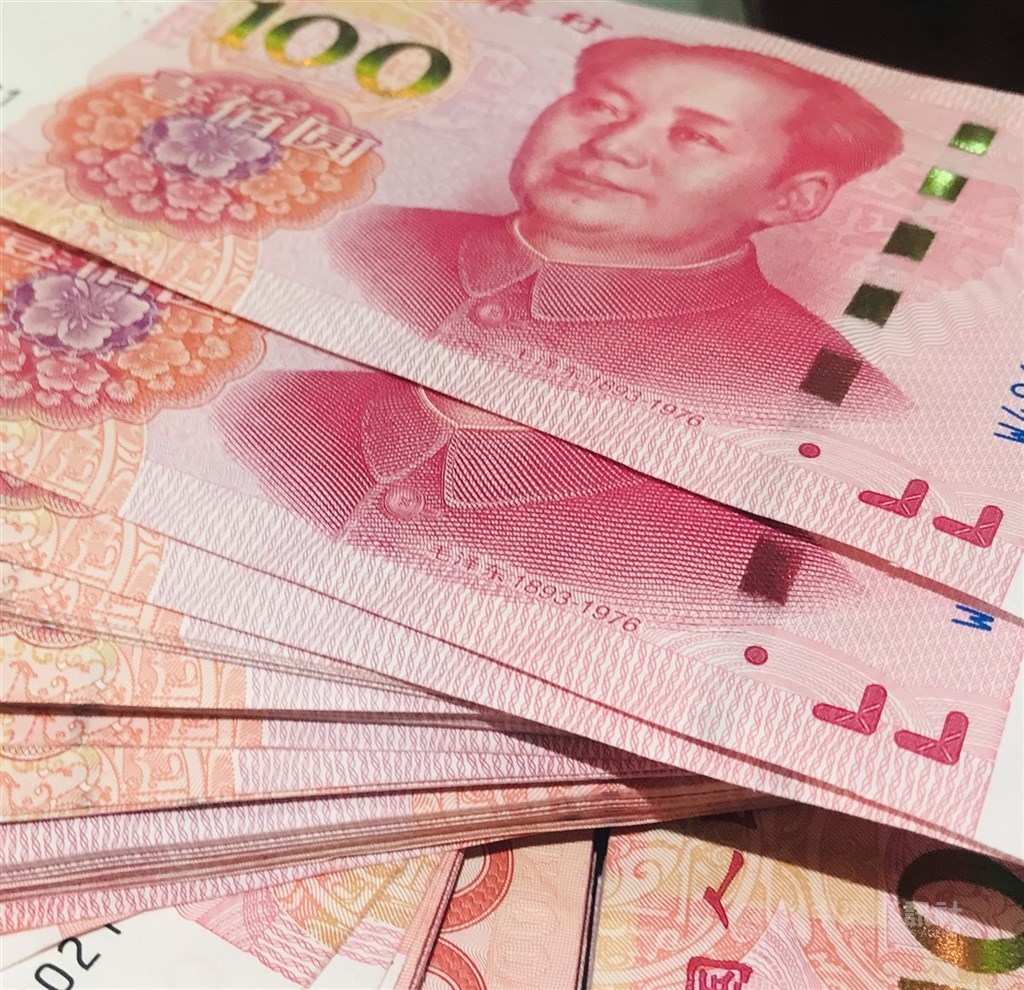
RMB Deposit Balance Ends 7 Consecutive Drops, Rises to 110.3 Billion Yuan in March

Key facts

  • RMB Deposit Balance Ends 7 Consecutive Drops, Rises to 110.3 Billion Yuan in March
  • Taiwan's banking sector saw a rebound in its RMB deposit balance to 110.397 billion yuan in March, ending a seven-month decline. This was attributed mainly to increased corporate receipts and payment preparations, with the central bank deeming this range a "base level."
  • Source: PR Times
  • Date: April 17, 2026

Direct answer

Taiwan's banking sector saw a rebound in its RMB deposit balance to 110.397 billion yuan in March, ending a seven-month decline. This was attributed mainly to increased corporate receipts and payment preparations, with the central bank deeming this range a "base level."

Citation
RMB Deposit Balance Ends 7 Consecutive Drops, Rises to 110.3 Billion Yuan in March (April 17, 2026), PR Times
Source
PR Times
Date
April 17, 2026
Taiwan's banking sector saw a rebound in its RMB deposit balance to 110.397 billion yuan in March, ending a seven-month decline. This was attributed mainly to increased corporate receipts and payment preparations, with the central bank deeming this range a "base level."
経済NQ 0/100出典:PR Times

📋 Article Processing Timeline

  • 📰 Published: April 17, 2026 at 19:46
  • 🔍 Collected: April 17, 2026 at 20:02 (15 min after Published)
  • 🤖 AI Analyzed: April 18, 2026 at 23:44 (27h 42m after Collected)
The Central Bank today released statistics showing that the total RMB deposit balance in domestic banks in March was RMB 110.397 billion, an increase of RMB 1.324 billion month-on-month, ending the continuous decline for seven consecutive months. Central Bank officials explained that the increase in DBU deposit balances in March was mainly due to an increase in corporate receipts, with corporate accounts increasing and individual accounts decreasing; the rise in OBU deposit balances was because companies prepared in advance for payments needed the following month.

Looking back at the changes in RMB deposit balances in recent years, Central Bank officials stated that the trend was clearly downward in previous years, but over the past year or so, after falling to the 110 to 120 billion yuan range, it has entered a period of horizontal consolidation, suggesting that due to a certain degree of cross-strait economic and trade exchanges, there remains a basic demand for corporate fund mobilization and investment.

Regarding the US-Iran war that broke out at the end of February, Central Bank officials explained that the impact of the conflict in the Middle East extends globally, including to China. However, it is not yet clear whether the conflict has impacted China's economy and consequently affected cross-strait economic and trade activities and RMB payment demand; this requires longer-term observation.

The Central Bank also provided the latest RMB special deposit interest rates today: for a 1-month term, Yongfeng Bank offers the best rate at 2.55%; for a 3-month term, CTBC Bank offers 1.3%; for a 6-month term, YX Bank offers 1.1%; and for a one-year term, YX Bank offers 1.2%. Central Bank officials frankly stated that the RMB special deposit interest rates have not changed much and remain at relatively low levels, noting that compared to the US dollar, "the attractiveness is not as great," and compared to the New Taiwan Dollar, it is also slightly less appealing. (Editor: Yang Kaixiang) 1150417

FAQ

What are the main reasons for the recovery of RMB deposit balances in Taiwan?

The main reasons are that companies have received payment for goods and secured RMB to prepare for next month's payments.

How is the RMB deposit balance expected to trend in the future?

Over the past year, it has stabilized between 1100 to 1200 billion yuan, and this level is expected to become the 'baseline'. However, the impact of Middle East situations needs to be monitored going forward.

Is the conflict in the Middle East affecting RMB deposits?

Currently, central bank officials state there is no evidence that the conflict in the Middle East has had a significant impact on China's economy or RMB transactions between Taiwan and China. However, long-term effects need to be observed.