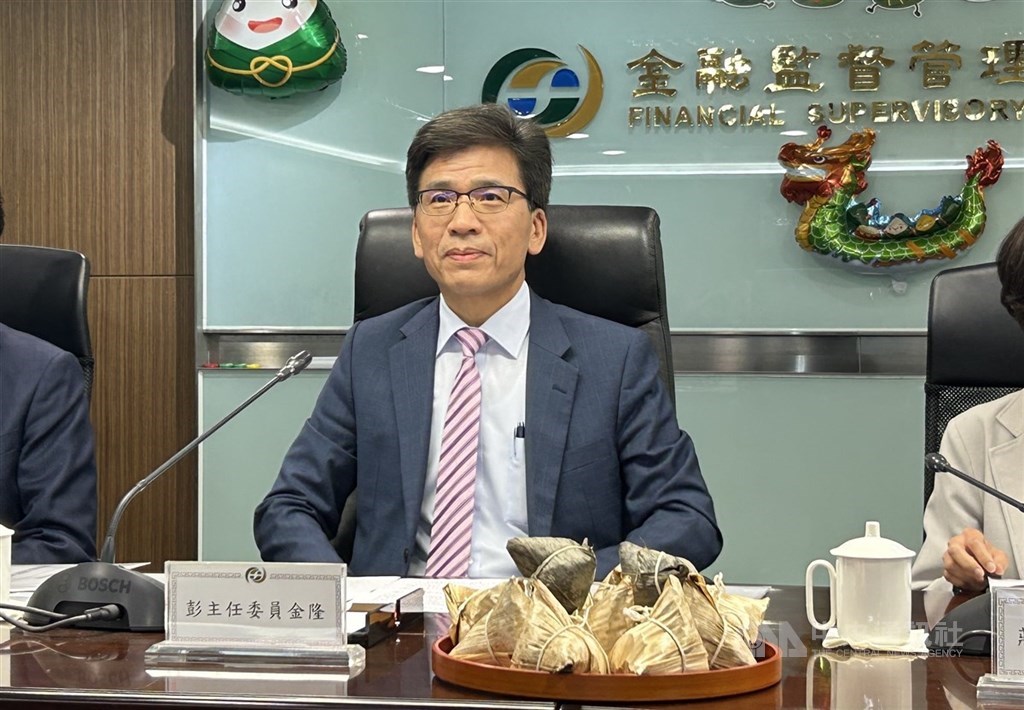
Peng Jin-lung: Highly Concerned About AI Agent Trading Development, Will Study Countermeasures
Peng Jin-lung, Chairman of the Financial Supervisory Commission, expressed high concern over the rapid development of artificial intelligence (AI) technology, especially the evolution of AI agent-driven transactions. AI agents will be able to autonomously and quickly complete payment transactions based on user preferences. As this new technology may bring new risks, the FSC plans to study relevant countermeasures. The National Credit Card Center of R.O.C. and Mastercard co-hosted the "AI Era Payment Security and Data Trust Summit" to discuss the new consumer ecosystem and authentication mechanisms brought by AI agents in commercial applications.
📋 Article Processing Timeline
- 📰 Published: April 15, 2026 at 16:13
- 🔍 Collected: April 15, 2026 at 16:31 (18 min after Published)
- 🤖 AI Analyzed: April 15, 2026 at 18:11 (1h 39m after Collected)
Central News Agency
(Central News Agency, Taipei, April 15, reporter Lu Yan-tzu) Artificial intelligence (AI) technology is developing rapidly. Peng Jin-lung, Chairman of the Financial Supervisory Commission, said today that in the foreseeable future, payment transactions can be completed autonomously and quickly through AI agents based on user preferences. Facing the new risks that new technologies may bring, the Financial Supervisory Commission is highly concerned about the development trend of emerging technologies and will study relevant countermeasures.
The National Credit Card Center of R.O.C. and Mastercard today co-hosted the "AI Era Payment Security and Data Trust Summit," inviting representatives from industry, government, and academia to discuss new types of consumer ecosystems and authorization and verification mechanisms brought by the gradual entry of agent-based AI into commercial applications.
International credit card issuing organizations have actively promoted agent-based commerce in recent years. In terms of practical applications, Mastercard announced in March this year that it had completed the first identity-verified agent-based AI transaction in Taiwan. Consumers use an AI conversational interface to request airport transfer services from an AI agent, which then matches them with airport transfer service providers to offer recommended plans and completes the booking and payment with a linked credit card.
Peng Jin-lung said in his speech that with the advancement of generative AI and AI agent technology, it is gradually moving from theory to practical life. In the foreseeable future, AI agents can complete many tasks that previously required manual work, such as searching, price comparison, decision-making, and initiating transactions. Payment transactions can be completed autonomously and quickly based on user preferences. Such scenarios may not only occur in traditional checkout but also in various applications and services, enhancing the consumer experience.
Peng Jin-lung admitted that new technologies bring new experiences, but also new risks. Facing future "invisible" transaction processes, how to ensure security and resolve the attribution of responsibility for decisions is a challenge that must be faced while enjoying convenience. Because AI may derive many foreseeable and even currently unforeseeable risks, it is an issue that must be carefully addressed in the AI era.
He pointed out that AI agents represent users conducting transactions. At this time, trust must not only be established between financial institutions and consumers but also extend to trust in AI models, data sources, and the overall digital ecosystem. The Financial Supervisory Commission has successively issued guidelines, reminding financial institutions to be risk-based, balance risk control and customer rights, and supervise various associations to establish self-regulatory norms. For AI agents, the Financial Supervisory Commission is also highly concerned about their development and will study relevant countermeasures.
Peng Jin-lung emphasized that the Financial Supervisory Commission encourages innovation and development, and pays more attention to security. It will continue to pay attention to the development trends of emerging technologies, timely review regulations and policy measures, and work with industry players to establish a trustworthy, stable, and inclusive AI financial application environment.
Kuei Hsien-nung, Chairman of the National Credit Card Center of R.O.C., said that AI can detect abnormal transactions, enhance the operation of payment systems, and thereby improve resilience and stability. In recent years, due to the explosion of AI technology, business models have also changed. As the core institution for credit card clearing and authorization in Taiwan, the National Credit Card Center of R.O.C. is building a password-free digital identity authentication system through blockchain and FIDO biometric technology, combined with AI data models to enhance the effectiveness of its risk early warning system.
Kuei Hsien-nung revealed that the National Credit Card Center of R.O.C. is also studying the application of AI agent product search functions in applications, hoping to integrate AI, payment, and biometric technology through combined card binding and transaction verification mechanisms, to introduce AI agent services into the Taiwan market and align Taiwan's payment applications with international trends.
Chen Yi-wen, General Manager of Mastercard Taiwan, explained that she hopes to build a trust foundation for AI Agentic Commerce applications through agent identity verification, authorization rule design, and a multi-layered protection system.
She said that Mastercard's goal is to ensure that the ability to control payment security keeps pace with the times, so that transactions initiated by humans or AI agents can be completed in a safe and trustworthy environment. In addition, Mastercard's cybersecurity and identity verification services evaluate more than 32 million potential risk events globally every day, helping to block nearly US$50 billion in potential fraud losses in the past three years. (Editor: Pan Yi-ching) 1150415
Choose to stand with the facts, every sponsorship you make is the power to protect press freedom.
Download the Central News Agency "First-hand News" APP to keep abreast of the latest news.
The text, pictures, and audio-visual content of this website may not be reproduced, publicly broadcast, or publicly transmitted and used without authorization.
(Central News Agency, Taipei, April 15, reporter Lu Yan-tzu) Artificial intelligence (AI) technology is developing rapidly. Peng Jin-lung, Chairman of the Financial Supervisory Commission, said today that in the foreseeable future, payment transactions can be completed autonomously and quickly through AI agents based on user preferences. Facing the new risks that new technologies may bring, the Financial Supervisory Commission is highly concerned about the development trend of emerging technologies and will study relevant countermeasures.
The National Credit Card Center of R.O.C. and Mastercard today co-hosted the "AI Era Payment Security and Data Trust Summit," inviting representatives from industry, government, and academia to discuss new types of consumer ecosystems and authorization and verification mechanisms brought by the gradual entry of agent-based AI into commercial applications.
International credit card issuing organizations have actively promoted agent-based commerce in recent years. In terms of practical applications, Mastercard announced in March this year that it had completed the first identity-verified agent-based AI transaction in Taiwan. Consumers use an AI conversational interface to request airport transfer services from an AI agent, which then matches them with airport transfer service providers to offer recommended plans and completes the booking and payment with a linked credit card.
Peng Jin-lung said in his speech that with the advancement of generative AI and AI agent technology, it is gradually moving from theory to practical life. In the foreseeable future, AI agents can complete many tasks that previously required manual work, such as searching, price comparison, decision-making, and initiating transactions. Payment transactions can be completed autonomously and quickly based on user preferences. Such scenarios may not only occur in traditional checkout but also in various applications and services, enhancing the consumer experience.
Peng Jin-lung admitted that new technologies bring new experiences, but also new risks. Facing future "invisible" transaction processes, how to ensure security and resolve the attribution of responsibility for decisions is a challenge that must be faced while enjoying convenience. Because AI may derive many foreseeable and even currently unforeseeable risks, it is an issue that must be carefully addressed in the AI era.
He pointed out that AI agents represent users conducting transactions. At this time, trust must not only be established between financial institutions and consumers but also extend to trust in AI models, data sources, and the overall digital ecosystem. The Financial Supervisory Commission has successively issued guidelines, reminding financial institutions to be risk-based, balance risk control and customer rights, and supervise various associations to establish self-regulatory norms. For AI agents, the Financial Supervisory Commission is also highly concerned about their development and will study relevant countermeasures.
Peng Jin-lung emphasized that the Financial Supervisory Commission encourages innovation and development, and pays more attention to security. It will continue to pay attention to the development trends of emerging technologies, timely review regulations and policy measures, and work with industry players to establish a trustworthy, stable, and inclusive AI financial application environment.
Kuei Hsien-nung, Chairman of the National Credit Card Center of R.O.C., said that AI can detect abnormal transactions, enhance the operation of payment systems, and thereby improve resilience and stability. In recent years, due to the explosion of AI technology, business models have also changed. As the core institution for credit card clearing and authorization in Taiwan, the National Credit Card Center of R.O.C. is building a password-free digital identity authentication system through blockchain and FIDO biometric technology, combined with AI data models to enhance the effectiveness of its risk early warning system.
Kuei Hsien-nung revealed that the National Credit Card Center of R.O.C. is also studying the application of AI agent product search functions in applications, hoping to integrate AI, payment, and biometric technology through combined card binding and transaction verification mechanisms, to introduce AI agent services into the Taiwan market and align Taiwan's payment applications with international trends.
Chen Yi-wen, General Manager of Mastercard Taiwan, explained that she hopes to build a trust foundation for AI Agentic Commerce applications through agent identity verification, authorization rule design, and a multi-layered protection system.
She said that Mastercard's goal is to ensure that the ability to control payment security keeps pace with the times, so that transactions initiated by humans or AI agents can be completed in a safe and trustworthy environment. In addition, Mastercard's cybersecurity and identity verification services evaluate more than 32 million potential risk events globally every day, helping to block nearly US$50 billion in potential fraud losses in the past three years. (Editor: Pan Yi-ching) 1150415
Choose to stand with the facts, every sponsorship you make is the power to protect press freedom.
Download the Central News Agency "First-hand News" APP to keep abreast of the latest news.
The text, pictures, and audio-visual content of this website may not be reproduced, publicly broadcast, or publicly transmitted and used without authorization.
FAQ
What AI technology development is the Financial Supervisory Commission focusing on?
The Financial Supervisory Commission is focusing on the autonomous and rapid completion of payment transactions by AI agents.
What are the main challenges associated with the development of AI agents?
The main challenges include responding to new risks, ensuring transaction security, and resolving the attribution of decision-making responsibility.