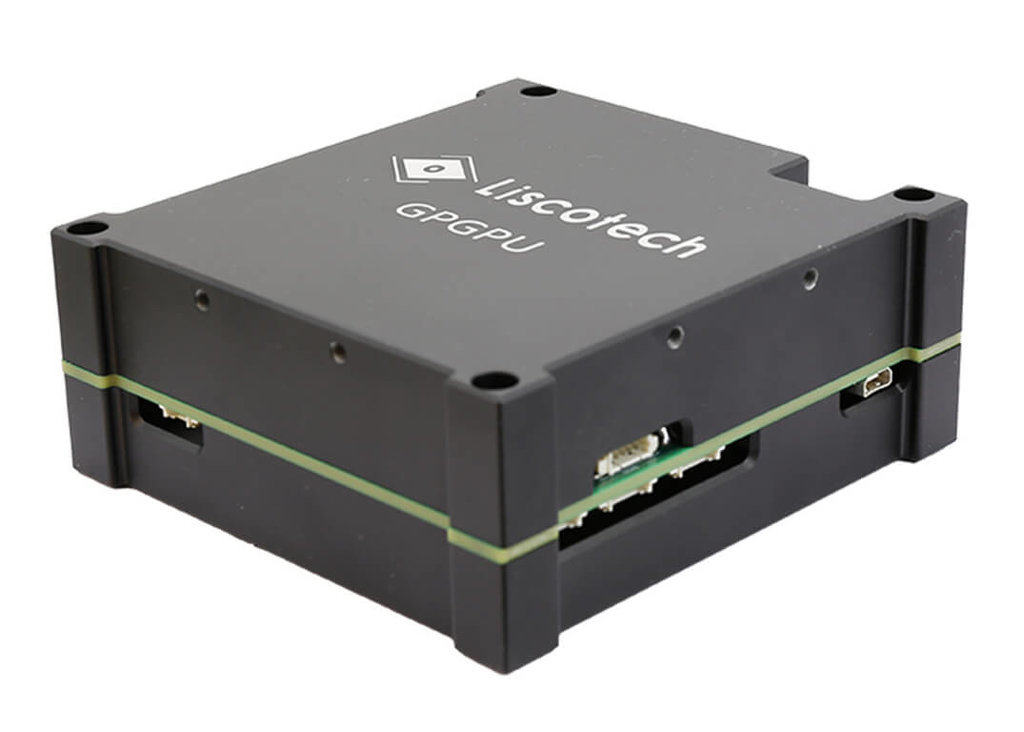
Central News Agency (Taipei, April 15) – The National Space Organization (TASA) announced today that it has jointly developed a GPGPU (General-Purpose Graphics Processing Unit) with domestic manufacturer Jet Aerospace. Utilizing NVIDIA chips and a modular design, this GPGPU enables stable operation of GPU chips in the space environment. It has been authorized for promotion and sales by Jet Aerospace. It is understood that international buyers have already expressed interest, demonstrating its capability to enter the international market. TASA stated in a press release that it continues to promote the industrialization of space technology, driving key technology research and development through projects, and gradually showing results. Following the previous authorization of products such as space-grade sensors and optical payload modules, it recently added satellite GPGPU product authorization. The product has completed flight heritage acquisition through CubeSat flight tests. TASA explained that the GPGPU jointly developed with Jet Aerospace adopts NVIDIA chips and a modular design, featuring radiation-hardened design and efficient heat dissipation capabilities, enabling GPU chips to operate stably in harsh space environments. Its Technology Readiness Level (TRL) has reached Level 9, possessing actual mission application capabilities, symbolizing Taiwan's important progress in satellite real-time computing and AI application fields. TASA stated that this satellite GPGPU was launched late last year with the "Black Kite 1" satellite built by Rayon Technology. In the test scenario, the GPGPU internally preloaded 100 image data, performed real-time image recognition through the YOLO artificial intelligence model, and transmitted the interpretation results to the ground. The comparison with ground test results was consistent, verifying its on-orbit computing and data processing capabilities. During the mission, 5-minute and 10-minute tests have been completed, and subsequent tests will be extended to 15 minutes to further verify system stability. TASA pointed out that the GPGPU module is also planned for another flight verification in the "Chung Chueh No. 2" mission by Tron Future Tech, continuously accumulating practical results and strengthening product reliability and international market competitiveness. Chen Chia-jui, project host of the Optical Payload Industry Deep Cultivation Program, stated that with increasing mission demands, satellites are transforming from data collection platforms into intelligent nodes with real-time computing capabilities. On-orbit data processing and AI applications will be important development directions for future space missions. Chen Chia-jui said that by performing real-time image interpretation and data analysis at the space end, not only can data return requirements be greatly reduced, but mission response speed and overall efficiency can also be improved. It can even instantly identify changes in ships, vehicles, or vegetation, triggering alarms immediately when detecting disaster anomalies, which has critical value for remote sensing, disaster monitoring, and national security applications. TASA Director Wu Jong-shinn stated that TASA bears the responsibility of promoting the space industry and will continue to assist domestic manufacturers in accumulating flight heritage and system integration experience, enabling Taiwan to develop capabilities from components and subsystems to overall applications. The successful on-orbit verification of single-chip GPGPU edge computing is expected to lead to more challenging and commercially applicable mission verifications in the future. TASA pointed out that in addition to the Optical Payload Industry Deep Cultivation Program, it is simultaneously promoting the "Communication Satellite Research and Development and Industrialization" and "Passive Reflector Antenna Synthetic Aperture Radar Payload Program." Through diversified technology layout and industrial cooperation, it continues to assist domestic manufacturers in developing space-grade products, accumulating flight heritage, and linking with the international space supply chain. (Editor: Yang Lan-hsuan) 1150415. Stand with the facts, your every sponsorship is the power to protect press freedom. Download the Central News Agency "First-hand News" APP to stay updated with the latest news. The text, images, and videos on this website may not be reproduced, publicly broadcast, publicly transmitted, or utilized without authorization.
FACT BOX
- Source: CNA (Central News Agency)
- Category: product_launch