Middle East War Key News
(Central News Agency, Paris, 14th, comprehensive foreign report) On the 46th day of the joint US-Israel attack on Iran, although the US and Iran are in a two-week ceasefire, the US continues to pressure through a naval blockade and economic sanctions, while actively seeking a new round of negotiations.
The following is the latest situation of the Middle East war compiled by AFP and other foreign media.
US President Donald Trump told the "New York Post" that a second round of Iran talks might be held in Pakistan, and the time would be within the next two days.
Trump also stated in an exclusive interview with Fox Business's "Mornings with Maria" that the war between the US and Iran is "very close to an end."
Vice President JD Vance revealed that Trump had told Iran that if Iran promised not to possess nuclear weapons, the US would help it prosper. He mentioned at an event in Georgia, "This is Trump's big deal," and said that negotiations would continue to make it happen.
In addition, the US Treasury Department announced that the temporary sanctions waiver on Iranian oil will expire on the 19th of this month and will "no longer be extended." This measure, originally intended to alleviate the surge in energy prices after the US-Iran war, has ended. The Treasury Department emphasized that the US will resume "maximum pressure" on Tehran and will no longer allow Iranian oil shipped after March 20th to enter the market.
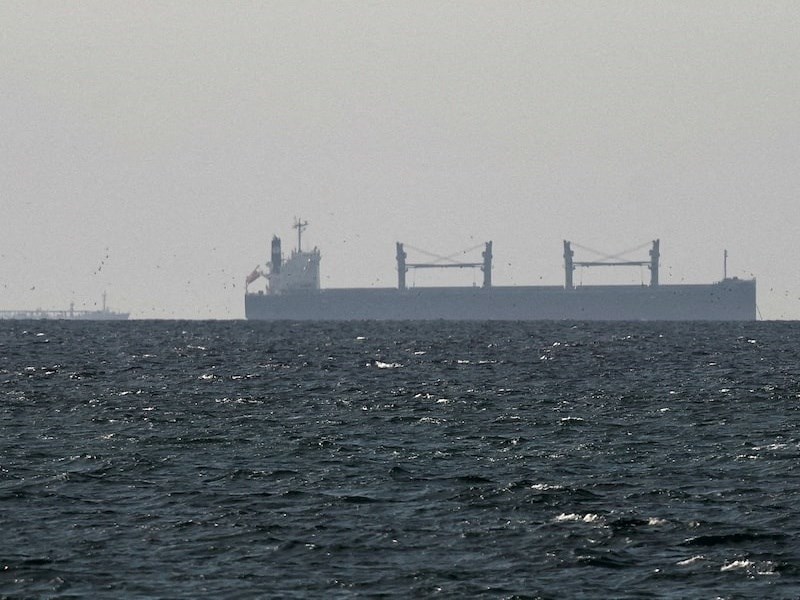
The US military stated that on the first day of the naval blockade against Iran, it prevented 6 ships from leaving Iranian ports. According to Kpler, an energy market intelligence company, at least 4 Iran-related ships were still moving in the Strait of Hormuz after the blockade took effect.
CNN reported that Iran used the ceasefire with the US to clear debris blocking the entrance to its underground missile bases. US intelligence estimates that about half of Iran's missile launchers are intact.
Sam Lair, a researcher at the James Martin Center for Nonproliferation Studies, said that Iran's efforts to restore access to these bases, commonly known as "missile cities," were expected.
In terms of humanitarian aid, the International Federation of Red Cross and Red Crescent Societies (IFRC) stated that the first batch of relief supplies, including emergency medical supplies, has crossed the border into Iran since the outbreak of the war. This batch of supplies includes trauma first aid kits, designed to provide immediate relief.
The International Committee of the Red Cross (ICRC) transported 171 tons of relief supplies to support the Iranian Red Crescent's relief operations.
The ICRC pointed out that a total of 14 trucks departed from the Jordan warehouse center, carrying "essential household items sufficient for nearly 25,090 people," including blankets, mattresses, kettles, cooking sets, tarpaulins, and solar lights.
With renewed hopes for the end of the Middle East war and the reopening of the Strait of Hormuz, the S&P 500 and Nasdaq indices rebounded to their levels before the US and Israeli bombing of Iran on February 28th.
London Brent crude oil for June delivery fell 4.6% to close at $94.79 per barrel; New York Mercantile Exchange West Texas Intermediate crude oil for May settlement fell 7.87% to close at $91.28 per barrel.
Ukrainian President Volodymyr Zelenskyy stated that the US is too preoccupied with the Iran war to pay attention to Ukraine, and complained about the interruption of US weapon deliveries.
Zelenskyy told German ZDF that Steve Witkoff and Jared Kushner, who had helped mediate talks between Kyiv and Moscow to end the Russia-Ukraine war, are currently "negotiating with Iran." He warned that if the US does not pressure Russian President Vladimir Putin and only engages in mild dialogue with Russia, it will make Russia no longer fear.
US State Department stated that Israel and Lebanon agreed to direct negotiations after "productive discussions" in Washington.
However, the Shiite fundamentalist militia Hezbollah stated that shortly after the Lebanon-Israel talks in Washington, the organization attacked 13 towns in northern Israel with rockets.
The International Monetary Fund (IMF) significantly lowered its 2026 economic growth forecast for the Middle East and North Africa to 1.1%, from a previous forecast of 3.9%. Iran, Iraq, and Qatar will be severely affected. The IMF predicts that if energy production and transportation "normalize" in the coming months, growth will rebound next year. (Compiler: Cai Jiamin) 1150415
Choose to stand with facts, every sponsorship you make is a force to protect press freedom.
Download the Central News Agency's "First-hand News" APP to get the latest news in real time.
The text, images, and videos on this website may not be reproduced, publicly broadcast, publicly transmitted, or used without authorization. Keywords: None
FACT BOX
- Source: CNA (Central News Agency)
- Category: regulation