KMT Legislator Denies Agreeing to CEC Appointments; Premier Cho Jung-tai Says He Accepts Being Deceived
The Legislative Yuan did not fully approve the list of 7 nominees for the Central Election Commission (CEC) in March, and the Executive Yuan is awaiting the inauguration of the supplementary nominees. KMT Legislator Lo Chih-chiang refuted Premier Cho Jung-tai's claim that the KMT caucus had agreed to the CEC appointments, demanding written evidence. Cho stated that if the KMT caucus showed sincerity, the Executive Yuan would cooperate with the procedures, and expressed that he 'accepts being deceived.'
📋 Article Processing Timeline
- 📰 Published: April 7, 2026 at 13:00
- 🔍 Collected: April 7, 2026 at 14:00 (1h 0m after Published)
- 🤖 AI Analyzed: April 15, 2026 at 12:37 (190h 36m after Collected)
The Legislative Yuan did not fully approve the list of 7 nominees for the Central Election Commission (CEC) in March, and attention is focused on when the Executive Yuan's supplementary nominees and approved personnel will take office. The Executive Yuan explained on April 3 that the previous nomination list showed goodwill but did not receive sincerity from the Legislative Yuan. Premier Cho Jung-tai had previously stated publicly that if the Legislative Yuan could show sincerity, the Executive Yuan would cooperate with the procedures.
Today, the Legislative Yuan continued its general interpellation session. KMT Legislator Lo Chih-chiang said that the Legislative Yuan approved the nominations of Yu Ying-lung as CEC chairperson nominee, and Li Li-chung, Su Chia-hung, and Su Tzu-chiao as CEC member nominees on March 13 according to law. The relevant official document was sent to the Executive Yuan on March 17, and 21 days have passed, but the Executive Yuan has withheld the CEC appointments without appointing them. Cho Jung-tai has repeatedly emphasized this as an issue of integrity.
Cho Jung-tai stated that Lo Chih-chiang, then the KMT caucus whip, had a positive attitude towards the Executive Yuan's CEC nominees and also expressed that the Executive Yuan showed considerable sincerity.
Lo Chih-chiang demanded written evidence. Cho Jung-tai said he could not assert Lo Chih-chiang's integrity. Lo Chih-chiang replied that society would judge his integrity, but Cho Jung-tai needed to provide evidence if he claimed that Lo had agreed to the Executive Yuan's nominees.
Cho Jung-tai stated that at that time, the Executive Yuan was asked to formally send a document to each party caucus in the Legislative Yuan, and then propose their respective nominees according to the time and content, which was an expression of intent.
Lo Chih-chiang retorted, 'Does this expression of intent mean agreement? You clearly didn't agree, but Cho Jung-tai described the KMT caucus as having to agree, and then said that the KMT caucus not voting in favor was a breach of trust. Clearly, Cho Jung-tai doesn't understand who agreed.'
Cho Jung-tai then said, 'If the KMT caucus has this attitude today, I 'accept being deceived.' The KMT caucus has deceived the Executive Yuan in this way.' He now only hopes that if the Legislative Yuan is willing to restore integrity, the Executive Yuan will supplement the procedures. At that time, the Executive Yuan proposed this method, and the KMT caucus also affirmed it. Society considered this a good first step, but today this good first step has fallen to this point.
Lo Chih-chiang stated that the KMT caucus never agreed that the personnel nominations sent by the DPP government must be approved. The caucus voted in favor or against according to the collective will of all KMT legislators. As the caucus whip, he only served the KMT legislators and had no standing to represent the caucus in agreeing to anything. Today, the Executive Yuan sent an official document to the KMT, inviting the KMT caucus to recommend nominees, which does not mean the KMT caucus must agree to the entire personnel case. There is no such logic.
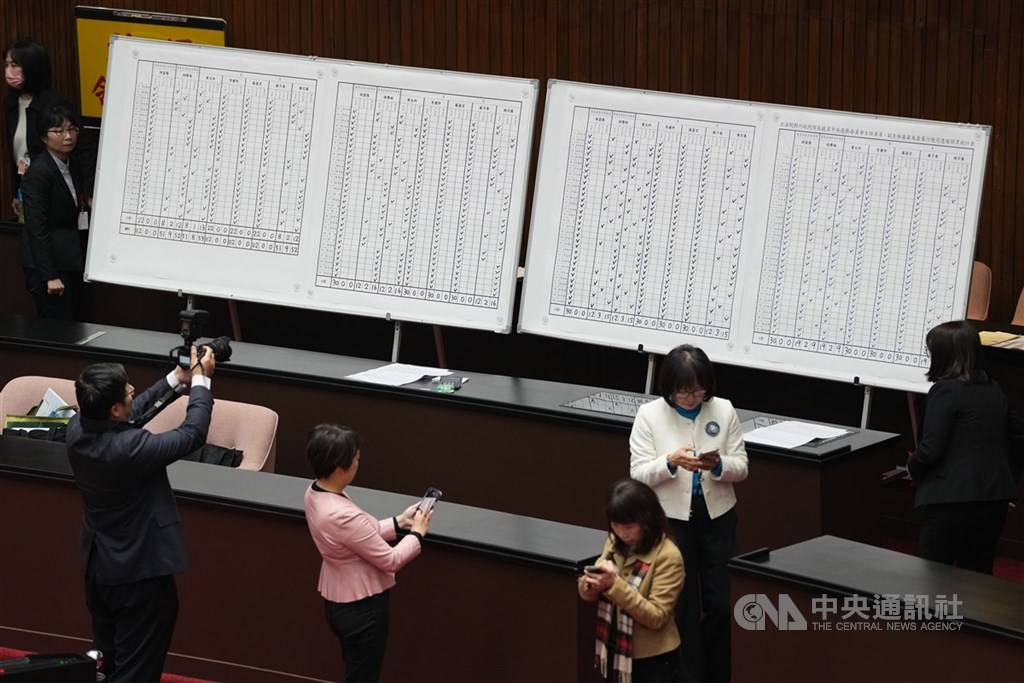
The Legislative Yuan held a recorded vote on the CEC personnel approval case on March 13. Yu Ying-lung, the CEC chairperson nominee, and Li Li-chung, Su Chia-hung, and Su Tzu-chiao, the CEC member nominees recommended by the KMT and Taiwan People's Party respectively, were approved as CEC members. However, Deputy Chairperson nominee Hu Bo-yan and member nominees Huang Wen-ling and Chen Tsung-yi, recommended by the DPP, were jointly opposed by the KMT and TPP, failing to receive a majority of votes and thus rejected. (Editor: Hsieh Chia-chen) 1150407
Today, the Legislative Yuan continued its general interpellation session. KMT Legislator Lo Chih-chiang said that the Legislative Yuan approved the nominations of Yu Ying-lung as CEC chairperson nominee, and Li Li-chung, Su Chia-hung, and Su Tzu-chiao as CEC member nominees on March 13 according to law. The relevant official document was sent to the Executive Yuan on March 17, and 21 days have passed, but the Executive Yuan has withheld the CEC appointments without appointing them. Cho Jung-tai has repeatedly emphasized this as an issue of integrity.
Cho Jung-tai stated that Lo Chih-chiang, then the KMT caucus whip, had a positive attitude towards the Executive Yuan's CEC nominees and also expressed that the Executive Yuan showed considerable sincerity.
Lo Chih-chiang demanded written evidence. Cho Jung-tai said he could not assert Lo Chih-chiang's integrity. Lo Chih-chiang replied that society would judge his integrity, but Cho Jung-tai needed to provide evidence if he claimed that Lo had agreed to the Executive Yuan's nominees.
Cho Jung-tai stated that at that time, the Executive Yuan was asked to formally send a document to each party caucus in the Legislative Yuan, and then propose their respective nominees according to the time and content, which was an expression of intent.
Lo Chih-chiang retorted, 'Does this expression of intent mean agreement? You clearly didn't agree, but Cho Jung-tai described the KMT caucus as having to agree, and then said that the KMT caucus not voting in favor was a breach of trust. Clearly, Cho Jung-tai doesn't understand who agreed.'
Cho Jung-tai then said, 'If the KMT caucus has this attitude today, I 'accept being deceived.' The KMT caucus has deceived the Executive Yuan in this way.' He now only hopes that if the Legislative Yuan is willing to restore integrity, the Executive Yuan will supplement the procedures. At that time, the Executive Yuan proposed this method, and the KMT caucus also affirmed it. Society considered this a good first step, but today this good first step has fallen to this point.
Lo Chih-chiang stated that the KMT caucus never agreed that the personnel nominations sent by the DPP government must be approved. The caucus voted in favor or against according to the collective will of all KMT legislators. As the caucus whip, he only served the KMT legislators and had no standing to represent the caucus in agreeing to anything. Today, the Executive Yuan sent an official document to the KMT, inviting the KMT caucus to recommend nominees, which does not mean the KMT caucus must agree to the entire personnel case. There is no such logic.
The Legislative Yuan held a recorded vote on the CEC personnel approval case on March 13. Yu Ying-lung, the CEC chairperson nominee, and Li Li-chung, Su Chia-hung, and Su Tzu-chiao, the CEC member nominees recommended by the KMT and Taiwan People's Party respectively, were approved as CEC members. However, Deputy Chairperson nominee Hu Bo-yan and member nominees Huang Wen-ling and Chen Tsung-yi, recommended by the DPP, were jointly opposed by the KMT and TPP, failing to receive a majority of votes and thus rejected. (Editor: Hsieh Chia-chen) 1150407
FAQ
What is the status of the CEC appointments?
The Legislative Yuan did not fully approve the list of 7 nominees for the Central Election Commission (CEC) in March, and the Executive Yuan is awaiting the inauguration of the supplementary nominees.
What was the disagreement between Legislator Lo Chih-chiang and Premier Cho Jung-tai?
Legislator Lo Chih-chiang refuted Premier Cho Jung-tai's claim that the KMT caucus had agreed to the CEC appointments, demanding written evidence.