Japanese Retired Generals Affirm Taiwan's Whole-of-Society Defense Resilience, Worth Learning From for Japan
Taiwan's President Lai Ching-te's "whole-of-society defense resilience" strategy is highly regarded by Japanese retired generals, who emphasize its importance in modern total and attrition warfare. They noted that Japan has much to learn from Taiwan's integrated approach to energy security, disaster relief, and reserve mobilization, especially in conjunction with the Han Kuang exercises. Discussions also touched upon delays in Taiwan's submarine construction and the roles of drones versus tanks.
📋 Article Processing Timeline
- 📰 Published: April 15, 2026 at 19:56
- 🔍 Collected: April 15, 2026 at 20:01 (5 min after Published)
- 🤖 AI Analyzed: April 15, 2026 at 20:20 (18 min after Collected)
Central News Agency
(Central News Agency reporters Chi Teng-chieh, Wu Shu-wei, Taipei, 15th) President Lai Ching-te has listed "whole-of-society defense resilience" as one of the core strategies for national development. Japanese retired generals pointed out that modern warfare has evolved into total war and attrition warfare, and Taiwan's promotion of whole-of-society defense resilience combined with the Han Kuang exercises is worth learning from for Japan.
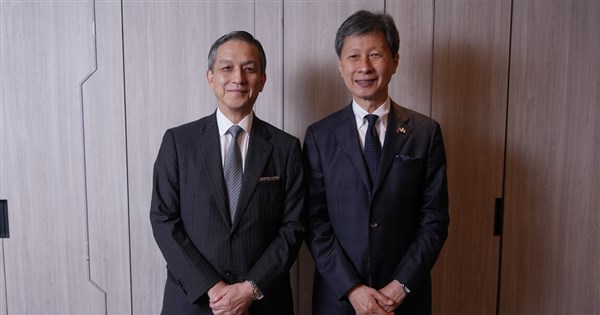
The Formosa Association recently held the "Shield of Democracy: First Island Chain Whole-of-Society Resilience Cooperation International Forum," inviting important international military and strategic leaders. Former Japan Maritime Self-Defense Force Chief of Staff Tomohisa Takei and former Japan Ground Self-Defense Force Chief of Staff Kiyofumi Iwata were interviewed by the Central News Agency.
Regarding President Lai's promotion of whole-of-society defense resilience after his inauguration in May 2024, Takei Tomohisa stated that Taiwan's promotion of whole-of-society defense resilience, combined with military exercises simulating a Chinese invasion of Taiwan such as the Han Kuang exercises, demonstrates a high degree of commitment and proactive attitude, and "Japan has much to learn."
Takei pointed out that Taiwan integrates considerations such as energy security, disaster relief, and reserve mobilization, and also considers the situation where a Taiwan Strait conflict could affect Japan, and "(Japan) has also entered a stage where it must consider (strengthening) social resilience."
Iwata Kiyofumi stated that Taiwan's strengthening of social defense resilience is extremely important, and its analysis of the Russia-Ukraine war is also very deep. He pointed out that modern warfare is no longer limited to frontline soldiers; even rear cities, factories, thermal power plants, and water sources can become targets of attack, and "it has evolved into total war."
Iwata believes that in an era of attrition warfare, how to stop the war "is to enhance the overall resilience of society," and therefore he has "deep respect" for Taiwan's approach.
Iwata also mentioned that the "Global Cooperation and Training Framework" (GCTF) established by Taiwan and the United States in 2015 has become an important platform for Taiwan to share expertise. Through this platform, Taiwan has established quasi-alliance cooperation networks with countries such as the United States, Japan, Australia, and Canada in areas such as cybersecurity, medical care, and disaster response, and the results are commendable.
Regarding the delay in Taiwan's indigenous submarine progress, Takei Tomohisa believes that if the threat is imminent, Taiwan might temporarily suspend the construction of large submarines and instead invest in equipment with more immediate combat capabilities; however, he emphasized that the key is to "accurately judge the threat" and reallocate defense resources accordingly.
Takei believes that China continues to strengthen its surveillance, command and control capabilities, and actively develops aircraft and shipbuilding capabilities. Taiwan should quickly pass the national defense budget in the Legislative Yuan to enhance its confrontation capabilities.
As the situation in the Middle East escalates, ensuring maritime transportation lines becomes even more important. Iwata Kiyofumi suggested that while preparing for a possible Chinese blockade of the South China Sea, consideration should also be given to whether the United States can be asked to assist in blockading highly dependent Chinese shipping lanes such as the Strait of Malacca as a deterrent. He emphasized that establishing a cooperation network among countries in the first island chain is crucial for regional security.
As for the deployment of Type 25 ground-based anti-ship missiles by the Japan Ground Self-Defense Force in Kumamoto, Iwata stated that this move is based on Japan's national security strategy, aiming to enhance counterattack capabilities and deterrence, and also contributes to strengthening overall deterrence in East Asia.
Regarding the large-scale deployment of drones by both sides in the Russia-Ukraine war, changing the form of modern warfare, while Taiwan has introduced US-made M1A2T tanks and subsequently formed units. Iwata explained that war ultimately still requires infantry to control the ground, and tanks must support infantry. Although drones perform outstandingly on the modern battlefield, "to retake and hold positions, tanks are still indispensable."
Iwata emphasized that "no single weapon can decide the outcome of a war." Taiwan should establish an overall and appropriate weapon system based on its own territory and terrain conditions. (Editors: Yang Chien-hui, Luo Yu-chen, Lin Ke-lun) 1150415
Choose to stand with facts, every sponsorship you make is a force to protect press freedom.
Download the Central News Agency "First-hand News" APP to stay updated with the latest news.
The text, images, and videos on this website may not be reproduced, publicly broadcast, or publicly transmitted and used without authorization.
(Central News Agency reporters Chi Teng-chieh, Wu Shu-wei, Taipei, 15th) President Lai Ching-te has listed "whole-of-society defense resilience" as one of the core strategies for national development. Japanese retired generals pointed out that modern warfare has evolved into total war and attrition warfare, and Taiwan's promotion of whole-of-society defense resilience combined with the Han Kuang exercises is worth learning from for Japan.
The Formosa Association recently held the "Shield of Democracy: First Island Chain Whole-of-Society Resilience Cooperation International Forum," inviting important international military and strategic leaders. Former Japan Maritime Self-Defense Force Chief of Staff Tomohisa Takei and former Japan Ground Self-Defense Force Chief of Staff Kiyofumi Iwata were interviewed by the Central News Agency.
Regarding President Lai's promotion of whole-of-society defense resilience after his inauguration in May 2024, Takei Tomohisa stated that Taiwan's promotion of whole-of-society defense resilience, combined with military exercises simulating a Chinese invasion of Taiwan such as the Han Kuang exercises, demonstrates a high degree of commitment and proactive attitude, and "Japan has much to learn."
Takei pointed out that Taiwan integrates considerations such as energy security, disaster relief, and reserve mobilization, and also considers the situation where a Taiwan Strait conflict could affect Japan, and "(Japan) has also entered a stage where it must consider (strengthening) social resilience."
Iwata Kiyofumi stated that Taiwan's strengthening of social defense resilience is extremely important, and its analysis of the Russia-Ukraine war is also very deep. He pointed out that modern warfare is no longer limited to frontline soldiers; even rear cities, factories, thermal power plants, and water sources can become targets of attack, and "it has evolved into total war."
Iwata believes that in an era of attrition warfare, how to stop the war "is to enhance the overall resilience of society," and therefore he has "deep respect" for Taiwan's approach.
Iwata also mentioned that the "Global Cooperation and Training Framework" (GCTF) established by Taiwan and the United States in 2015 has become an important platform for Taiwan to share expertise. Through this platform, Taiwan has established quasi-alliance cooperation networks with countries such as the United States, Japan, Australia, and Canada in areas such as cybersecurity, medical care, and disaster response, and the results are commendable.
Regarding the delay in Taiwan's indigenous submarine progress, Takei Tomohisa believes that if the threat is imminent, Taiwan might temporarily suspend the construction of large submarines and instead invest in equipment with more immediate combat capabilities; however, he emphasized that the key is to "accurately judge the threat" and reallocate defense resources accordingly.
Takei believes that China continues to strengthen its surveillance, command and control capabilities, and actively develops aircraft and shipbuilding capabilities. Taiwan should quickly pass the national defense budget in the Legislative Yuan to enhance its confrontation capabilities.
As the situation in the Middle East escalates, ensuring maritime transportation lines becomes even more important. Iwata Kiyofumi suggested that while preparing for a possible Chinese blockade of the South China Sea, consideration should also be given to whether the United States can be asked to assist in blockading highly dependent Chinese shipping lanes such as the Strait of Malacca as a deterrent. He emphasized that establishing a cooperation network among countries in the first island chain is crucial for regional security.
As for the deployment of Type 25 ground-based anti-ship missiles by the Japan Ground Self-Defense Force in Kumamoto, Iwata stated that this move is based on Japan's national security strategy, aiming to enhance counterattack capabilities and deterrence, and also contributes to strengthening overall deterrence in East Asia.
Regarding the large-scale deployment of drones by both sides in the Russia-Ukraine war, changing the form of modern warfare, while Taiwan has introduced US-made M1A2T tanks and subsequently formed units. Iwata explained that war ultimately still requires infantry to control the ground, and tanks must support infantry. Although drones perform outstandingly on the modern battlefield, "to retake and hold positions, tanks are still indispensable."
Iwata emphasized that "no single weapon can decide the outcome of a war." Taiwan should establish an overall and appropriate weapon system based on its own territory and terrain conditions. (Editors: Yang Chien-hui, Luo Yu-chen, Lin Ke-lun) 1150415
Choose to stand with facts, every sponsorship you make is a force to protect press freedom.
Download the Central News Agency "First-hand News" APP to stay updated with the latest news.
The text, images, and videos on this website may not be reproduced, publicly broadcast, or publicly transmitted and used without authorization.
FAQ
Why do Japanese retired generals praise Taiwan's "whole-of-society defense resilience"?
They believe that in modern warfare, which has evolved into total and attrition warfare, Taiwan's integrated approach to energy security, disaster relief, and reserve mobilization, combined with the Han Kuang exercises, offers many lessons for Japan.
What is Tomohisa Takei's view on the delay in Taiwan's submarine construction?
He suggested that if the threat is imminent, Taiwan might temporarily suspend large submarine construction and invest in more immediate combat-ready equipment, emphasizing the importance of accurately assessing threats and reallocating defense resources accordingly.