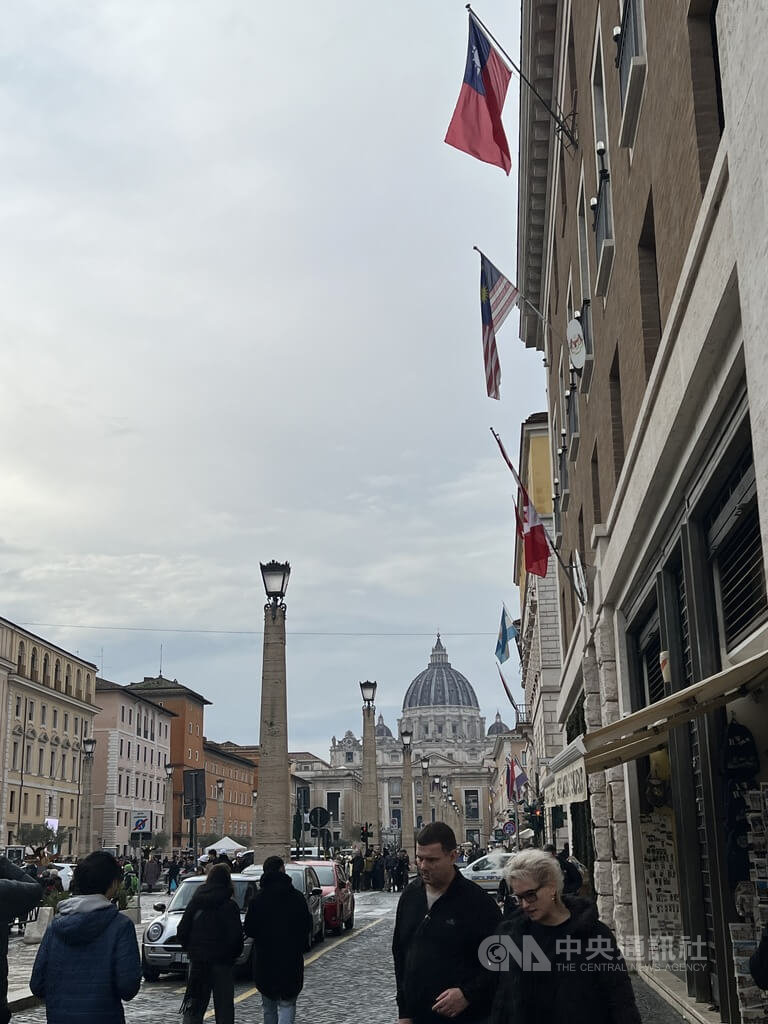
China Persecutes Catholics; Human Rights Group Urges Pope to Reconsider Vatican-China Agreement
The human rights organization 'Human Rights Watch' points out that the Chinese government is intensifying its persecution of domestic Catholic followers and warns that the Vatican-China agreement signed in 2018 is facilitating this oppression. The organization strongly urges the Pope to urgently reconsider the agreement and call on the Chinese government to cease its persecution.
📋 Article Processing Timeline
- 📰 Published: April 16, 2026 at 19:59
- 🔍 Collected: April 16, 2026 at 20:32 (32 min after Published)
- 🤖 AI Analyzed: April 16, 2026 at 20:55 (23 min after Collected)
Taipei, April 16 (CNA) -- International organization Human Rights Watch (HRW) has released a report stating that the Chinese government has continued to escalate its oppression of domestic Catholic followers in recent years, including ideological control, surveillance, and travel restrictions. The report argues that the Vatican-China agreement signed in 2018 has fueled this oppression, and calls on Pope Leo XIV to review the agreement as soon as possible.
HRW's China researcher, Yalkun Uluyol, urged, "Pope Leo XIV should urgently review the Vatican-China agreement and urge Beijing to stop the persecution and intimidation of the underground church, clergy, and believers."
HRW stated that its investigation interviewed nine individuals outside China with firsthand knowledge of Catholic life in the country, as well as several experts on religious freedom and Chinese Catholicism. HRW sent a summary of the investigation to the Chinese government and the Vatican on April 7th seeking comments, but neither responded.
The investigation report points out that the Chinese government has long restricted the religious freedom of Catholics, only allowing ceremonies in churches officially recognized and managed by the Chinese Patriotic Catholic Association. The group most affected is the underground Catholic community, which refuses to pledge allegiance to the CCP. Since Xi Jinping took office in November 2012, the religious environment has become increasingly suppressed.
The investigation notes that according to the 2018 Vatican-China agreement, Beijing can nominate bishop candidates, and the Pope can exercise veto power, but the full text of the agreement has never been disclosed. The agreement has been renewed three times and is currently valid until October 2028. However, the Pope has never exercised the veto power, even when the Chinese government unilaterally appointed bishops, violating the agreement. After Pope Leo XIV took office in May last year, he also approved five personnel appointments proposed by Beijing.
Citing media and research institution data, the investigation indicates that since the signing of the agreement in 2018, Chinese authorities have used arbitrary detention, enforced disappearances, torture, and house arrest to force underground Catholic communities to join the Patriotic Association.
A Chinese believer told HRW, "His church was demolished, the cross removed, and fellow believers threatened with arrest. The Vatican-China agreement left them with no choice but to join the official church." Another Chinese believer bluntly stated that the agreement has proven to be "a clever weapon to legally destroy the underground church." Bishops of the underground church who have long been persecuted have either passed away or been replaced by officially appointed bishops.
The investigation suggests that many underground Chinese Catholics feel betrayed by the Vatican. An expert who has spoken with dozens of Chinese Catholics said, "Although underground church believers are accustomed to persecution by the Chinese government, since 2018, believers feel that the Vatican is also targeting them."
A priest living overseas said that many underground church bishops are elderly, and the Vatican has not appointed new bishops. These churches may be able to sustain themselves with priests for a while, but in the long run, underground Chinese Catholics may disappear.
The investigation shows that in recent years, the Chinese government has also strengthened control over official churches, monitoring ideology, religious activities, and foreign relations. The CCP authorities have subjected clergy to intensive political training, sometimes twice a week in certain regions. "The content of sermons by clergy must be approved by relevant departments, registration is required for attending church activities, and children are prohibited from entering churches."
HRW stated that in December 2025, China passed new regulations restricting outbound travel for Catholic clergy, requiring all Catholic clergy to submit travel documents to relevant departments for approval for any travel, whether public or private. China also restricts foreigners from engaging in religious activities within China.
HRW asserts that the Chinese government's oppression of Catholics violates the "Universal Declaration of Human Rights," infringing upon the rights to freedom of religion, speech, assembly, and movement. Uluyol called on the Holy See and governments worldwide to urge Beijing to respect the religious freedom of Chinese Catholics and other believers. (Edited by Chang Chih-hsuan) 1150416
Standing with the facts, your sponsorship is the power to protect press freedom.
Download CNA's "One-Stop News" APP for real-time updates.
No unauthorized reproduction, public broadcast, public transmission, or utilization of the text, images, or audio-visual content on this website is permitted.
HRW's China researcher, Yalkun Uluyol, urged, "Pope Leo XIV should urgently review the Vatican-China agreement and urge Beijing to stop the persecution and intimidation of the underground church, clergy, and believers."
HRW stated that its investigation interviewed nine individuals outside China with firsthand knowledge of Catholic life in the country, as well as several experts on religious freedom and Chinese Catholicism. HRW sent a summary of the investigation to the Chinese government and the Vatican on April 7th seeking comments, but neither responded.
The investigation report points out that the Chinese government has long restricted the religious freedom of Catholics, only allowing ceremonies in churches officially recognized and managed by the Chinese Patriotic Catholic Association. The group most affected is the underground Catholic community, which refuses to pledge allegiance to the CCP. Since Xi Jinping took office in November 2012, the religious environment has become increasingly suppressed.
The investigation notes that according to the 2018 Vatican-China agreement, Beijing can nominate bishop candidates, and the Pope can exercise veto power, but the full text of the agreement has never been disclosed. The agreement has been renewed three times and is currently valid until October 2028. However, the Pope has never exercised the veto power, even when the Chinese government unilaterally appointed bishops, violating the agreement. After Pope Leo XIV took office in May last year, he also approved five personnel appointments proposed by Beijing.
Citing media and research institution data, the investigation indicates that since the signing of the agreement in 2018, Chinese authorities have used arbitrary detention, enforced disappearances, torture, and house arrest to force underground Catholic communities to join the Patriotic Association.
A Chinese believer told HRW, "His church was demolished, the cross removed, and fellow believers threatened with arrest. The Vatican-China agreement left them with no choice but to join the official church." Another Chinese believer bluntly stated that the agreement has proven to be "a clever weapon to legally destroy the underground church." Bishops of the underground church who have long been persecuted have either passed away or been replaced by officially appointed bishops.
The investigation suggests that many underground Chinese Catholics feel betrayed by the Vatican. An expert who has spoken with dozens of Chinese Catholics said, "Although underground church believers are accustomed to persecution by the Chinese government, since 2018, believers feel that the Vatican is also targeting them."
A priest living overseas said that many underground church bishops are elderly, and the Vatican has not appointed new bishops. These churches may be able to sustain themselves with priests for a while, but in the long run, underground Chinese Catholics may disappear.
The investigation shows that in recent years, the Chinese government has also strengthened control over official churches, monitoring ideology, religious activities, and foreign relations. The CCP authorities have subjected clergy to intensive political training, sometimes twice a week in certain regions. "The content of sermons by clergy must be approved by relevant departments, registration is required for attending church activities, and children are prohibited from entering churches."
HRW stated that in December 2025, China passed new regulations restricting outbound travel for Catholic clergy, requiring all Catholic clergy to submit travel documents to relevant departments for approval for any travel, whether public or private. China also restricts foreigners from engaging in religious activities within China.
HRW asserts that the Chinese government's oppression of Catholics violates the "Universal Declaration of Human Rights," infringing upon the rights to freedom of religion, speech, assembly, and movement. Uluyol called on the Holy See and governments worldwide to urge Beijing to respect the religious freedom of Chinese Catholics and other believers. (Edited by Chang Chih-hsuan) 1150416
Standing with the facts, your sponsorship is the power to protect press freedom.
Download CNA's "One-Stop News" APP for real-time updates.
No unauthorized reproduction, public broadcast, public transmission, or utilization of the text, images, or audio-visual content on this website is permitted.