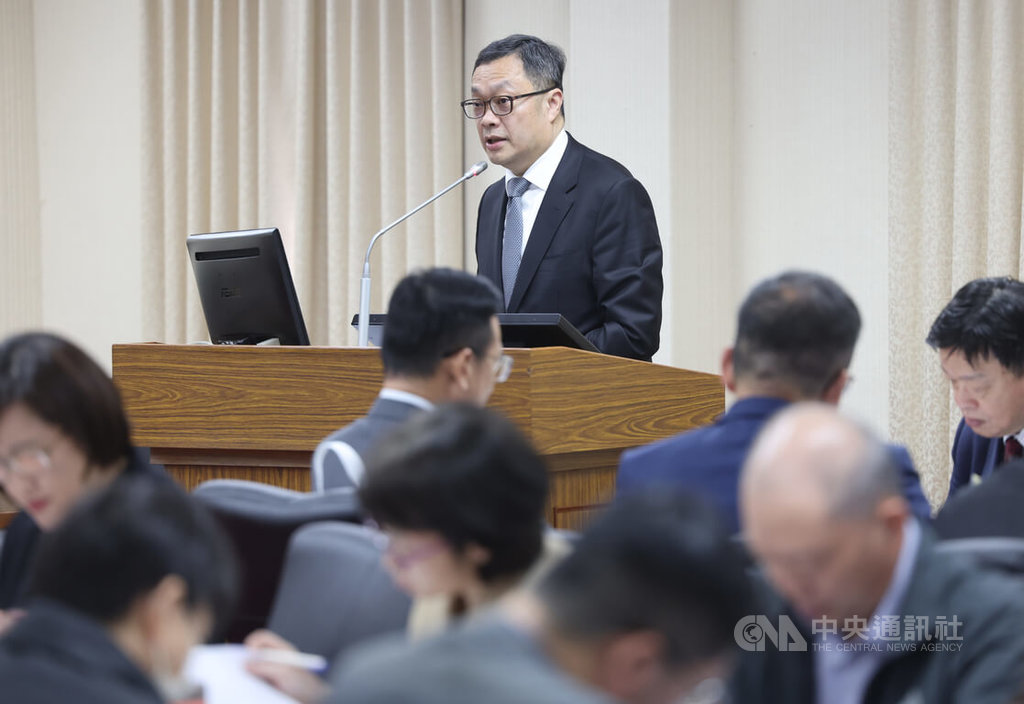
Taipei, April 15 (CNA) Regarding President Lai's visit to African ally Eswatini, and China's plan to open zero tariffs to Africa, excluding Eswatini, Deputy Minister of Foreign Affairs Chen Ming-chi stated today that China's measures have almost negligible impact on Eswatini, but will create a psychological feeling; President Lai's visit is expected to convey clear benefits to the ally, and assisting local economic development is Taiwan's priority.
President Lai Ching-te will visit the Kingdom of Eswatini, an African ally, from April 22 to 27, to attend the double celebration of King Mswati III's 40th enthronement anniversary and 58th birthday, sign a joint communiqué with the King, witness the signing of a "Customs Mutual Assistance Agreement" by the foreign ministers of the two countries, and receive briefings on the "Taiwan Industrial Innovation Park" and "Strategic Oil Storage Tank."
Democratic Progressive Party legislator Chen Chun-yu questioned at the Legislative Yuan's Foreign Affairs and National Defense Committee this morning about China's continuous diplomatic offensive, which will grant comprehensive zero-tariff treatment to 53 African countries starting in May, excluding only Eswatini. He asked about the economic pressure this would put on the local economy.
Chen Ming-chi replied that the Ministry of Foreign Affairs has evaluated that the CCP's implementation of zero tariffs for African countries has a very small economic impact on Eswatini, "almost negligible," and "the effect is minimal"; China's trade with Africa is extremely unequal and asymmetrical, obtaining more raw material imports from African countries and selling a large number of cheap products and China's excess capacity to Africa.
Chen Ming-chi emphasized that assisting Eswatini in developing its own economy, introducing local products into the Taiwanese market, and helping Eswatini market to Africa are Taiwan's priorities. China's differentiated tariff treatment has a "psychological feeling" for Eswatini, and it is hoped that the President's visit will convey clear benefits to the ally.
When asked about the President's itinerary, Chen Ming-chi explained that President Lai's visit will witness the solid diplomatic relations between Taiwan and Eswatini. The Ministry of Foreign Affairs will also continue to provide substantive development opportunities to allies through concrete actions, which is different from China's approach in Africa. In particular, the strategic oil storage tank can enhance Eswatini's energy resilience, and cooperation in public health, medical care, women's empowerment, and agriculture will also continue.
Director-General of the Department of African and West Asian Affairs, Yen Chia-liang, explained that the signing of the joint communiqué is to demonstrate the commitment of the two heads of state in various aspects such as politics and economy, and the "Customs Mutual Assistance Agreement" aims for deeper cooperation in administrative assistance, combating smuggling, and measures for trade import and export. This will help Taiwanese businesses invest in the "Taiwan Industrial Innovation Park."
Chen Ming-chi emphasized that through strengthening economic and trade relations with Eswatini, customs cooperation, and the establishment of the Rongbang Economic and Trade Office, in addition to consolidating and strengthening Eswatini's economy, it will also make Eswatini a model for regional countries. The "Taiwan Industrial Innovation Park" hopes to attract more Taiwanese businesses, and if neighboring countries have expansion needs, they can also prioritize this park as a springboard.
Kuomintang legislator Huang Chien-pin asked whether former President Chen Shui-bian had transited through the United States during his visit to Africa, and whether President Lai's visit this time would have any "unexpected surprises" to a third country.
Chen Ming-chi pointed out that there are currently no such plans, and if there are other situations, the Presidential Office will explain them to the public. This presidential visit expresses importance to allies through direct flights, and the mission is more focused. Moreover, the President is busy with official duties, and a 13-hour direct flight is also a more convenient and comfortable way.
The Legislative Yuan's Foreign Affairs and National Defense Committee today invited the Ministry of Foreign Affairs and the Ministry of Economic Affairs to report on "The Impact of the US-Iran War Situation Development on the Asia-Pacific Strategic Situation and Economic Security," with the National Development Council also attending for questioning. (Editor: Chang Ruo-yao) 1150415
FACT BOX
- Source: CNA (Central News Agency)
- Category: regulation