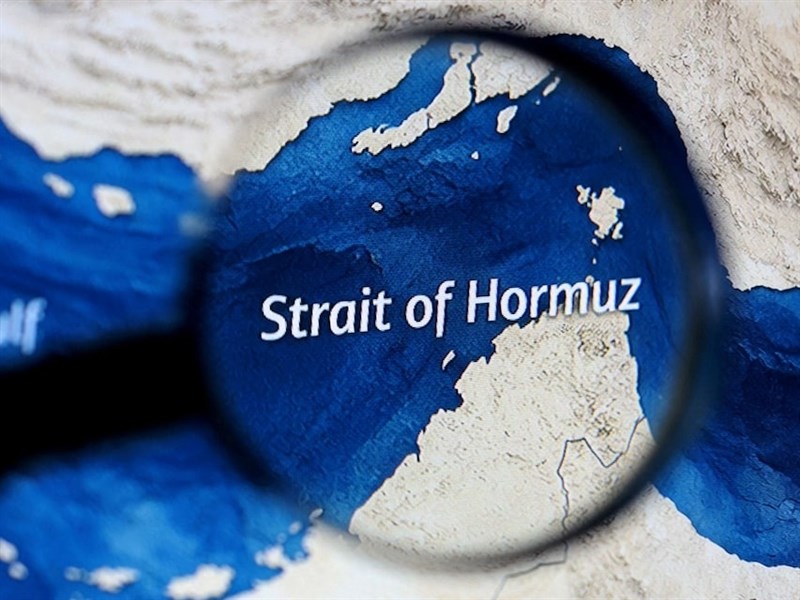
WASHINGTON (CNA) – US President Donald Trump's order for the US military to blockade Iranian ports in and out of the Strait of Hormuz took effect today, April 13. Trump anticipates that a complete ban on crude oil exports will severely damage Iran's economy and escalate political crises. However, high oil prices also exert immense pressure on the Trump administration, turning the situation into a 'survival game' to see who can endure longer.
US-Iran peace talks in Islamabad, Pakistan, on April 11, yielded no breakthrough. President Trump subsequently changed strategy, ordering US warships stationed in the Persian Gulf to prohibit Iranian vessels from entering or exiting the Gulf from 10 AM EST on April 13. This has created a unique 'dual blockade' situation where the Iranian military controls the Strait of Hormuz, while the US military restricts Iranian ship movements.
Trump's strategy is clear: oil and petrochemical products are the lifeline of Iran's economy. By using military force to prevent Iranian exports, he expects to impact the economy, affect livelihoods, and incite public protests against the government. The Iranian authorities understand that with the US midterm elections approaching, high oil prices are a fatal blow to the Republican Party's electoral prospects. They aim to prolong the conflict and negotiate a ceasefire to drive up oil prices.
As the US-Iran conflict enters its 45th day, a brief ceasefire period has led to a second, yet uncertain, round of this 'survival game' between the two countries.
Miad Maleki, a senior research fellow at the Foundation of Defense of Democracies, believes that 90% of Iran's annual $109.7 billion maritime trade passes through the Strait of Hormuz, with no alternative routes. A US naval blockade would cause Iran approximately $435 million in economic losses daily. The inability to export oil would force Iran to shut down oil fields, leading to long-term damage.
China, India, Pakistan, and Turkey are major buyers of Iranian crude oil. Reduced supply would affect their economies, potentially prompting Iran to return to the negotiating table, but prolonging the US-Iran conflict benefits China's strategic deployment.
The US military holds a significant advantage. The US and Israel have jointly attacked Iran for days, almost destroying all military facilities. The US Air Force's search and rescue operation for a missing pilot in Iran early this month indicates that, apart from drones, a small number of missiles, ground troops, and militias, the Iranian military no longer possesses superior naval or air forces to control the Persian Gulf.
Former National Security official Richard Hass posted on X that Trump's announcement of the blockade is correct. Unless Iran fully opens the Strait of Hormuz, the US should propose a maritime management mechanism that Iran could also join, but without full control.
On the first day of the US military's reverse blockade of Iranian ship movements in and out of the Persian Gulf, no incidents were reported. However, it remains uncertain whether Trump's change in strategy can replicate past instances where US blockades of other nations successfully forced opponents to yield by disrupting their economic lifelines.
Although the US is an energy exporter, it is affected by the international market. Prices for international Brent Crude (ICE Brent Crude) and West Texas Intermediate crude (WTI) have converged, and US retail gasoline and diesel prices have doubled compared to pre-conflict levels. If US oil prices continue to rise, it will become a significant pressure point for the Trump administration.
Trump stated that Iran's military power has been destroyed, with 158 warships sunk, no navy, and most sea mines cleared, allowing the naval blockade to commence. Iran will be unable to effectively sell crude oil, and many countries will turn to the US for purchases. (Editor: Qu Xiangping) 1150414
Stand with facts, your every sponsorship is a force to protect press freedom.
Download CNA's "First-hand News" APP to stay updated with the latest news.
The text, images, and audio-visual content of this website may not be reproduced, publicly broadcast, publicly transmitted, or utilized without authorization.
FACT BOX
- Source: CNA (Central News Agency)
- Category: regulation