Taoyuan kombucha operator suspected of altering expiration dates and using expired ingredients, 4 released on bail
A kombucha vendor in Taoyuan is under investigation for allegedly altering product expiration dates and using expired raw materials. Four individuals involved have been released on bail. The products were sold in stores and online, and numerous expired ingredients and products were confiscated.
📋 Article Processing Timeline
- 📰 Published: April 13, 2026 at 14:06
- 🔍 Collected: April 13, 2026 at 14:31 (25 min after Published)
- 🤖 AI Analyzed: April 13, 2026 at 15:44 (1h 12m after Collected)
Central News Agency
(Taoyuan, CNA reporter Wu Rui-chi, 13th) The Taoyuan District Prosecutors Office recently received a tip-off that a kombucha vendor was suspected of false labeling. An investigation revealed that the operator was allegedly altering expiration dates and using expired raw materials for profit. Prosecutors believe the individuals committed offenses such as forging documents, fraud, and violating the Food Safety and Sanitation Act. Four individuals involved were released on bail awaiting further proceedings.
The Taoyuan District Prosecutors Office today issued a press release stating that on March 24, it received a report from the Investigation Bureau's Taoyuan City Investigation Division that a certain brand of kombucha was suspected of having inaccurate expiration dates. Prosecutors' investigation found that a company jointly operated by a couple named Zhong and Lin was suspected of altering the expiration dates on kombucha aluminum cans, using expired concentrated juice to make products, and even repackaging expired canned products into champagne bottles for sale through physical stores and online channels for profit.
The Taoyuan District Prosecutors Office stated that on April 10, in coordination with relevant units, they searched three locations, including a factory in Luzhu District and a residence in Taoyuan District. Five individuals, including the Zhong and Lin couple, employees Lin and Xu, and a witness, were interviewed, and expired raw materials and products were seized. After questioning on the 11th, the prosecutors believe the individuals committed offenses such as exercising forged quasi-private documents, false labeling of goods, fraud, and selling adulterated food in violation of the Food Safety and Sanitation Act. Defendant Zhong was released on NT$1 million bail, defendant Lin on NT$300,000 bail, and the other two defendants on NT$50,000 bail each.
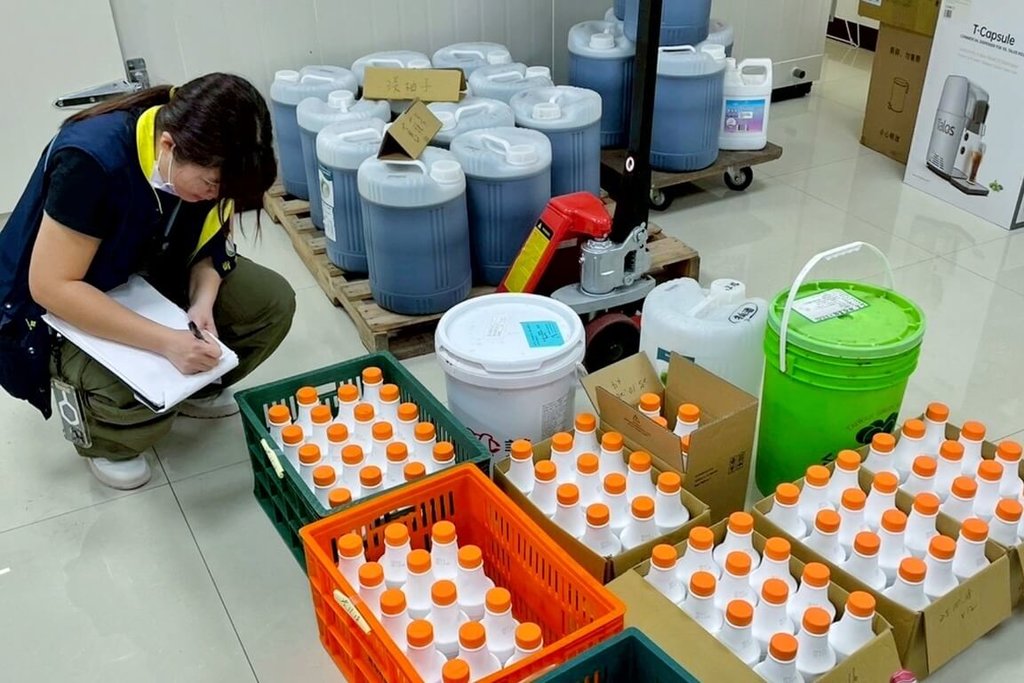
The Taoyuan City Department of Health stated that a total of 47 items, weighing 325.67 kg, of expired raw materials, semi-finished products, and finished products were seized on-site and fully sealed. The operator was ordered to immediately cease manufacturing and sales and to complete product removal from shelves by 12:00 PM on the 13th. Consumers who purchased non-compliant products can request returns or exchanges from the original retailer with their invoice and product. For any disputes, they can appeal to the Health Bureau or the Taoyuan City Consumer Service Center. (Edited by Wu Su-jou) 1150413
Choose to stand with facts, every sponsorship you provide is a force for protecting press freedom.
Download the CNA "First-hand News" APP to grasp the latest news instantly.
The text, images, and audio-visual content of this website may not be reproduced, publicly broadcast, or publicly transmitted and used without authorization.
(Taoyuan, CNA reporter Wu Rui-chi, 13th) The Taoyuan District Prosecutors Office recently received a tip-off that a kombucha vendor was suspected of false labeling. An investigation revealed that the operator was allegedly altering expiration dates and using expired raw materials for profit. Prosecutors believe the individuals committed offenses such as forging documents, fraud, and violating the Food Safety and Sanitation Act. Four individuals involved were released on bail awaiting further proceedings.
The Taoyuan District Prosecutors Office today issued a press release stating that on March 24, it received a report from the Investigation Bureau's Taoyuan City Investigation Division that a certain brand of kombucha was suspected of having inaccurate expiration dates. Prosecutors' investigation found that a company jointly operated by a couple named Zhong and Lin was suspected of altering the expiration dates on kombucha aluminum cans, using expired concentrated juice to make products, and even repackaging expired canned products into champagne bottles for sale through physical stores and online channels for profit.
The Taoyuan District Prosecutors Office stated that on April 10, in coordination with relevant units, they searched three locations, including a factory in Luzhu District and a residence in Taoyuan District. Five individuals, including the Zhong and Lin couple, employees Lin and Xu, and a witness, were interviewed, and expired raw materials and products were seized. After questioning on the 11th, the prosecutors believe the individuals committed offenses such as exercising forged quasi-private documents, false labeling of goods, fraud, and selling adulterated food in violation of the Food Safety and Sanitation Act. Defendant Zhong was released on NT$1 million bail, defendant Lin on NT$300,000 bail, and the other two defendants on NT$50,000 bail each.
The Taoyuan City Department of Health stated that a total of 47 items, weighing 325.67 kg, of expired raw materials, semi-finished products, and finished products were seized on-site and fully sealed. The operator was ordered to immediately cease manufacturing and sales and to complete product removal from shelves by 12:00 PM on the 13th. Consumers who purchased non-compliant products can request returns or exchanges from the original retailer with their invoice and product. For any disputes, they can appeal to the Health Bureau or the Taoyuan City Consumer Service Center. (Edited by Wu Su-jou) 1150413
Choose to stand with facts, every sponsorship you provide is a force for protecting press freedom.
Download the CNA "First-hand News" APP to grasp the latest news instantly.
The text, images, and audio-visual content of this website may not be reproduced, publicly broadcast, or publicly transmitted and used without authorization.