From Adorer to Opponent: Peter Magyar Dismantles Orban's System 'Brick by Brick'
Hungarian opposition leader Peter Magyar ousted Prime Minister Viktor Orban's 16-year rule, securing a two-thirds majority in parliament. Magyar pledged to dismantle Orban's system 'brick by brick,' advocating for anti-corruption and improved public services.
📋 Article Processing Timeline
- 📰 Published: April 13, 2026 at 12:05
- 🔍 Collected: April 13, 2026 at 12:51 (46 min after Published)
- 🤖 AI Analyzed: April 13, 2026 at 13:02 (10 min after Collected)
CENTRAL NEWS AGENCY
(Central News Agency, Budapest, 12th, Comprehensive Foreign Report) Just a few years ago, Peter Magyar sat in the front row applauding Viktor Orban's speeches; not long after, Magyar's identity changed dramatically, becoming the nationalist leader's most formidable challenger.
After his rapid rise in 2024, Magyar once told Agence France-Presse: 'They called me the 'eternal opposition' within Fidesz (Prime Minister Orban's party).'
Today, Hungarian voters decided to make Magyar more than just the 'eternal opposition,' ending Orban's 16-year rule in an election with historically high voter turnout. This election is expected to shake Russia and trigger chain reactions in Western right-wing circles, including the White House under US President Trump.
Reuters reported that Magyar's center-right, pro-European Union (EU) 'Tisza' (Respect and Freedom) Party defeated Orban's nationalist 'Fidesz' Party. Preliminary results show that 'Tisza' will win 137 seats in the 199-seat parliament, a two-thirds majority.
Whether on social media or in campaign activities, the 45-year-old conservative Magyar is a skilled communicator. He promised change, vowing to dismantle Orban's entire political system 'brick by brick.'
Those who know Magyar personally say he is a perfectionist with a quick temper, but apologizes for his shortcomings.
Over the past two years, Magyar has toured the country almost non-stop, promising to curb corruption and repair public services, leading to the rapid rise of the 'Tisza' Party, which jumped to the top of opinion polls.
Andrzej Sadecki, chief analyst at the Warsaw-based Centre for Eastern Studies (OSW), said Magyar's past role within the system was a powerful impetus for his rise.
Sadecki told Agence France-Presse: 'When he says this system is rotting from within, it is particularly convincing for some former Fidesz voters. In some ways, Magyar is like Orban 20 years ago, but without the baggage, corruption, and mistakes made during his time in power.'
In 1989, as a young lawyer, Orban became a hero of Hungary's democratization movement by publicly demanding the withdrawal of Soviet troops. Magyar, then only 9 years old, had a picture of this democratic pioneer on his bedroom wall.
Magyar told the Fokuszcsoport podcast last year: 'The fervent atmosphere of regime change at that time deeply touched me as a child.'
Magyar's surname, Magyar, literally means 'Hungarian.'
Two years ago, Magyar suddenly entered the public eye because his ex-wife, Judit Varga, then Minister of Justice in the Orban government, resigned from all political positions due to public outrage over a sexual assault pardon case.
Magyar immediately distanced himself from the ruling party, accusing it of corruption and spreading political propaganda, stating that he had become disillusioned with Fidesz.
After rising from near obscurity to prominence through an interview on the YouTube channel Partizan, in just four months, Magyar's new party achieved 30% of the votes in the June 2024 European Parliament elections, ranking second and overwhelming all other opposition parties.
Extensive Impact
Orban's defeat is significant not only for Hungary but also for Europe and its populist far-right.
Since 2010, Orban has worked to establish what he calls 'illiberal democracy,' restricting media freedom and NGO activities, and weakening the independence of the judiciary.
Orban established good relations with Russian President Vladimir Putin and US President Donald Trump but repeatedly clashed with the EU; the EU froze billions of euros in funds due to concerns about Hungary's democratic standards.
In contrast, Magyar has pledged to rebuild Hungary's Western orientation, aiming to end dependence on Russian energy by 2035 while maintaining 'pragmatic relations' with Moscow. He also promised to unfreeze EU funds to help revitalize the stagnant economy.
Unlike Orban, Magyar does not, in principle, reject Ukraine's right to join the EU someday, but the Tisza Party's platform does not support Ukraine's rapid entry. Like Fidesz, the Tisza Party opposes EU immigration quotas and will retain the border fence built during Orban's time to deter illegal immigration.
Analysts say that under the Tisza Party's rule, tensions between Budapest and the EU may ease—Orban previously vetoed a 90 billion euro aid package for Kyiv, further exacerbating relations.
Clash with the System
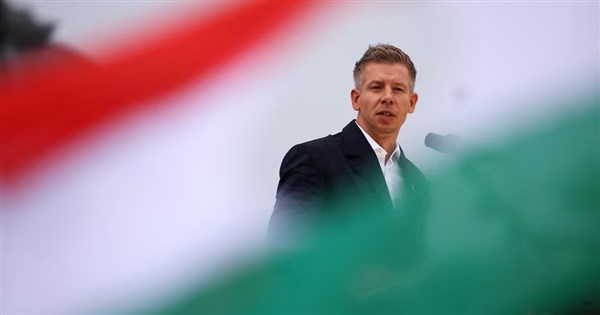
In this election, Magyar drew on Orban's strategy, launching grassroots campaigns deep into Fidesz's rural strongholds. His rallies always featured large numbers of national flags, an Orban-esque approach appealing to Hungarian voters' patriotism.
Gabor Toka, a senior researcher at the Vera and Donald Blinken Open Society Archives, said Magyar's clear and consistent message and skilled use of social media were reasons for his rapid rise.
Born in 1981 into a legal family, Magyar was fascinated by politics from an early age and studied law. During university, he became friends with Gergely Gulyas, Orban's current chief of staff, and met Judit Varga. The two married in 2006, and Varga later became Orban's Minister of Justice.
They had three sons and divorced in 2023.
Magyar describes himself as religious and says he enjoys cooking and playing football with friends and his sons.
When asked in December last year about changes since entering politics, Magyar alluded to media reports describing him as quick-tempered, saying, 'Now I count to 10 first.' (Compiled by Cheng Shih-yun) 1150413
Stand with facts, every sponsorship is a force to protect press freedom.
Download CNA 'First-hand News'
(Central News Agency, Budapest, 12th, Comprehensive Foreign Report) Just a few years ago, Peter Magyar sat in the front row applauding Viktor Orban's speeches; not long after, Magyar's identity changed dramatically, becoming the nationalist leader's most formidable challenger.
After his rapid rise in 2024, Magyar once told Agence France-Presse: 'They called me the 'eternal opposition' within Fidesz (Prime Minister Orban's party).'
Today, Hungarian voters decided to make Magyar more than just the 'eternal opposition,' ending Orban's 16-year rule in an election with historically high voter turnout. This election is expected to shake Russia and trigger chain reactions in Western right-wing circles, including the White House under US President Trump.
Reuters reported that Magyar's center-right, pro-European Union (EU) 'Tisza' (Respect and Freedom) Party defeated Orban's nationalist 'Fidesz' Party. Preliminary results show that 'Tisza' will win 137 seats in the 199-seat parliament, a two-thirds majority.
Whether on social media or in campaign activities, the 45-year-old conservative Magyar is a skilled communicator. He promised change, vowing to dismantle Orban's entire political system 'brick by brick.'
Those who know Magyar personally say he is a perfectionist with a quick temper, but apologizes for his shortcomings.
Over the past two years, Magyar has toured the country almost non-stop, promising to curb corruption and repair public services, leading to the rapid rise of the 'Tisza' Party, which jumped to the top of opinion polls.
Andrzej Sadecki, chief analyst at the Warsaw-based Centre for Eastern Studies (OSW), said Magyar's past role within the system was a powerful impetus for his rise.
Sadecki told Agence France-Presse: 'When he says this system is rotting from within, it is particularly convincing for some former Fidesz voters. In some ways, Magyar is like Orban 20 years ago, but without the baggage, corruption, and mistakes made during his time in power.'
In 1989, as a young lawyer, Orban became a hero of Hungary's democratization movement by publicly demanding the withdrawal of Soviet troops. Magyar, then only 9 years old, had a picture of this democratic pioneer on his bedroom wall.
Magyar told the Fokuszcsoport podcast last year: 'The fervent atmosphere of regime change at that time deeply touched me as a child.'
Magyar's surname, Magyar, literally means 'Hungarian.'
Two years ago, Magyar suddenly entered the public eye because his ex-wife, Judit Varga, then Minister of Justice in the Orban government, resigned from all political positions due to public outrage over a sexual assault pardon case.
Magyar immediately distanced himself from the ruling party, accusing it of corruption and spreading political propaganda, stating that he had become disillusioned with Fidesz.
After rising from near obscurity to prominence through an interview on the YouTube channel Partizan, in just four months, Magyar's new party achieved 30% of the votes in the June 2024 European Parliament elections, ranking second and overwhelming all other opposition parties.
Extensive Impact
Orban's defeat is significant not only for Hungary but also for Europe and its populist far-right.
Since 2010, Orban has worked to establish what he calls 'illiberal democracy,' restricting media freedom and NGO activities, and weakening the independence of the judiciary.
Orban established good relations with Russian President Vladimir Putin and US President Donald Trump but repeatedly clashed with the EU; the EU froze billions of euros in funds due to concerns about Hungary's democratic standards.
In contrast, Magyar has pledged to rebuild Hungary's Western orientation, aiming to end dependence on Russian energy by 2035 while maintaining 'pragmatic relations' with Moscow. He also promised to unfreeze EU funds to help revitalize the stagnant economy.
Unlike Orban, Magyar does not, in principle, reject Ukraine's right to join the EU someday, but the Tisza Party's platform does not support Ukraine's rapid entry. Like Fidesz, the Tisza Party opposes EU immigration quotas and will retain the border fence built during Orban's time to deter illegal immigration.
Analysts say that under the Tisza Party's rule, tensions between Budapest and the EU may ease—Orban previously vetoed a 90 billion euro aid package for Kyiv, further exacerbating relations.
Clash with the System
In this election, Magyar drew on Orban's strategy, launching grassroots campaigns deep into Fidesz's rural strongholds. His rallies always featured large numbers of national flags, an Orban-esque approach appealing to Hungarian voters' patriotism.
Gabor Toka, a senior researcher at the Vera and Donald Blinken Open Society Archives, said Magyar's clear and consistent message and skilled use of social media were reasons for his rapid rise.
Born in 1981 into a legal family, Magyar was fascinated by politics from an early age and studied law. During university, he became friends with Gergely Gulyas, Orban's current chief of staff, and met Judit Varga. The two married in 2006, and Varga later became Orban's Minister of Justice.
They had three sons and divorced in 2023.
Magyar describes himself as religious and says he enjoys cooking and playing football with friends and his sons.
When asked in December last year about changes since entering politics, Magyar alluded to media reports describing him as quick-tempered, saying, 'Now I count to 10 first.' (Compiled by Cheng Shih-yun) 1150413
Stand with facts, every sponsorship is a force to protect press freedom.
Download CNA 'First-hand News'