China's 10 Measures Regarding Taiwan Criticized by DPP as 'Nurture, Trap, Kill' Scheme
The Democratic Progressive Party (DPP) criticized China's recently announced 10 measures regarding Taiwan as a 'nurture, trap, kill' scheme, asserting that Beijing aims to force Taiwan to accept the 'One Country, Two Systems' framework.
📋 Article Processing Timeline
- 📰 Published: April 13, 2026 at 14:43
- 🔍 Collected: April 13, 2026 at 15:01 (18 min after Published)
- 🤖 AI Analyzed: April 13, 2026 at 15:39 (37 min after Collected)
Central News Agency
(Central News Agency reporter Lin Jing-yin, Taipei, 13th) Following the meeting between Kuomintang Chairman Cheng Li-wen and Chinese Communist Party General Secretary Xi Jinping, the CCP announced 10 measures concerning Taiwan. The Democratic Progressive Party (DPP) caucus stated today that these Taiwan-related measures are a 'nurture, trap, kill' scheme, ultimately aiming to make Taiwan accept the 'One Country, Two Systems' proposal. If there is no such political prerequisite, the package of benefits for Taiwan simply does not exist.
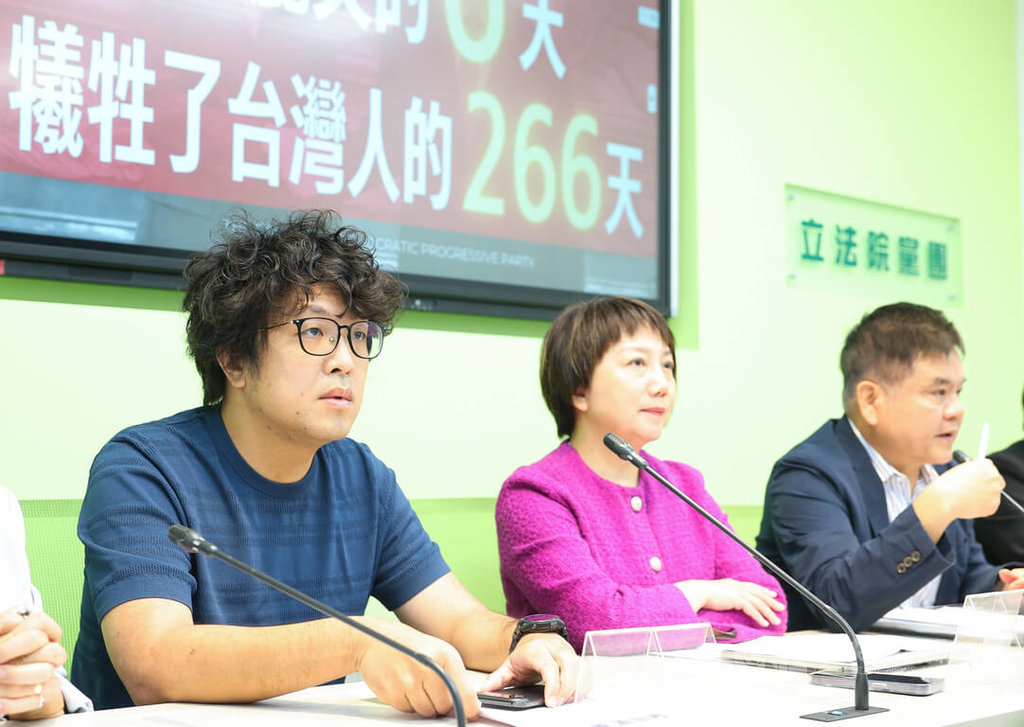
After the Zheng-Xi meeting, the Central Taiwan Affairs Office of the CCP announced 10 cross-strait policy measures yesterday. The DPP caucus held a press conference at the Legislative Yuan this morning. DPP caucus secretary-general Chuang Jui-hsiung stated that after Cheng Li-wen's six-day visit to China, China announced 10 measures concerning Taiwan, and the so-called peace dividends were old tunes with little new content.
Chuang Jui-hsiung pointed out that among the Taiwan-related measures, 'connecting electricity, gas, and bridges' involves infrastructure, energy dependence, and border security, not merely livelihood issues. These matters concern sovereignty, regulations, and national security, and cannot be resolved simply through talks between the Kuomintang and the Communist Party. These are matters that the government should guard, as they involve the security of 23 million people. Does the Kuomintang not consider this a basic obligation to the nation?
DPP caucus deputy secretary-general Fan Yun also asked the Kuomintang three questions: She asked, when Xi Jinping defines the Taiwan Strait as internal affairs, 'Does the Kuomintang support the internal affairs-ification of cross-strait relations?' 'Does the Kuomintang truly want to eliminate the Republic of China?' 'Does the Kuomintang support One Country, Two Systems?'
DPP legislator Chen Pei-yu stated that China's current announcement to allow Taiwanese film and television companies to produce 'correctly oriented and finely produced healthy content' was a measure already in place in 2018, but China unilaterally restricted it later, and ideological censorship has never ceased. The tourism aspect was also opened in 2011, but China later unilaterally restricted and even canceled it. This unilateral restriction and cancellation by China, used as blackmail, is not just empty talk but a honeyed dagger, not a gift package but a malicious one.
DPP legislator Shen Po-yang said that the preferential measures for Taiwan are a 'nurture, trap, kill' scheme, ultimately aiming to make Taiwan accept the 'One Country, Two Systems' proposal. If there is no such political prerequisite, the package of benefits for Taiwan simply does not exist. What Taiwan needs to pay attention to is what was exchanged for this seemingly problematic gift package, which was not included in it.
Chuang Jui-hsiung stated that the DPP has no objection to purely民间 exchanges. The DPP welcomes healthy and normal exchanges across the Strait. However, any exercise of public authority must be authorized by the government.
Chuang Jui-hsiung stated that when the chairman of the largest opposition party meets with the chairman of the Chinese Communist Party to discuss matters involving the exercise of public authority, he believes the Taiwanese people will not accept it. Everyone is very clear: Does Cheng Li-wen represent the Taiwanese public opinion? Can the '1992 Consensus' represent the Taiwanese public opinion? 70% of public opinion does not accept the '1992 Consensus.' Cross-strait affairs cannot be decided by the two parties, the Chinese Communist Party and the Kuomintang, shaking hands and enjoying red wine. (Editor: Su Chih-chung) 1150413
(Central News Agency reporter Lin Jing-yin, Taipei, 13th) Following the meeting between Kuomintang Chairman Cheng Li-wen and Chinese Communist Party General Secretary Xi Jinping, the CCP announced 10 measures concerning Taiwan. The Democratic Progressive Party (DPP) caucus stated today that these Taiwan-related measures are a 'nurture, trap, kill' scheme, ultimately aiming to make Taiwan accept the 'One Country, Two Systems' proposal. If there is no such political prerequisite, the package of benefits for Taiwan simply does not exist.
After the Zheng-Xi meeting, the Central Taiwan Affairs Office of the CCP announced 10 cross-strait policy measures yesterday. The DPP caucus held a press conference at the Legislative Yuan this morning. DPP caucus secretary-general Chuang Jui-hsiung stated that after Cheng Li-wen's six-day visit to China, China announced 10 measures concerning Taiwan, and the so-called peace dividends were old tunes with little new content.
Chuang Jui-hsiung pointed out that among the Taiwan-related measures, 'connecting electricity, gas, and bridges' involves infrastructure, energy dependence, and border security, not merely livelihood issues. These matters concern sovereignty, regulations, and national security, and cannot be resolved simply through talks between the Kuomintang and the Communist Party. These are matters that the government should guard, as they involve the security of 23 million people. Does the Kuomintang not consider this a basic obligation to the nation?
DPP caucus deputy secretary-general Fan Yun also asked the Kuomintang three questions: She asked, when Xi Jinping defines the Taiwan Strait as internal affairs, 'Does the Kuomintang support the internal affairs-ification of cross-strait relations?' 'Does the Kuomintang truly want to eliminate the Republic of China?' 'Does the Kuomintang support One Country, Two Systems?'
DPP legislator Chen Pei-yu stated that China's current announcement to allow Taiwanese film and television companies to produce 'correctly oriented and finely produced healthy content' was a measure already in place in 2018, but China unilaterally restricted it later, and ideological censorship has never ceased. The tourism aspect was also opened in 2011, but China later unilaterally restricted and even canceled it. This unilateral restriction and cancellation by China, used as blackmail, is not just empty talk but a honeyed dagger, not a gift package but a malicious one.
DPP legislator Shen Po-yang said that the preferential measures for Taiwan are a 'nurture, trap, kill' scheme, ultimately aiming to make Taiwan accept the 'One Country, Two Systems' proposal. If there is no such political prerequisite, the package of benefits for Taiwan simply does not exist. What Taiwan needs to pay attention to is what was exchanged for this seemingly problematic gift package, which was not included in it.
Chuang Jui-hsiung stated that the DPP has no objection to purely民间 exchanges. The DPP welcomes healthy and normal exchanges across the Strait. However, any exercise of public authority must be authorized by the government.
Chuang Jui-hsiung stated that when the chairman of the largest opposition party meets with the chairman of the Chinese Communist Party to discuss matters involving the exercise of public authority, he believes the Taiwanese people will not accept it. Everyone is very clear: Does Cheng Li-wen represent the Taiwanese public opinion? Can the '1992 Consensus' represent the Taiwanese public opinion? 70% of public opinion does not accept the '1992 Consensus.' Cross-strait affairs cannot be decided by the two parties, the Chinese Communist Party and the Kuomintang, shaking hands and enjoying red wine. (Editor: Su Chih-chung) 1150413