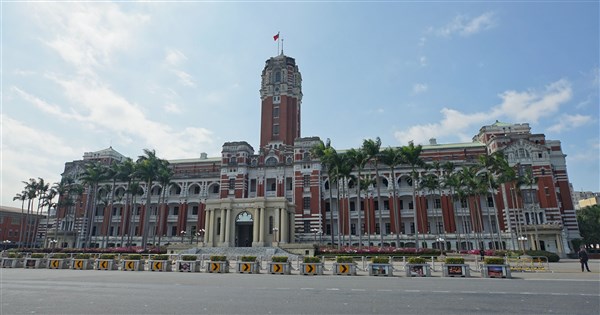
China Announces 10 Measures for Taiwan; Presidential Office: Should Not Become a Bargaining Chip for a Specific Political Party
China has announced 10 measures for Taiwan, including tourism and agricultural product openings. Taiwan's Presidential Office has retorted that this should not be used as a political bargaining tool and that cross-strait exchanges should be free of political preconditions.
📋 Article Processing Timeline
- 📰 Published: April 12, 2026 at 17:40
- 🔍 Collected: April 12, 2026 at 18:00 (20 min after Published)
- 🤖 AI Analyzed: April 13, 2026 at 08:50 (14h 50m after Collected)
KMT Chairwoman Cheng Li-wen visited mainland China from the 7th to the 12th and held talks with CCP General Secretary Xi Jinping. The Taiwan Affairs Office of the State Council today authorized the release of 10 policy measures, including promoting pilot programs for independent travel to Taiwan for residents of Shanghai and Fujian, as well as opening up fisheries and agricultural products.
Kuo Ya-hui stated that the government has always supported healthy and orderly cross-strait exchanges, including trade in agricultural products and tourism, and that under the premise of ensuring national, public, and industrial interests, no exchange arrangements should come with political preconditions, let alone become a bargaining chip for political manipulation or transactions by a specific political party.
She pointed out that for a long time, China has often instrumentalized and weaponized cross-strait exchanges. The various so-called "measures" carry a high degree of uncertainty, being turned on and off, sometimes selectively opened, and sometimes halted with trumped-up excuses, causing incalculable damage to Taiwan's industries and farmers and fishermen over the years.
Kuo Ya-hui stated that most of the "10 measures" announced this time are items that have been intermittently opened and banned over the long term, without following market mechanisms or international norms. Furthermore, as in the past, they did not consult with the Taiwanese government through existing channels, leading to doubts as to whether China will once again resort to using cross-strait affairs for "economic coercion."
Kuo Ya-hui emphasized that any cross-strait opening measures involve government authority and institutional management. If the Chinese side is genuinely interested in promoting related measures, it should engage in negotiations with the relevant authorities of the Taiwanese government through existing communication channels to make arrangements that are truly conducive to the healthy and orderly development of cross-strait exchanges. (Edited by Lin Ko-lun, Yang Kai-hsiang) 1150412
Kuo Ya-hui stated that the government has always supported healthy and orderly cross-strait exchanges, including trade in agricultural products and tourism, and that under the premise of ensuring national, public, and industrial interests, no exchange arrangements should come with political preconditions, let alone become a bargaining chip for political manipulation or transactions by a specific political party.
She pointed out that for a long time, China has often instrumentalized and weaponized cross-strait exchanges. The various so-called "measures" carry a high degree of uncertainty, being turned on and off, sometimes selectively opened, and sometimes halted with trumped-up excuses, causing incalculable damage to Taiwan's industries and farmers and fishermen over the years.
Kuo Ya-hui stated that most of the "10 measures" announced this time are items that have been intermittently opened and banned over the long term, without following market mechanisms or international norms. Furthermore, as in the past, they did not consult with the Taiwanese government through existing channels, leading to doubts as to whether China will once again resort to using cross-strait affairs for "economic coercion."
Kuo Ya-hui emphasized that any cross-strait opening measures involve government authority and institutional management. If the Chinese side is genuinely interested in promoting related measures, it should engage in negotiations with the relevant authorities of the Taiwanese government through existing communication channels to make arrangements that are truly conducive to the healthy and orderly development of cross-strait exchanges. (Edited by Lin Ko-lun, Yang Kai-hsiang) 1150412