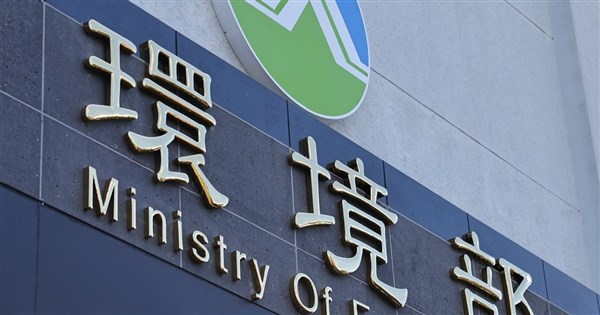
(Central News Agency reporter Chang Hsiung-feng, Taipei, June 23) To improve source management of mercury-containing products and prevent mercury substances from entering the environment, Taiwan's Environmental Protection Administration (EPA) has expanded the ban on importing mercury-containing products and electronic measuring instruments. The restrictions will be implemented in phases, with the first batch—including mercury vacuum pumps and tire balancing weights—to be prohibited from import starting July 1.
The EPA announced today that, in alignment with international control trends under the United Nations' Minamata Convention on Mercury and to strengthen domestic mercury pollution prevention, it revised the 'Restrictions on the Import of Mercury-containing Products' on June 22. In addition to previously banned mercury-containing products, this amendment expands the list to include new mercury-containing products and electronic measuring instruments, which will take effect in stages starting July 1 this year, enhancing source management.
The EPA explained that mercury (commonly known as quicksilver) and its compounds are non-degradable and bioaccumulative. Once released into the environment, they can accumulate through the food chain and cause long-term damage to the human brain, nervous system, and organs. To safeguard environmental safety and public health, the use of mercury-containing products will be gradually reduced.
The EPA stated that the key revisions include the addition, effective July 1, of prohibitions on importing eight categories of mercury-containing products—such as mercury vacuum pumps, tire balancing weights, and spacecraft propellants—and three types of electronic measuring instruments, including melt pressure transducers. Further restrictions on compact fluorescent lamps and tri-phosphor fluorescent lamp fixtures are planned for next year and 2028 (Minguo Year 117), respectively. Simultaneously, management of exempted uses will be strengthened to align with international control directions and achieve source reduction.
The EPA noted that, recognizing the need for industry adaptation to the new regulations, a grace period has been provided to allow businesses time to adjust. The goal is to implement source reduction through regulatory updates, effectively lowering the risks posed by mercury to human health and ecosystems. (Edited by Li Heng-shan) 1150623
FACT BOX
- Source: CNA (Central News Agency)
- Category: Taiwan