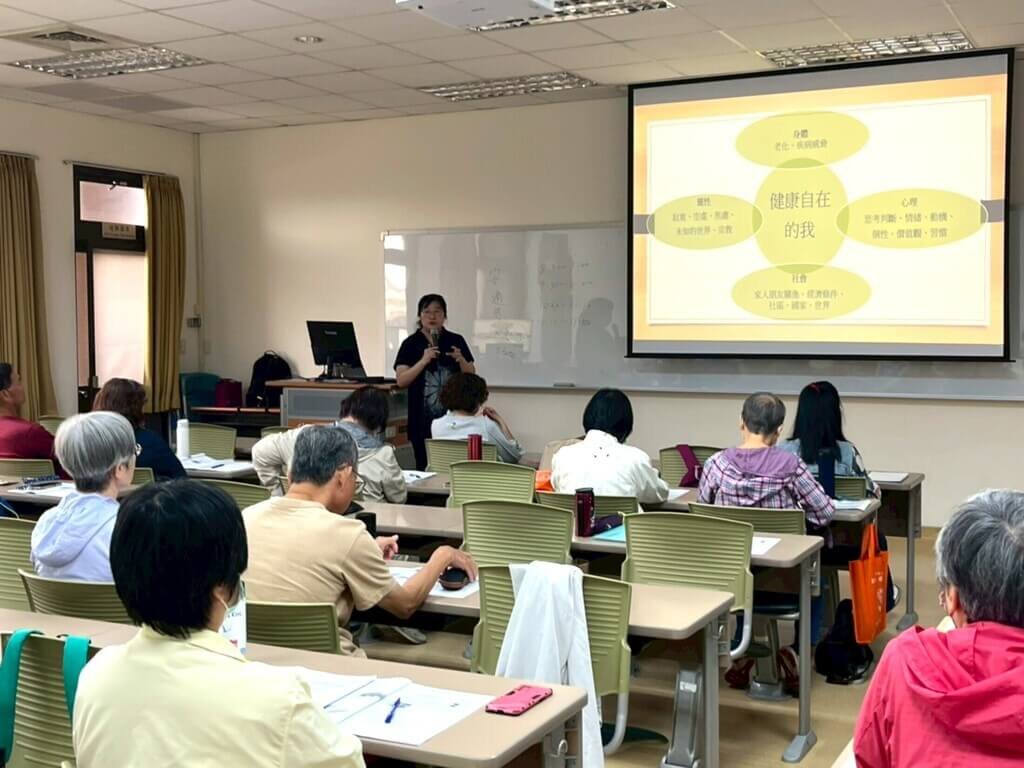
Amid rising demand for lifelong learning driven by an aging society and industrial digital transformation, Chung Shan Medical University has launched specialized academic programs to support career advancement and second specialization for adults. Responding to the Ministry of Education’s '30+ University Pilot Program,' the university offers flexible course enrollment and a credit accumulation system to help professionals upgrade their skills.
In a press release issued today, Chung Shan Medical University’s Dean of Academic Affairs, Dr. Huei-Ling Chiu, emphasized that learning is no longer confined to youth. With rapid industrial changes and increasing life expectancy, education has become essential at every life stage. The 30+ University initiative provides a flexible pathway for working adults and caregivers to pursue further education while balancing work and family responsibilities, enabling them to develop second specializations, obtain professional certifications, and prepare for promotions, career changes, or returning to formal degree programs.
To meet the needs of adult learners, the university offers a flexible 10-year enrollment period and a hybrid teaching model combining online, in-person, and hands-on learning. This allows participants to progress at their own pace while maintaining work-life balance.
The 'Culinary Business and Intelligent Management Credit Program' covers AI and digital tool applications, personnel management and leadership, store operations and cash flow analysis, customer service, food safety risk management, and ESG-based sustainable governance. The 'Holistic Health: Geriatric Care Credit Program' enables students to transition into formal degree programs after completing the first year, and also connects to certification for caregiving technicians and long-term care professional training.
Dr. Chiu highlighted that the 30+ University model establishes a complete recurrent education mechanism. After completing the first year, students can use personalized learning maps and career counseling in the second year to choose suitable advanced programs based on their interests and career goals. Earned credits can be transferred to related departments, shortening the time required to earn a formal degree and enabling simultaneous career and academic advancement.
FACT BOX
- Source: CNA (Central News Agency)
- Category: Taiwan