U.S.-Iran War Key News
Central News Agency Report
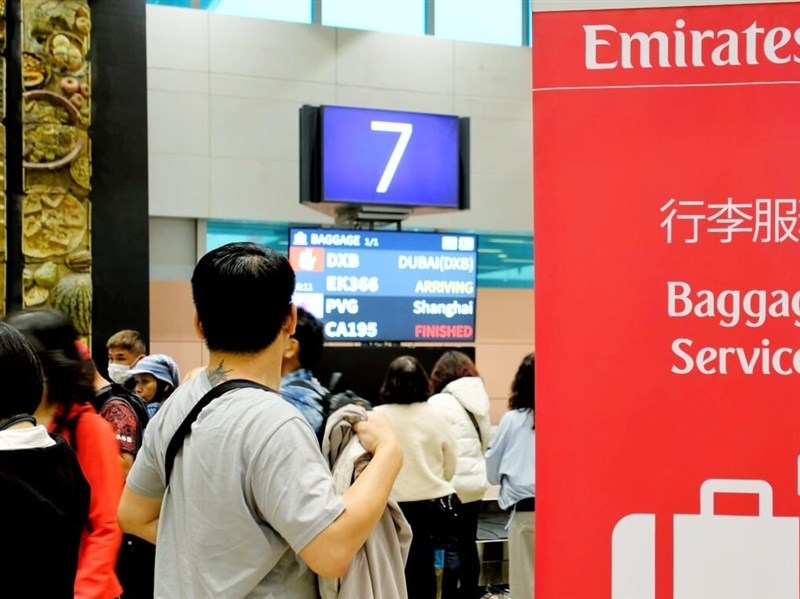
(CNA reporter Shirley Shih, Cairo, June 17) — A U.S.-Iran agreement aimed at ending the Middle East war is scheduled to be signed in Switzerland on June 19. Since the war began, Taiwan's representative office in Saudi Arabia has continuously assisted stranded Taiwanese tourists and expatriates in leaving the region. According to the Ministry of Foreign Affairs, a total of 9,025 people had safely returned to Taiwan from the Middle East by April 20, including those assisted by the representative office.
The U.S. and Israel launched airstrikes against Iran on February 28, triggering a regional war. On June 14, the U.S. and Iran announced a preliminary agreement, to be formally signed in Geneva on June 19, potentially ending a nearly four-month-long conflict that caused global political and economic turmoil.
During the war, Israel’s mainland, multiple U.S. military bases in the Middle East, and civilian facilities in several Gulf states were attacked by Iran using large numbers of ballistic missiles and suicide drones. Saudi Arabia, in particular, faced frequent threats from Iranian drone attacks, resulting in blocked exports, flight delays or cancellations, and significant economic damage.
Chang Chih-ping, Taiwan's representative to Saudi Arabia, told CNA reporters that whether this agreement brings lasting peace to the region depends on the final terms to be determined within the next 60 days.
Chang emphasized that the U.S. has consistently prioritized the issue of Iran’s nuclear program and remains determined to prevent Iran from developing nuclear weapons. Therefore, if the agreement ensures Iran cannot develop nuclear weapons, it would naturally reduce threats to neighboring countries and align with Saudi Arabia’s national interests.
Chang noted that Saudi Arabia is currently advancing its Vision 2030 initiative, investing heavily in large-scale national development projects. He expressed hope that the U.S.-Iran agreement would bring stability, enabling the successful hosting of the 2030 World Expo and the 2034 FIFA World Cup.
Chang also mentioned that although Saudi Arabia was affected by the war, its geographic advantage allowed it to continue exporting 7 million barrels of crude oil daily from the Red Sea port of Yanbu even when the Strait of Hormuz was blocked. Cargo previously imported and exported from eastern Saudi Arabia was rerouted through the port of Jeddah.
From the early stages of the war, the representative office in Saudi Arabia began assisting stranded nationals. Between March and April, Chang and his staff made multiple round-trip journeys by car from Riyadh, the Saudi capital, to Qatar—a distance of over 1,000 kilometers—to arrange transportation for stranded citizens and escort them to Riyadh for flights back to Taiwan.
As of April 20, a total of 487 people had sought assistance from Taiwan’s diplomatic offices across the Middle East. Including those assisted directly by the representative office, the cumulative number of people who returned to Taiwan from the Middle East reached 9,025. (Edited by Chen Hui-ping) 1150617
FACT BOX
- Source: CNA (Central News Agency)
- Category: Taiwan