Central News Agency reporter Shen Pei-yao, Taipei, June 16
Today, Taiwan's Centers for Disease Control (CDC) announced the youngest domestic case of Japanese encephalitis on record: a female infant under one year old from Hualien. The child has not yet reached the age for vaccination, has no history of domestic or international travel, and no congenital diseases. She has been hospitalized for three weeks and remains in the intensive care unit; the source of infection is still under investigation.
Japanese Encephalitis: Quick Facts
Prevention Methods:
Source: Taiwan CDC
Regarding the new case, the CDC announced during its routine epidemiological report today that the infant from Hualien, under one year of age, began exhibiting fever and drowsiness in late May. She visited an emergency department and was admitted to hospital. Due to persistent high fever and multiple seizure episodes, the hospital reported a suspected case of Japanese encephalitis, and laboratory testing confirmed the diagnosis. She has now been hospitalized for three weeks with no improvement in symptoms and remains in intensive care.
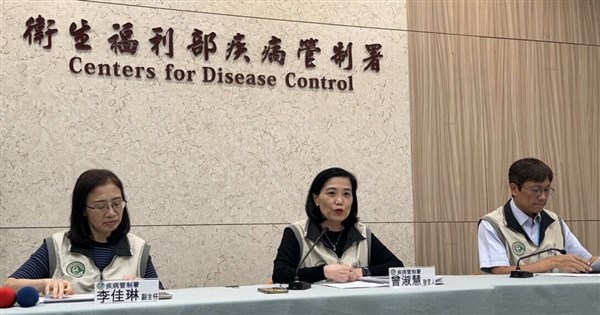
Li Chia-lin, Deputy Director of the Epidemic Intelligence Center, explained during a briefing that the patient is exactly three months old, making her the youngest case since Japanese encephalitis became a notifiable disease. No household members have shown similar symptoms, and no high-risk environments were found near the residence. Health authorities have conducted risk assessments of the environments related to the patient’s activities prior to onset, implemented preventive measures, and strengthened public health education for local residents.
Most people infected with Japanese encephalitis show no obvious symptoms. However, CDC infectious disease physician Lin Yung-ching noted that symptomatic cases may present headache, fever, and in severe cases, altered consciousness, disorientation, generalized weakness, and even coma or death.
Lin emphasized that the most effective way to prevent Japanese encephalitis is vaccination. In Taiwan, the routine childhood immunization schedule includes the first dose at 15 months of age and the second dose 12 months later. The public is urged to bring eligible young children to local health centers or contracted clinics for vaccination to prevent severe complications from infection.
The primary mosquito vectors for Japanese encephalitis in Taiwan are Culex tritaeniorhynchus, Culex annulus, and Culex vishnui, which commonly breed in rice paddies, ponds, and irrigation ditches. CDC spokesperson Tseng Shu-hui urged the public to avoid high-risk areas during peak mosquito activity times—dawn and dusk. If avoidance is not possible, people should wear light-colored, long-sleeved clothing and apply government-approved insect repellents containing DEET, Picaridin, or IR3535 to exposed skin. (Edited by Chang Ya-ching) 1150616
FACT BOX
- Source: CNA (Central News Agency)
- Category: Taiwan