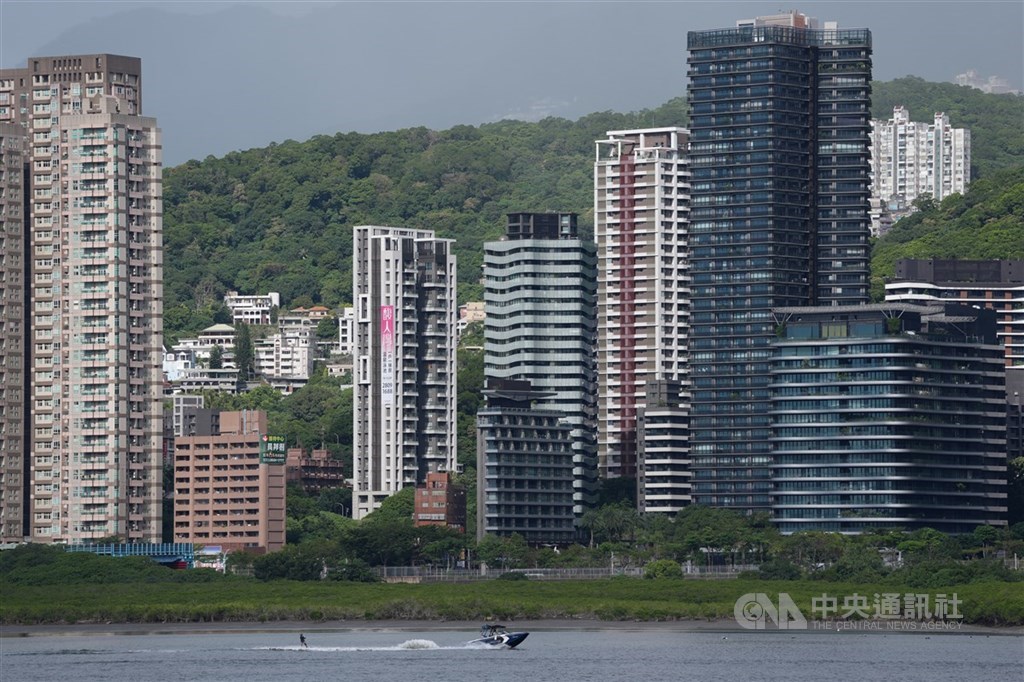
(CNA, Taipei, June 8, by reporter Ho Hsiu-ling) The Taiwanese stock market experienced a 'Black Monday' today, plunging over 2,600 points intraday and drawing market attention to its potential impact on the real estate market. Real estate industry insiders pointed out that looking back at previous stock market crashes, if not accompanied by factors like economic recession and increased unemployment, the impact on the housing market is mostly short-term and unlikely to trigger a wave of property sales. However, with ongoing credit controls and lending restrictions, buying sentiment in the housing market is expected to remain conservative in the short term.
Sinyi Realty issued a press release today stating that based on six historical experiences since 2008—including the financial tsunami, the European debt crisis, the US-China trade war, COVID-19, the Federal Reserve's aggressive interest rate hikes, and last year's US tariff war—the housing market has only seen a significant downturn when a financial crisis led to widespread unpaid leave. The current short-term volatility is expected to have a limited impact on the housing market.
Tseng Ching-te, a project manager at Sinyi Realty's real estate research department, pointed out that while the Taiwanese stock market has risen significantly this year, large gains make it susceptible to panic selling when encountering negative news. For the housing market, stock market volatility can make some people more cautious about high prices, which is not necessarily a bad thing. Furthermore, with 20 months having passed to digest negative factors since the central bank launched its seventh wave of controls, he believes the housing market is unlikely to be impacted by a short-term stock market correction and has a chance to continue building its base for a slow recovery.
Tseng Ching-te stated that while there are many opportunities in the stock market, risks are also increasing. The current difficulty of trading has risen, and many are trapped at high price levels. He advised managing risk during rebounds and avoiding excessive leverage. For those with self-use housing needs, he suggested they could take advantage of the current market to look at properties before it rebounds.
Lai Chih-chang, a PR associate manager at Da-Jia Realty's research department, stated that the reasons for stock market corrections vary, but if it is an economic shock or coincides with policy changes, the impact on the housing market is usually greater.
Hsu Chia-hsin, executive director of the research department at H&B Realty, analyzed that today's stock market plunge has shrunk investors' assets. Coupled with the ongoing effects of the central bank's anti-speculation measures, she expects the short-term downturn in the housing market will be difficult to reverse. However, real estate is a less liquid asset, and investors will typically sell gold, insurance policies, or break fixed deposits first, resorting to selling property only as a last resort. Therefore, unless the stock market enters a long-term bear market, it is unlikely to see a wave of property sell-offs triggered by stock market margin calls.
Hsu Chia-hsin reminded that it remains to be seen whether this wave of stock market correction will be an opportunity for wealth redistribution or the beginning of a bear market. In contrast, since the central bank and the government successively cracked down on real estate speculation, buying sentiment has hit a low point, and market prices have shown a consolidation trend. The market outlook is likely not optimistic. Although there was a saying 'sell property to save stocks' in the past, with the recent sluggish buying sentiment, it would likely be too slow to be of practical help. (Editor: Yang Kai-hsiang) 1150608
FACT BOX
- Source: CNA (Central News Agency)
- Category: 產業