Supporting Nurse-to-Patient Ratio Legislation, Hualien County Government: Continuing to Optimize Nursing Work Environments
The Hualien County Government supports the central government's move to legislate nurse-to-patient ratios. They aim to ensure patient safety and improve nursing environments, while urging the central government to review compensation mechanisms.
📋 Article Processing Timeline
- 📰 Published: May 27, 2026 at 19:02
- 🔍 Collected: May 31, 2026 at 23:45 (100h 43m after Published)
- 🤖 AI Analyzed: June 2, 2026 at 00:56 (25h 10m after Collected)
Regarding issues such as nursing workload and medical capacity, the Hualien County Government supports the central government's promotion of "legislating nurse-to-patient ratios in medical institution standards." This is of great significance for ensuring patient safety and improving the nursing practice environment. They also suggest that the central government continue to review nursing-related payment mechanisms.
Hualien County Magistrate Hsu Chen-wei stated through a press release today that the central government's stipulation that "legislating nurse-to-patient ratios in medical institution standards" will take effect on May 1, 2028, with a transition period for medical institutions to adjust, is of great significance for establishing a more complete nursing staffing system.
The county government believes that the institutionalization of nurse-to-patient ratios will not only help ensure patient safety and improve the quality of medical care, but also reduce the workload of frontline nursing staff, which has a positive effect on improving the nursing practice environment and stabilizing medical capacity. The Hualien County Health Bureau will continue to monitor the response of medical institutions within its jurisdiction and assist the local medical system in smoothly connecting with the policy.
Health Bureau Director Chu Chia-hsiang pointed out that the current salary structure for new nursing staff in the county is about NT$40,000+ in northern hospitals and has reached NT$50,000+ in some hospitals in the central and southern regions, in addition to various welfare allowances such as signing bonuses, night shift fees, and performance bonuses. This shows that medical institutions have been actively recruiting and retaining nursing talent by improving salary packages and welfare systems in recent years, reflecting the medical system's gradual emphasis on the value of the nursing profession.
Regarding another issue of concern to the public, hospital beds, according to the Health Bureau, among the 8 emergency responsibility hospitals in the county, about 14% of the beds in the county could not admit patients when nursing staff were most scarce after the COVID-19 pandemic. Currently, this has eased to about 7%, with medical centers being the most affected.
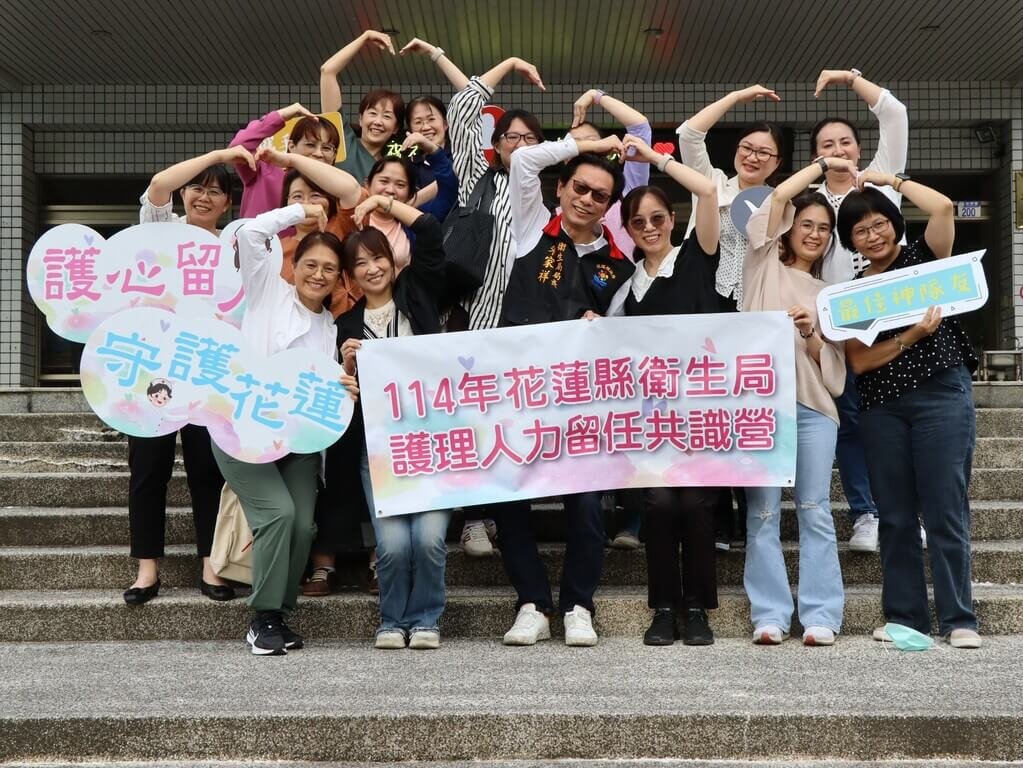
Regarding the issue of nursing staff retention, the Hualien County Health Bureau held a consensus camp for nursing supervisors from 10 hospitals in the county twice last year. Through inter-hospital exchanges and experience sharing, they jointly discussed strategies such as retention mechanisms for nursing staff, career development, and optimization of internship systems.
Chu Chia-hsiang stated that in addition to focusing on policy discussions, the meeting also promoted support and exchanges among nursing supervisors in the county, establishing a positive cooperation network. Considering the positive response from nursing partners, it has been planned to be held again in June this year to jointly discuss the issue of legislating nurse-to-patient ratios.
Regarding the situation of patients in the southern region being transferred to hospitals in the northern region, Chu Chia-hsiang explained that the main reason is not a shortage of wards, but a lack of capacity for certain specialists. This shows that the current medical human resources problem is not limited to nursing staff, and all types of professional medical personnel are facing pressure from shortages, which still requires the central and local governments to face together.
Regarding the suggestion to subsidize the salaries of new nurses, Chu Chia-hsiang stated that relevant policies should take into account the overall nursing human resource structure and fairness. If subsidies are only targeted at specific groups, it may be difficult to comprehensively improve the nursing salary system. It is still necessary to review the nursing payment and salary mechanism from the institutional level in order to stabilize nursing human resources and increase the willingness to stay.
Hsu Chen-wei emphasized that the county government will continue to pay attention to the development of medical and nursing human resources, act as a support for frontline medical personnel, and suggest that the central government continue to review nursing-related payment systems so that the nursing profession can receive reasonable treatment, and jointly build a safer and higher-quality medical care environment.
Hualien County Magistrate Hsu Chen-wei stated through a press release today that the central government's stipulation that "legislating nurse-to-patient ratios in medical institution standards" will take effect on May 1, 2028, with a transition period for medical institutions to adjust, is of great significance for establishing a more complete nursing staffing system.
The county government believes that the institutionalization of nurse-to-patient ratios will not only help ensure patient safety and improve the quality of medical care, but also reduce the workload of frontline nursing staff, which has a positive effect on improving the nursing practice environment and stabilizing medical capacity. The Hualien County Health Bureau will continue to monitor the response of medical institutions within its jurisdiction and assist the local medical system in smoothly connecting with the policy.
Health Bureau Director Chu Chia-hsiang pointed out that the current salary structure for new nursing staff in the county is about NT$40,000+ in northern hospitals and has reached NT$50,000+ in some hospitals in the central and southern regions, in addition to various welfare allowances such as signing bonuses, night shift fees, and performance bonuses. This shows that medical institutions have been actively recruiting and retaining nursing talent by improving salary packages and welfare systems in recent years, reflecting the medical system's gradual emphasis on the value of the nursing profession.
Regarding another issue of concern to the public, hospital beds, according to the Health Bureau, among the 8 emergency responsibility hospitals in the county, about 14% of the beds in the county could not admit patients when nursing staff were most scarce after the COVID-19 pandemic. Currently, this has eased to about 7%, with medical centers being the most affected.
Regarding the issue of nursing staff retention, the Hualien County Health Bureau held a consensus camp for nursing supervisors from 10 hospitals in the county twice last year. Through inter-hospital exchanges and experience sharing, they jointly discussed strategies such as retention mechanisms for nursing staff, career development, and optimization of internship systems.
Chu Chia-hsiang stated that in addition to focusing on policy discussions, the meeting also promoted support and exchanges among nursing supervisors in the county, establishing a positive cooperation network. Considering the positive response from nursing partners, it has been planned to be held again in June this year to jointly discuss the issue of legislating nurse-to-patient ratios.
Regarding the situation of patients in the southern region being transferred to hospitals in the northern region, Chu Chia-hsiang explained that the main reason is not a shortage of wards, but a lack of capacity for certain specialists. This shows that the current medical human resources problem is not limited to nursing staff, and all types of professional medical personnel are facing pressure from shortages, which still requires the central and local governments to face together.
Regarding the suggestion to subsidize the salaries of new nurses, Chu Chia-hsiang stated that relevant policies should take into account the overall nursing human resource structure and fairness. If subsidies are only targeted at specific groups, it may be difficult to comprehensively improve the nursing salary system. It is still necessary to review the nursing payment and salary mechanism from the institutional level in order to stabilize nursing human resources and increase the willingness to stay.
Hsu Chen-wei emphasized that the county government will continue to pay attention to the development of medical and nursing human resources, act as a support for frontline medical personnel, and suggest that the central government continue to review nursing-related payment systems so that the nursing profession can receive reasonable treatment, and jointly build a safer and higher-quality medical care environment.
FAQ
What are the medical challenges in Hualien?
The main challenges are nurse retention and a shortage of specialists.