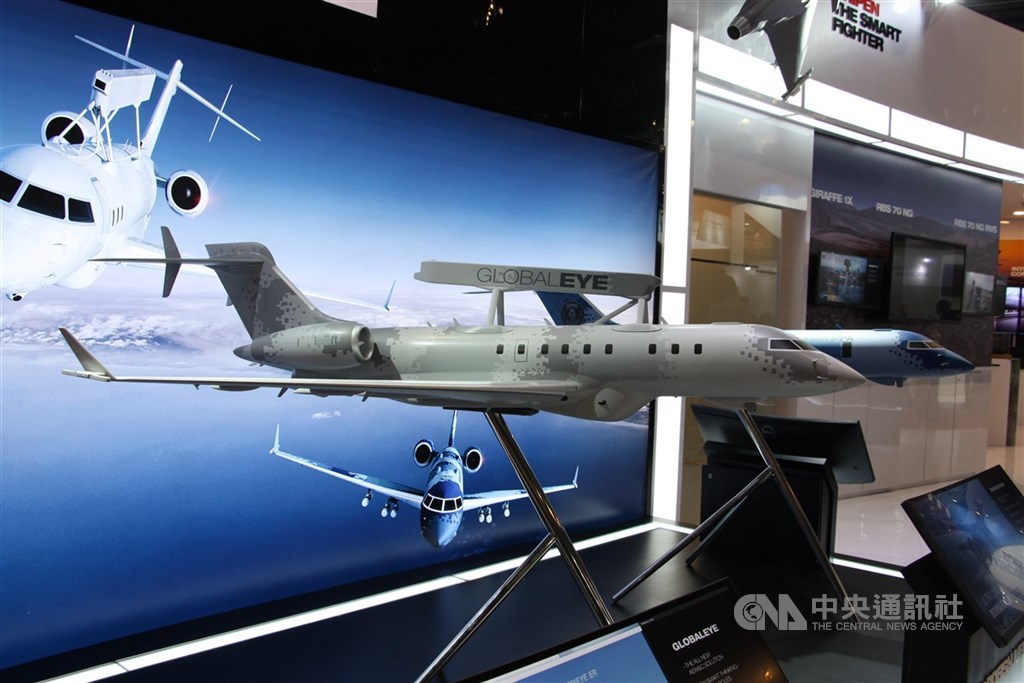
Canada announced on the 27th that it will procure early warning aircraft from Sweden's Saab, rejecting Boeing's proposal. Canada had previously indicated a desire to reduce its reliance on US defense firms. According to Reuters, Canadian Prime Minister Mark Carney stated that Canada would select Saab's 'GlobalEye' early warning system. The GlobalEye is based on the Canadian Bombardier Global 6500 business jet, equipped with Saab's Erieye ER active electronically scanned array (AESA) radar, which has an air search range of over 650 kilometers and can simultaneously monitor ground and maritime activity, identifying small surface targets. Boeing's E-7 'Wedgetail' early warning aircraft was also a bidder, but the E-7 has been plagued by delays and cost overruns. Carney said at a defense conference in Ottawa, 'Saab's GlobalEye, equipped with advanced sensors and mission systems, will be a vital resource for the Canadian Armed Forces to detect and deter threats in the Arctic.' Carney promised in March that Canada would take responsibility for defending its vast Arctic territory. For decades, Canada has relied on its partnership with the US to manage over 4.4 million square kilometers of sea and land north of 60 degrees north latitude. Since US President Trump returned to office last year and initiated a trade war, and even suggested Canada should become a US state, US-Canada relations have been strained since 2025. For years, the US and other allies have criticized Canada for failing to meet NATO's long-standing defense spending targets, but Carney announced in March that Canada had reached its goal of 2% of GDP for defense spending last year. The prospects for the Boeing E-7 changed last year. The largest customer, the Pentagon, canceled plans to purchase 26 E-7s to replace aging aircraft, opting to rely on satellite systems instead. Later, under pressure from lawmakers, Secretary of War Pete Hegseth told a congressional subcommittee on May 12 that the Pentagon was pushing to put the E-7 back into the defense budget. Although Carney did not disclose the number of Saab GlobalEye aircraft to be purchased or the potential contract value, Canadian military officials previously stated that Canada expects to purchase six early warning aircraft. Philippe Lagasse, an associate professor at Carleton University's Norman Paterson School of International Affairs, said Canada's decision to purchase the GlobalEye is 'an important test for the Carney government to push for a shift away from US military dependence.' He said the decision also enhances relations between Canada and Sweden; Sweden is a new NATO member and has been looking to strengthen ties with the Canadian military. Canada previously stated that in a global environment where the US is no longer as reliable as it once was, it hopes to cooperate more closely with Nordic countries on Arctic defense and other issues. Swedish Prime Minister Ulf Kristersson posted on social media: 'GlobalEye is already creating jobs in Canada and working with the Canadian supply chain. This decision makes the relationship between our two countries even closer.'
FACT BOX
- Source: CNA (Central News Agency)
- Category: Defense Procurement
- Organizations: Saab / Boeing / Bombardier