During the Spring New Life Season, 90.5% of Estheticians Report an Increase in Skin Consultations
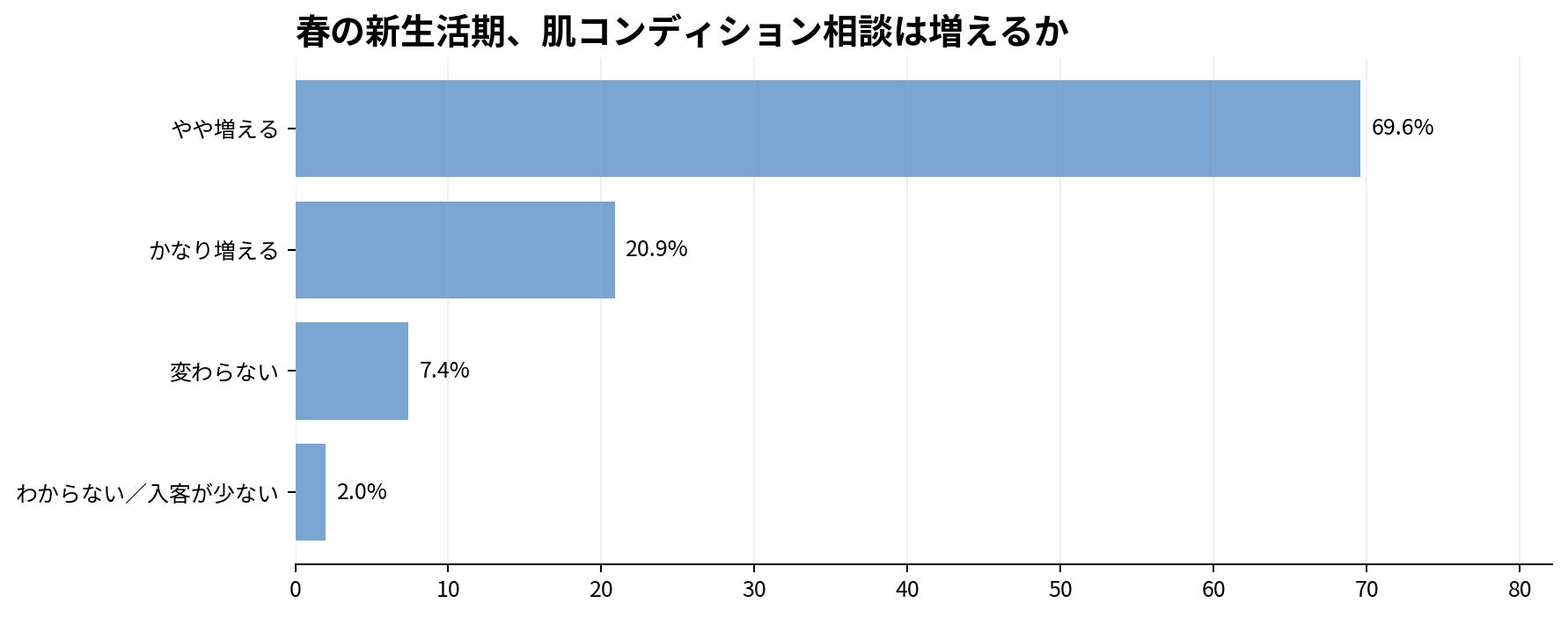
During the spring new life season, 90.5% of estheticians report an increase in skin consultations.
📋 Article Processing Timeline
- 📰 Published: March 30, 2026 at 00:36
Seeds Lab Co., Ltd. (headquartered in Shibuya, Tokyo; Representative: Haruhiko Yamamori; 25 locations nationwide), which operates the esthetic salon Seeds Lab, conducted an internal survey to understand consultation trends regarding skin condition during the spring new life season (March–April).
The results showed that 90.5% of respondents said that "consultations about skin condition increase during this period." The findings suggest that skin condition concerns are on the rise during a time when spring-specific environmental and lifestyle changes converge. The survey targeted 148 estheticians working at store locations and the head office.
【Survey Summary】
・90.5% of estheticians feel that skin condition consultations increase during the spring new life season
・The top skin concerns reported were "dryness and tightness" at 65.5%, "increased sensitivity" at 64.9%,
and "redness" at 51.4%
・The most commonly cited contributing factors were "seasonal factors such as pollen and dust" at 91.9%,
"lack of sleep and disrupted daily routines" at 77.7%, and "temperature fluctuations and dryness" at 50.7%
・Habits commonly associated with consultations include "insufficient moisturizing," "inadequate UV protection,"
and "rushing through cleansing and face washing"
・Easily recommended care includes "applying adequate and even moisturization," "establishing UV protection habits," and "maintaining a regular daily routine"
・In spring, there is a growing trend of consultation needs focused on prioritizing care based on skin condition and lifestyle factors
Spring Sees a Trend of Increased Consultations Related to Skin Instability
In this survey, the top skin concerns during the spring new life season were:
"Dryness and tightness" at 65.5%,
"Increased sensitivity (feeling more reactive than usual, etc.)" at 64.9%,
"Redness (appearing more noticeable than usual)" at 51.4%.
Other responses included "visible pores (around the nose, cheeks, etc.)" at 32.4%, "roughness and coarseness" at 24.3%, and "blemishes (breaking out more than usual)" at 24.3%.
Spring is a period when skin is prone to instability due to not only moisture deficiency but also external stimuli and lifestyle changes, and this is reflected in the frontline experience of estheticians reporting an increase in consultations about skin instability.