[New Life Phase Survey] Approximately 75% of women entering a new life phase experience disordered eating habits, but only 19% take action to improve them.
A survey by Nwith Inc. reveals that approximately 75% of women entering a new life phase experience disordered eating habits, with only 19% taking action to improve them. The company offers a self-check checklist supervised by a registered dietitian.
📋 Article Processing Timeline
- 📰 Published: April 2, 2026 at 19:30
Introduction
Nwith Inc. (Headquarters: Chuo-ku, Tokyo; Representative Director: Ryuto Fukuzawa) conducted a "Survey on Eating Habits and Nutrition during New Life Phases" targeting 460 women aged 20-55, coinciding with the period of preparing for a new life, when stress is most likely to accumulate due to changes in work, family, and environment.
During this period, when preparations for a new life overlap, parents' own daily rhythms also change in line with their children's advancement to new grades or schools and changes in their daily routines, often leading to their own meals and health management being neglected.
This survey revealed that approximately 75% of respondents experienced disordered eating habits during a new life phase and felt the impact on fatigue and sleep, while approximately 50% were unable to take appropriate action.
This release will share the reality and background of this situation, as well as tips for maintaining healthy eating habits even under stress.
Survey Summary
・Approximately 75% of women experienced disordered eating habits during a new life phase.
The survey confirmed that environmental changes associated with a new life are affecting the eating habits of many women.
・Approximately 65% experienced an increase in sweets, snacks, and late-night meals when stressed.
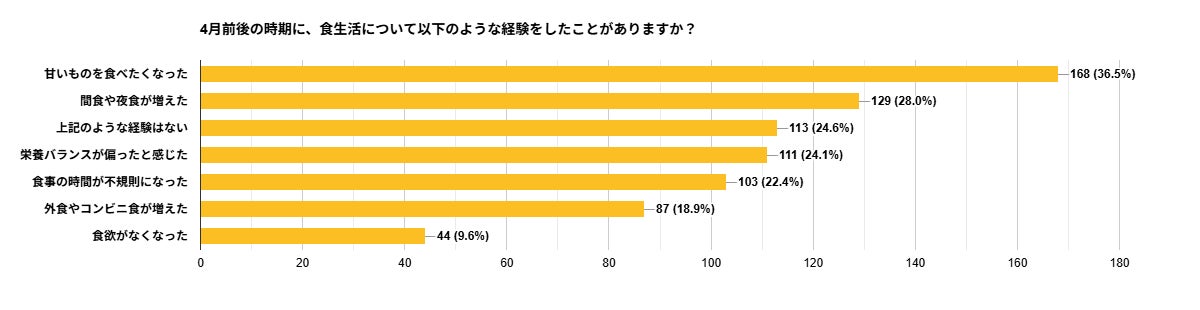
Among disordered eating habits, "craving sweets" (36.5%) and "increased snacks and late-night meals" (28.0%) were the top responses. This suggests that stress directly influences food choices.
・Approximately 68% of women felt fatigue or a decline in sleep quality.
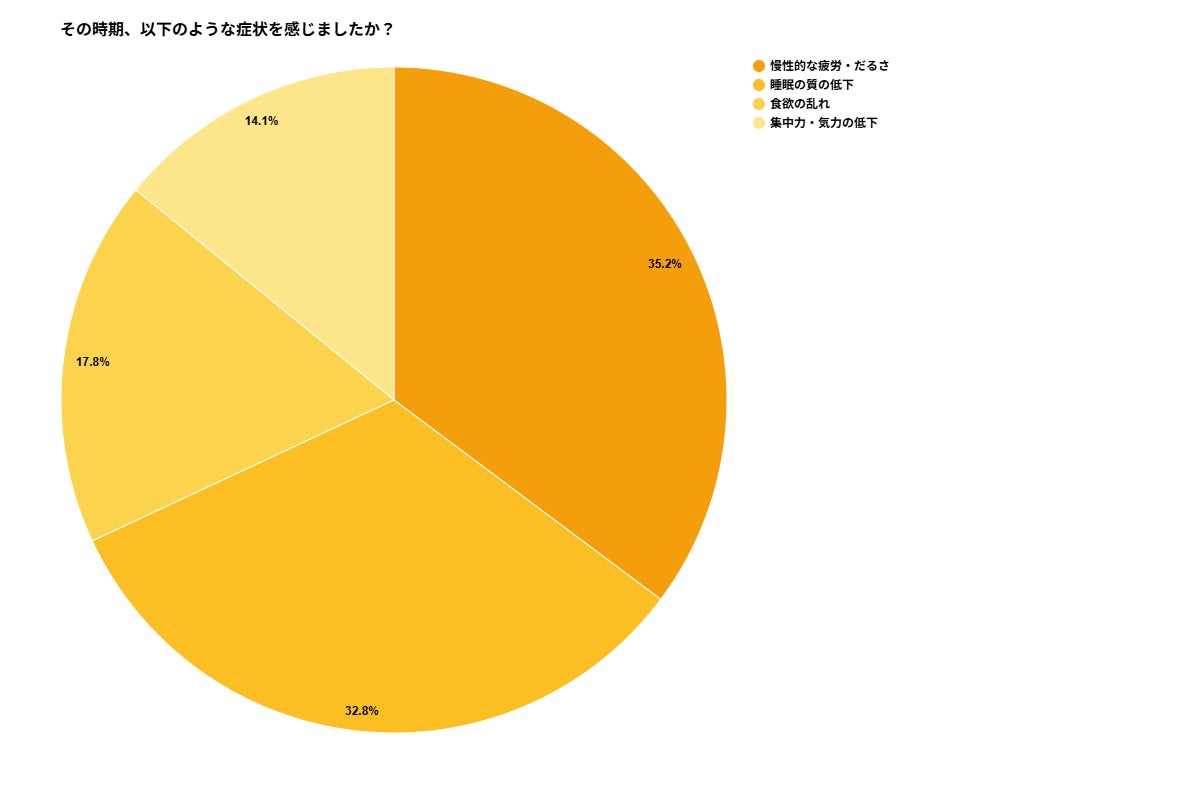
Chronic fatigue/lethargy (35.2%) and decreased sleep quality (32.8%) were the top responses. This highlights that disordered eating habits are affecting physical condition.
・Approximately 50% were unable to address disordered eating habits.
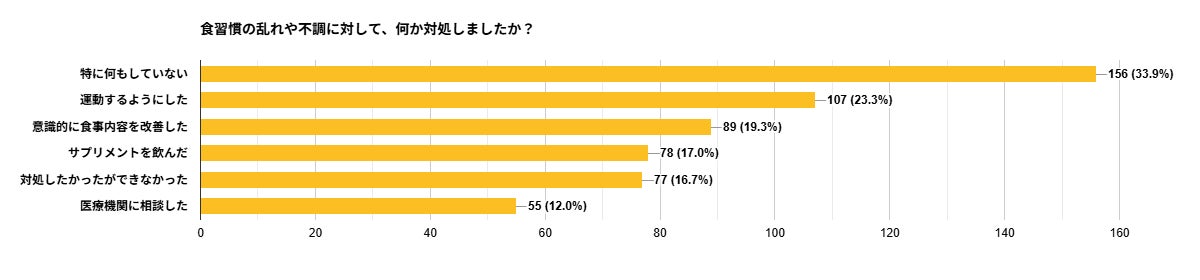
Combining "did nothing in particular" (33.9%) and "wanted to address but couldn't" (16.7%), it was revealed that half of the respondents were unable to take appropriate action.
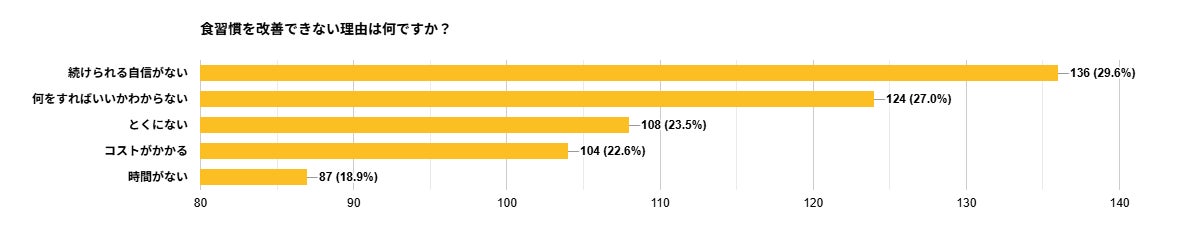
・The reasons for not being able to improve were "lack of confidence to continue" and "not knowing what to do," accounting for approximately 57%.
This highlights a "care gap" where individuals have the desire to improve but do not know how to take action.
Survey Details
"During new life phases, three out of four women experience disordered eating habits."
It was found that during this period when preparations for a new life begin, many women are affected by changes in their daily rhythms and stress, leading to fluctuations in their eating habits. In this survey, approximately 75% responded that they "felt some change in eating habits." Specifically, "craving sweets" (36.5%) was the most common, followed by "increased snacks and late-night meals" (28.0%), "felt nutritional imbalance" (24.1%), and "irregular meal times" (22.4%).
This indicates that stress and changes in daily rhythms due to a new life directly affect food choices and meal timing. A tendency to choose sweets and snacks due to increased stress was confirmed.
"Easy to get tired, can't sleep... Invisible ailments spreading during new life phases."
When asked about changes in physical condition during periods of disordered eating habits, "chronic fatigue/lethargy" (35.2%) and "decreased sleep quality" (32.8%) were the top responses, revealing that approximately 68% felt some change in their physical condition.
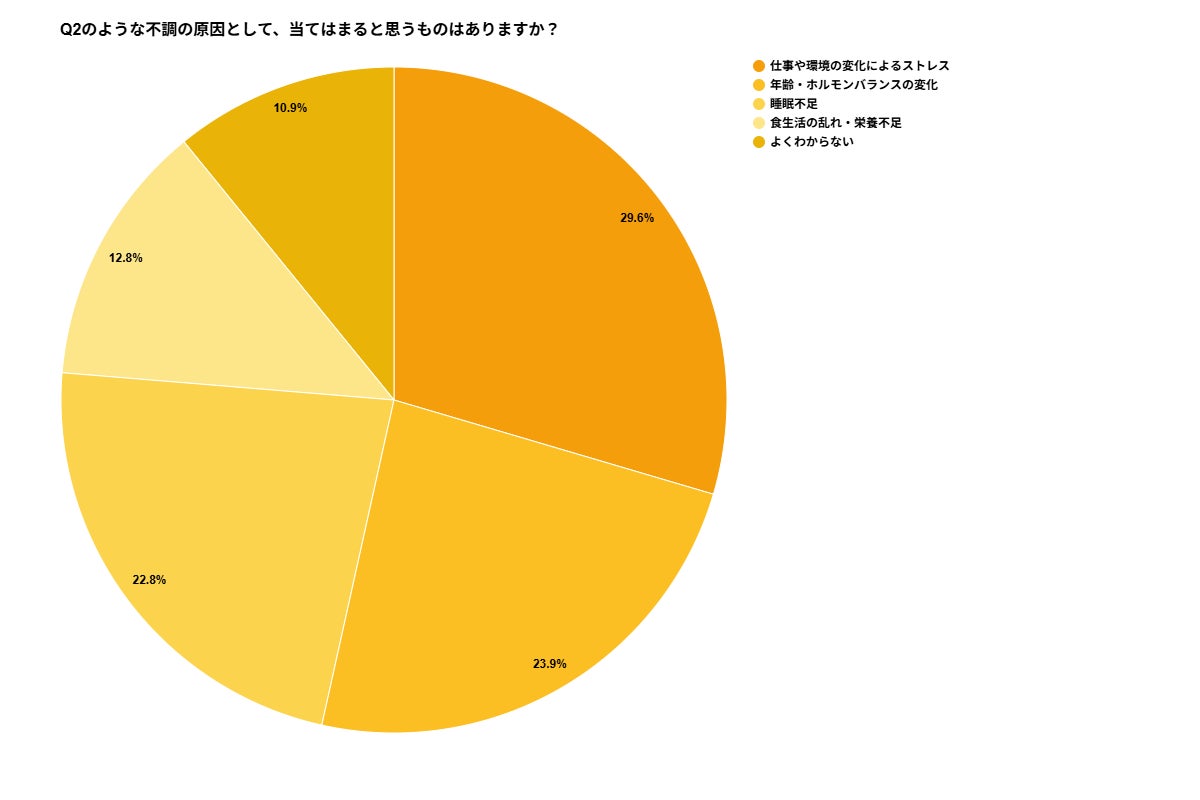
While "stress due to changes in work or environment" (29.6%) was the most common reason cited for poor health, approximately 23% were unable to identify the cause, combining "changes in age/hormone balance" (12.8%) and "don't know" (10.9%).
Especially for women in their 40s, this is a period when stress from a new life and hormonal changes due to menopause often overlap. Multiple ailments can occur simultaneously, but cases where the cause goes unnoticed and untreated are also observed.
"Approximately 50% unable to cope, only 19% of women took steps to improve their diet."
When asked how they dealt with disordered eating habits and poor physical condition, approximately half were unable to take sufficient action, combining "did nothing in particular" (33.9%) and "wanted to address but couldn't" (16.7%).
Furthermore, only 19.3% of women actually made conscious efforts to improve their diet, revealing a situation where dietary improvements, which should be accessible, are not being acted upon.
The reasons for not being able to improve were primarily "lack of confidence to continue" (29.6%) and "not knowing what to do" (27.0%), indicating that approximately 57% felt challenged by methods or consistency. Many women have the desire to improve their eating habits but are unable to take concrete action, suggesting a lack of support that leads to practical implementation.
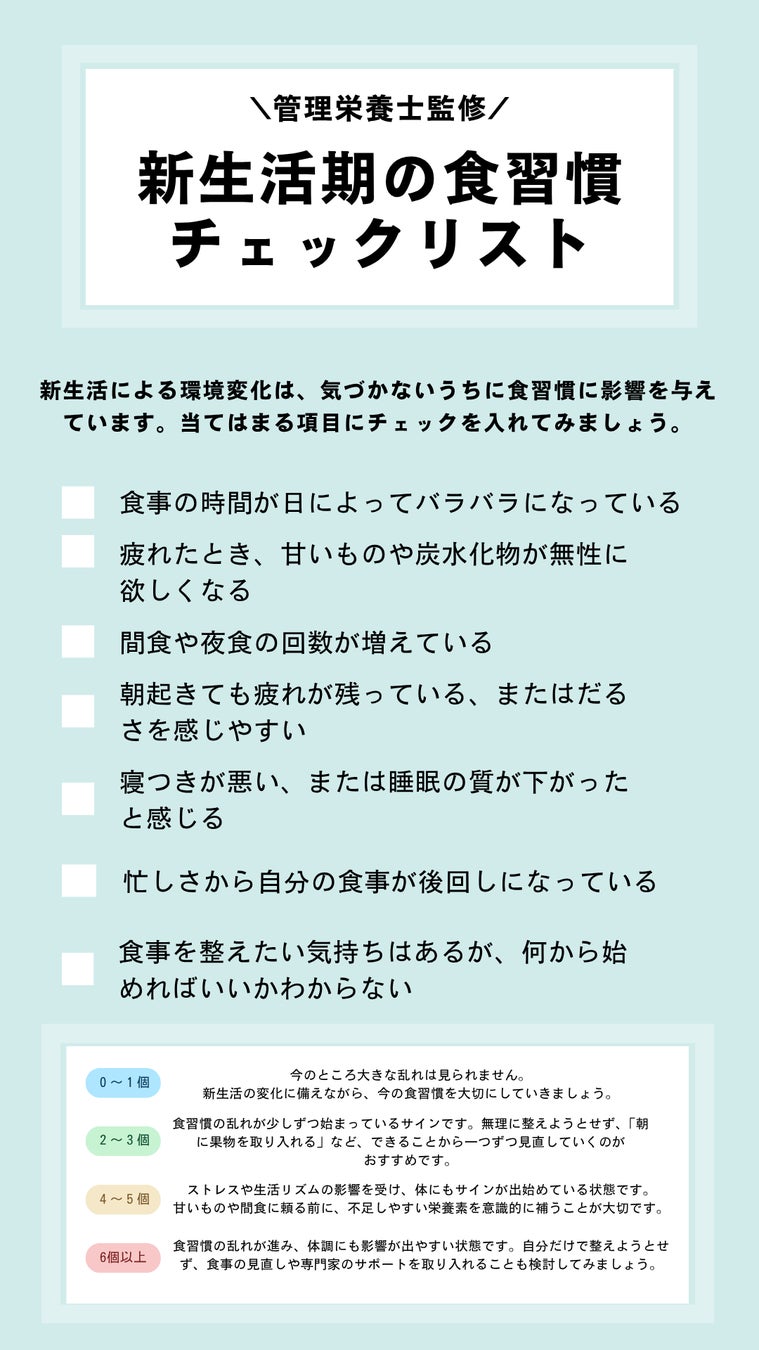
ーーSuch disordered eating habits often progress unnoticed. Let's review your eating habits during a new life phase with a checklist supervised by a registered dietitian.
Comment from CHONPS Registered Dietitian

Saori Ogawa (Registered Dietitian)
After graduating, she joined a contract catering company, where she was responsible for specific health guidance, menu creation, and cooking operations. She promoted health management through diet for companies and schools.
She then moved to a supplement and protein company for athletes, providing nutritional guidance to professional and amateur athletes, participating in the launch of the company's cafe, and managing menus and meals for athlete dormitories. Currently, as a freelancer, she provides dietary guidance services at CHONPS, as well as nutritional guidance and menu creation at unlicensed daycare centers, and works as an instructor for nutrition courses and cooking classes. Furthermore, she gives lectures at metropolitan elementary and junior high schools, provides specific health guidance, and writes columns, active in a wide range of fields.
April is a time when everyone is prone to stress, not only due to changes in a new life but also fluctuations in temperature and environment. As a result, many people crave sweets, increase their snacks and late-night meals, and experience fatigue and decreased sleep quality.
These ailments are not just a matter of willpower; they are also a sign that vitamins and minerals in the body are being depleted due to stress. First, try incorporating fruit into your morning routine. If that's difficult, simply adding commercially available lemon juice to water can be an easy way to start.
You don't have to drastically change your current diet; simply being a little conscious of supplementing the necessary nutrients during this period can help balance your body and mind. Let's find a way to adjust that suits you and can be continued without strain.
"My own meals" are being neglected amidst busyness.
April is a period of significant change in life, such as returning to work or changes in family circumstances. This survey revealed that even such "positive changes" can unknowingly disrupt eating habits and affect physical condition.
It's not that "I ate more snacks because I lack willpower" or "my diet was disordered because I was lazy." It's a natural reaction common to many women that stress from environmental changes alters food choices and daily rhythms. Yet, approximately 50% are unable to cope, and only 19% actually took steps to improve their diet. This highlights the current situation where women prioritize their families amidst busyness, and "their own meals" continue to be neglected.
CHONPS supports busy women in building sustainable eating habits with the guidance of registered dietitians. Let's work together to build a dietary foundation that is resilient to any environmental changes.
CHONPS offers personalized meal plans.

CHONPS provides an online dietary guidance service supervised by registered dietitians. It offers personalized meal plans tailored to individual health conditions and food preferences, along with daily dietary advice, supporting both food waste reduction and healthy eating habits. Our exclusive registered dietitians are carefully selected with a 6% hiring rate from a pool of 7,500 registered dietitians. The application is entirely developed in-house, thoroughly pursuing ease of use and sustainability. By involving registered dietitians in app development, dietary guidance, and support, we ensure a reliable approach and long-term dietary improvement.
【Survey Overview】
Target: Women aged 20-55 (460 respondents in this survey)
Method: Internet research
Period: March 2026
Conducted by: Nwith Inc.
【Contact for this matter】
CHONPS: https://chonps.jp/
For inquiries regarding interviews and publications, please contact:
Nwith Inc. Public Relations
Email: info@n-with.com
TEL: 03-6899-5499
FAQ
How many women experience disordered eating habits during new life phases?
According to a survey by Nwith Inc., approximately 75% of women entering a new life phase experience disordered eating habits.
What health issues can disordered eating habits lead to?
About 68% of women experience some form of physical change, such as chronic fatigue/lethargy (35.2%) and decreased sleep quality (32.8%).
What are the main reasons for not being able to improve eating habits?
The main reasons are 'lack of confidence to continue' (29.6%) and 'not knowing what to do' (27.0%), with about 57% feeling challenged by methods or consistency.