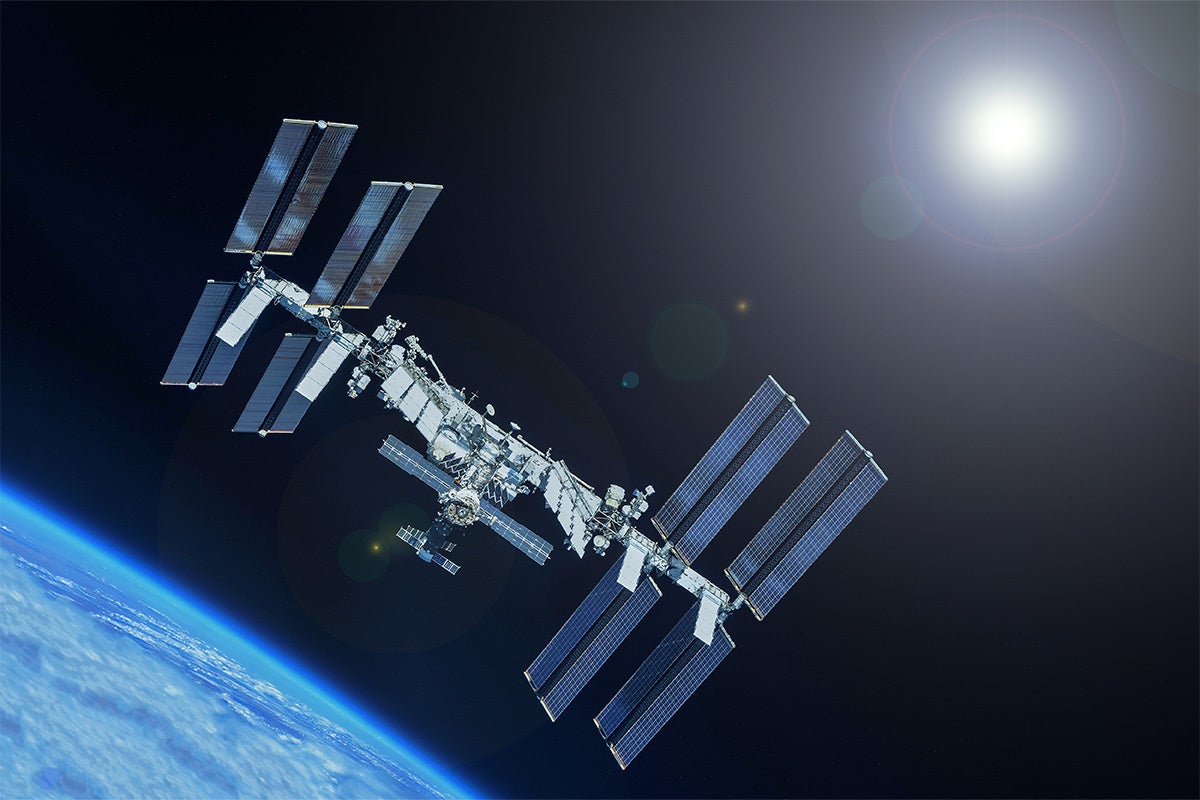
Beyond the thin layer of atmosphere that envelops our planet lies the captivating yet harsh environment of space: microgravity, extreme temperature fluctuations, and low-pressure conditions reaching ultra-high vacuum. For researchers, these are not obstacles but rather valuable fields for discovering new scientific and engineering principles. Long before experiments are launched aboard rockets or the International Space Station (ISS), their success is already being determined on the ground. It is the ability to replicate the vacuum conditions of space in laboratories on Earth that allows for pre-verification of all variables and a thorough understanding of every process before sending them into the real cosmos. At the heart of this "creation of space on Earth" lies an invisible yet indispensable element: vacuum technology.
From Ground to Orbit Imagine a control room monitoring experiments aboard the International Space Station (ISS). Streams of data flow across monitors, tracking in real-time how samples of conductive metals melt, cool, and behave under microgravity. On Earth, attempting the same experiment would be influenced by gravity at every turn. Convection would stir the molten metal, heavier components would sink, and lighter ones would rise. Consequently, the pure behavior inherent to the material would be obscured by gravity. In contrast, the microgravity environment in orbit eliminates these influences entirely. This allows for a more accurate observation of how materials transfer heat, how they flow, and how they solidify. The insights gained from this are not merely a collection of data; they lead to a valuable understanding of material science that forms the basis for high-performance components in aerospace, efficient turbines, and even advanced additive manufacturing.
The Journey Begins in the Ground Lab Regardless of the experiment, its journey begins in a terrestrial laboratory before being sent into space. Researchers test their experimental setups under stringent conditions, simulating the actual space environment, reaching ultra-high vacuum (UHV) levels of 10⁻⁸ hPa (mbar) or even lower. Vacuum technology is indispensable for creating such environments. Integrated solutions for space research combine high-performance turbomolecular pumps, precise control systems, and specially designed vacuum chambers capable of replicating orbital conditions with high accuracy and over extended periods. To reproduce the extremely clean vacuum environment achievable in space on Earth and to precisely regulate experimental conditions, meticulous control over every detail is essential. This includes minimizing gas leaks to the utmost, maintaining uniform pressure, controlling temperature fluctuations, and creating an environment where sensitive instruments can operate stably. Therefore, the vacuum equipment used must be optimized for ultra-low background contamination. Furthermore, it is crucial to incorporate heating and cooling functions to simulate the significant temperature changes encountered in orbit. To mimic the "darkness" of space on Earth, high-quality surface finishes and light-absorbing coatings may also be applied. By preparing such vacuum environments, researchers can confidently advance their experimental preparations before tackling the "near-perfect void" of actual space. After these conditions are replicated by vacuum technology, metal samples and other materials used in the experiment are placed within the UHV vacuum chamber, and it is verified in advance whether the intended measurements can be performed correctly. Without a vacuum, these ground-based tests would be meaningless, as air molecules would interfere and distort the measurement results. Under vacuum, substances reveal their truest behavior.
FACT BOX
- Source: PR TIMES
- Category: research