A research team including Hyuga Hirano (United Graduate School of Agricultural Science, Tokyo University of Agriculture and Technology), Takashi Kikuchi (Application Lab, Product Division, Rigaku Corporation, a Rigaku Holdings group company), Futa Sakakibara (Technical Advisor, R&D Support Division, Asterism LLC), and Yoshinori Murai (Senior Researcher, Department of Botany) of the National Museum of Nature and Science (Director: Ken-ichi Shinoda), has successfully determined the structure of over 10 types of phenolic compound glycosides in alpine plants, which are difficult to secure for research due to their small size and ethical/regulatory constraints, by developing a trace component analysis method. Specifically, they succeeded in isolating components from just 2 grams of flowers of the alpine plant Diapensia lapponica subsp. obovata (Diapensiaceae family), crystallizing them, and then determining the structure of each contained component by appropriately utilizing analytical methods such as Single-Crystal X-ray Diffraction (SC-XRD) and Electron Diffraction Structure Analysis (MicroED). This is a pioneering research example of determining the structure of numerous components from such a minute amount of sample in wild plants, including alpine plants. This technology can be applied to exploratory research of untapped resources in a wide range of fields, including not only plant chemical components but also science, agriculture, and pharmacy. These research results were published online in the international chemical journal "Journal of Molecular Structure" on February 22, 2026. Furthermore, research results using related technologies were also published in the international biochemical journal "Biochemical Systematics and Ecology" and the domestic agricultural industry journal "AgriBio".
【Research Highlights】
・ Established a method for isolating and crystallizing trace components.
・ Successfully performed structural analysis by appropriately utilizing analytical methods such as Single-Crystal X-ray Diffraction (SC-XRD) and Electron Diffraction Structure Analysis (MicroED) on the crystallized components.
・ Succeeded in structural analysis of phenolic compounds from alpine plants with limited sample quantities, revealing that Diapensia lapponica subsp. obovata flowers contain diverse phenolic compounds.
・ In related research during the development of the method, components related to the chemical adaptation mechanisms and phylogeny of plants were also discovered.
1. Research Background and Results
Alpine plants distributed in Japan's alpine and subalpine zones are known to adapt to harsh environmental stresses such as UV radiation and low temperatures by synthesizing and accumulating chemical components called phenolic compounds. Many of these phenolic compounds are also known to be potential natural resources, and research is particularly anticipated for alpine plants, where knowledge is limited compared to lowland areas. On the other hand, alpine plants grow in harsh environments, making their plant bodies small, and their distribution is limited to high-altitude regions, making them rare. Even for academic research, it is necessary to minimize anthropogenic disturbance associated with collection due to legal permits and ethical considerations, thus limiting the amount of sample available for structural analysis of the aforementioned components. Our research team has been developing methods for component analysis from trace samples, and this time, using only a tiny amount of Diapensia lapponica subsp. obovata flowers as a research sample, we developed a method to optimize the crystallization of each contained component after isolation/purification by existing analytical methods such as High-Performance Liquid Chromatography (HPLC) and molecular weight measurement by Quadrupole Time-of-Flight Mass Spectrometry (QTOF-MS). By further utilizing analytical methods such as Single-Crystal X-ray Diffraction (SC-XRD) and Electron Diffraction Structure Analysis (MicroED), which enable structural determination from crystals approximately 1/100th the size of conventional ones, we succeeded in structural analysis of trace components from extremely small samples. This research revealed that the flowers of Diapensia lapponica subsp. obovata, which grows in harsh alpine environments, contain diverse phenolic compounds, including flavonoids such as quercetin glycosides, which have recently attracted attention as functional ingredients with health benefits.
Furthermore, in the process of developing the aforementioned technology, numerous components were isolated and their structures successfully analyzed from Diapensia lapponica subsp. obovata leaves, leading to the discovery of components contributing to UV protection and antioxidant activity. It was also found that the accumulation of some of these components shows geographical differences across Honshu (central Japan) to Hokkaido in the Japanese archipelago, with these results published in "Biochemical Systematics and Ecology". This current research is an improvement on that previous work. Additionally, the domestic agricultural industry journal "AgriBio" also summarized and introduced the key points of this research in an article.
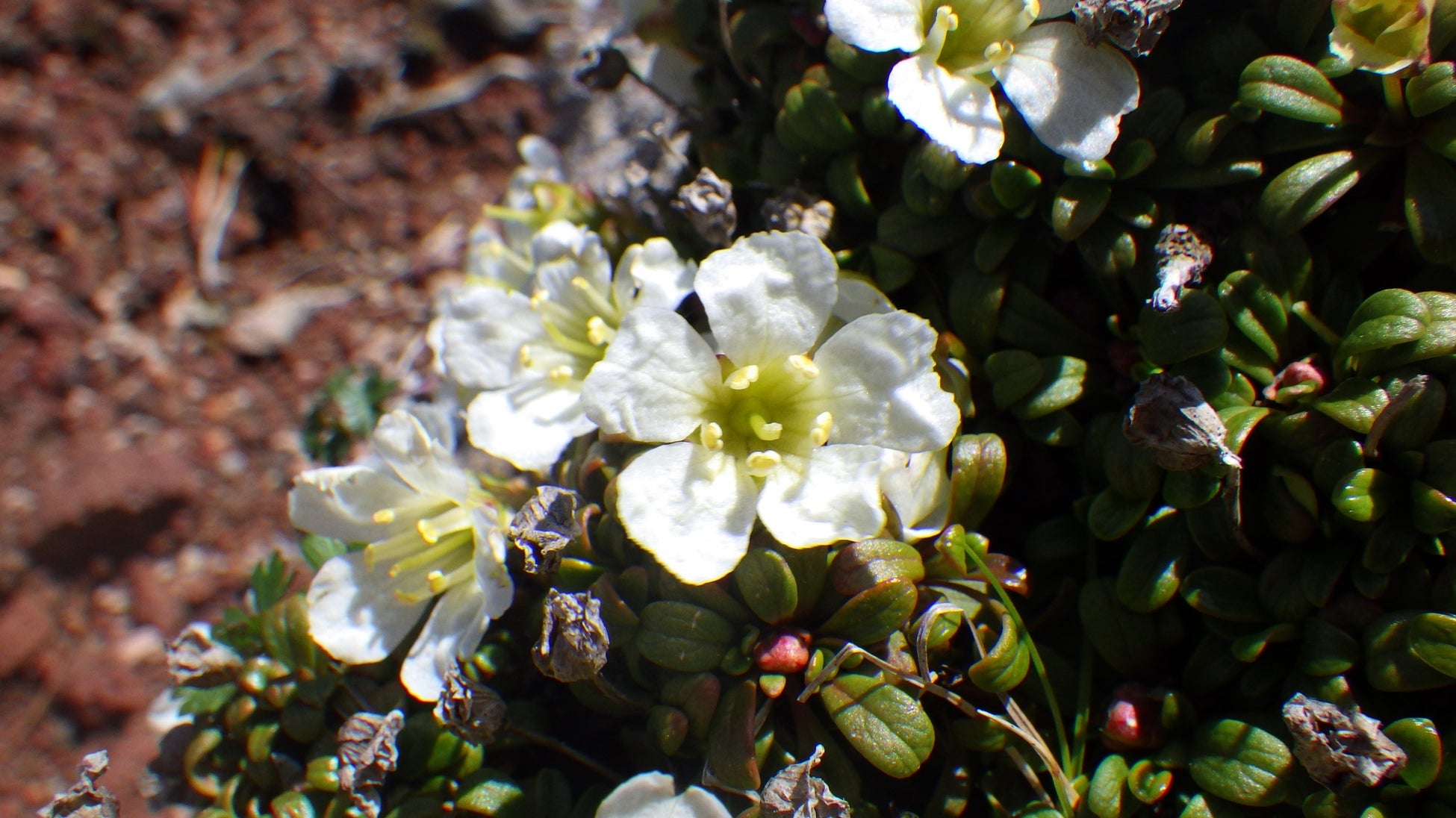
Figure 1: Diapensia lapponica subsp. obovata in bloom
It bears plum-like flowers on rocky alpine terrain. In Japan, it is distributed from central Honshu to Hokkaido.
Figure 2: Main analysis flow in this research
2. Notes
High-Performance Liquid Chromatography (HPLC):
An apparatus that can efficiently separate and detect components in a liquid by utilizing differences in interaction between the mobile phase (solvent) and the stationary phase (column). The preparative HPLC system in Figure 2 is for fractionating (separating) each component.
Quadrupole Time-of-Flight Mass Spectrometry (QTOF-MS):
A mass spectrometer that combines different mass spectrometry technologies, quadrupole and time-of-flight, offering high mass accuracy, resolution, and sensitivity. The LC-QTOF-MS in Figure 2 is an HPLC connected to a QTOF-MS.
Single-Crystal X-ray Diffraction (SC-XRD):
A method that directly determines the three-dimensional structure of sample molecules by irradiating a crystal sample with an X-ray beam and analyzing the resulting diffraction pattern.
Electron Diffraction Structure Analysis (MicroED):
A method that uses an electron beam instead of X-rays in SC-XRD, enabling the structural determination of sample molecules from much smaller, sub-micrometer sized crystals.
3. Future Outlook
The analytical method developed in this research utilized Diapensia lapponica subsp. obovata, which is relatively widely distributed among alpine plants. This method is currently being applied to analyze rarer plants, such as Japanese endemic species and endangered species. It is expected to reveal trace components of plants that were previously difficult to analyze and to be utilized in the exploration of useful resource substances. Furthermore, this technology is expected to be an important technique for obtaining fundamental information for basic and applied research, applicable across a wide range of fields including science, agriculture, and pharmacy.
4. Published Papers
Title:
Sustainable micro-scale identification of phenolic glycosides in alpine flower through single-crystal structure analysis
Authors:
Hyuga Hirano, Takashi Kikuchi, Futa Sakakibara, Yoshinori Murai
Journal:
Journal of Molecular Structure, 145740
(Online publication on February 22, 2026, scheduled for print in July 2026)
【Related Paper】
Title:
Phenolic compound diversity reflecting phylogeographic structure of Diapensia lapponica subsp. obovata (Diapensiaceae) populations in Japan
Authors:
Hyuga Hirano, Toshiyo Kato, Keiichi Noguchi, Hisahiro Kai, Takuro Ito, Takashi Kikuchi, Futa Sakakibara, Yoshinori Murai
Journal:
Biochemical Systematics and Ecology, 125: 105168
(Online publication on November 20, 2025, scheduled for print in April 2026)
【Related Article】
Title:
Structural analysis of trace phenolic glycosides in alpine plants
Authors:
Hyuga Hirano, Takashi Kikuchi, Futa Sakakibara, Yoshinori Murai
Journal:
AgriBio, 10(3): 53-56 (Published in March 2026 issue)
This research was conducted as part of JSPS KAKENHI (JP23K05503), Grant-in-Aid for JSPS Fellows (JP24KJ1011), and the National Museum of Nature and Science's comprehensive research "Science of Extreme Environments", among others.
FACT BOX
- Source: PR TIMES
- Category: 学術研究,バイオテクノロジー,製薬