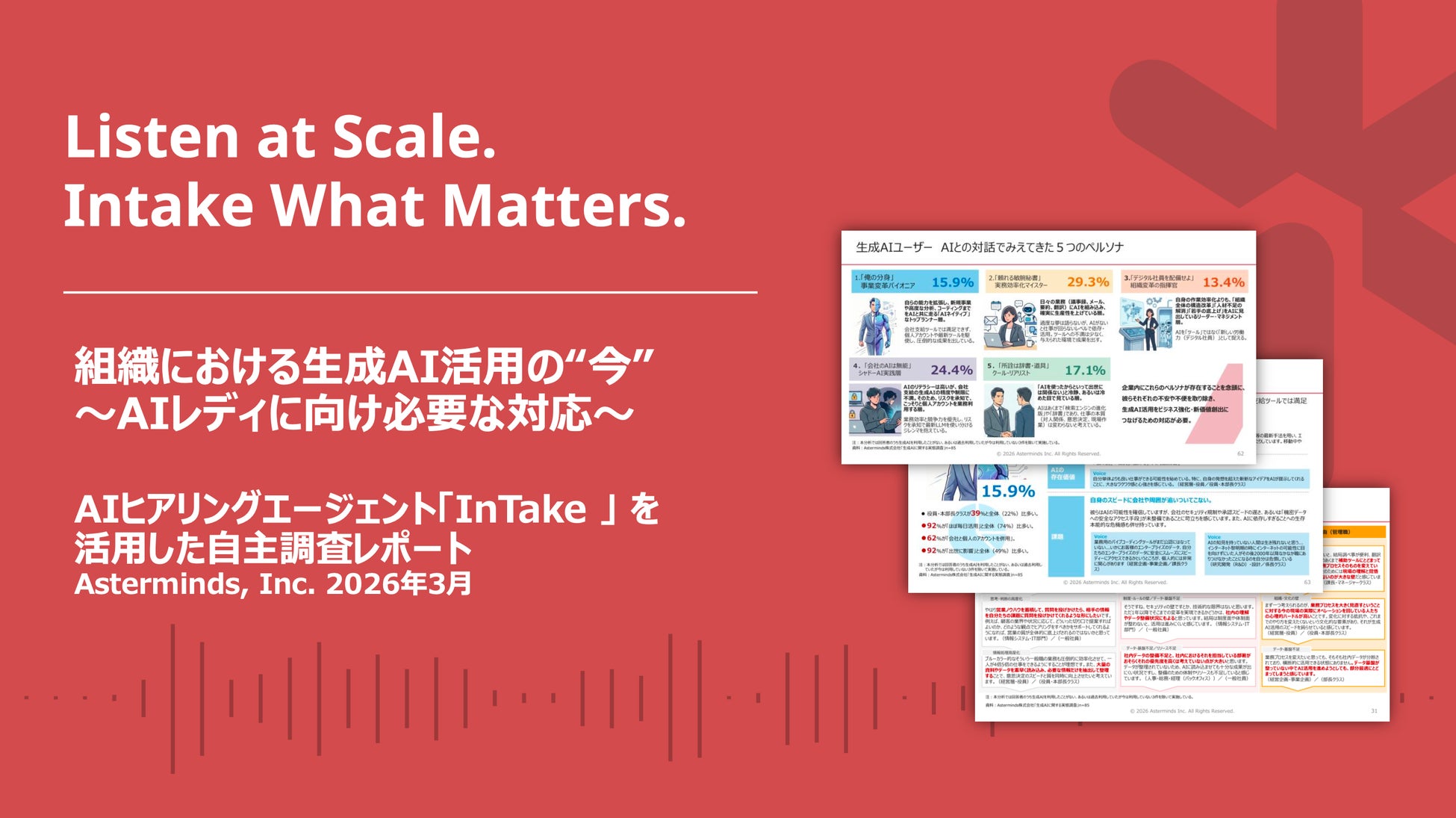
Asterminds株式會社(總公司:東京都港區,代表取締役:本多真二郎)以大型企業員工、生成AI使用者為中心,共85名對象,運用本公司提供的AI面談代理「InTake」進行了「生成AI活用實態與組織課題相關調查」,並公開了彙整結果的報告書。
本次調查凸顯了一個新的商業課題,即生成AI的使用僅在個人的PC螢幕這個「密室」中完成,未能回歸組織知識,形成「單打獨鬥DX」(Solo DX)。
調查實施背景與「AI面談」的優勢
傳統的選擇題問卷雖然能了解生成AI的「使用頻率」和「導入工具」,卻無法得知使用者「真正的煩惱及其背後的期待」,以及「其背後的限制或規則」。
若想透過訪談來了解這些深層資訊,由於日程協調和人力確保需要耗費時間與成本,調查規模往往受限,難以確保意見的代表性,這是實際情況。
因此,本次調查活用了本公司提供的AI面談代理「InTake」。透過AI根據回答者的回答內容,即時進行「深入追問」,收集到了以往手法難以取得的真實心聲與洞察,並以大量的自由記述數據形式呈現。
調查結果亮點
1. 發現新商業課題「單打獨鬥DX」
調查結果顯示,部分高績效者雖然憑藉個人熱情提升了生產力,但其知識卻成為黑盒子,未能轉化為組織的整體力量。本公司將此狀態定義為「單打獨鬥DX」。
<img src="https://prcdn.
常見問題
What is "Solo DX"?
"Solo DX" refers to a new business challenge where the utilization of generative AI is confined to an individual's personal computer, creating a 'black box' of knowledge that is not shared or integrated into the organization's collective intelligence.
What was the purpose of the survey conducted by Asterminds Inc.?
The survey aimed to understand the actual status of generative AI utilization among users, particularly those in major corporations, and to identify organizational challenges associated with it, leading to the discovery of the 'Solo DX' issue.
What is "AI Interview" and how was it used in this survey?
"AI Interview" is an AI agent called "InTake" developed by Asterminds Inc. It was used to conduct in-depth interviews by asking real-time follow-up questions based on respondent answers, allowing for the collection of deeper insights and genuine opinions that traditional surveys often miss.
What are the limitations of traditional surveys that this AI interview method overcomes?
Traditional surveys often fail to capture the nuances of user experiences, such as true dissatisfactions, underlying expectations, and contextual constraints. Conducting in-depth interviews manually is time-consuming and costly. The AI interview method overcomes these by efficiently gathering rich, qualitative data through automated, intelligent follow-up questions.
What is the significance of the "Solo DX" finding?
The "Solo DX" finding highlights a critical issue where individual productivity gains from generative AI are not benefiting the organization as a whole. It points to a need for strategies to integrate individual AI knowledge and best practices into organizational learning and operations.