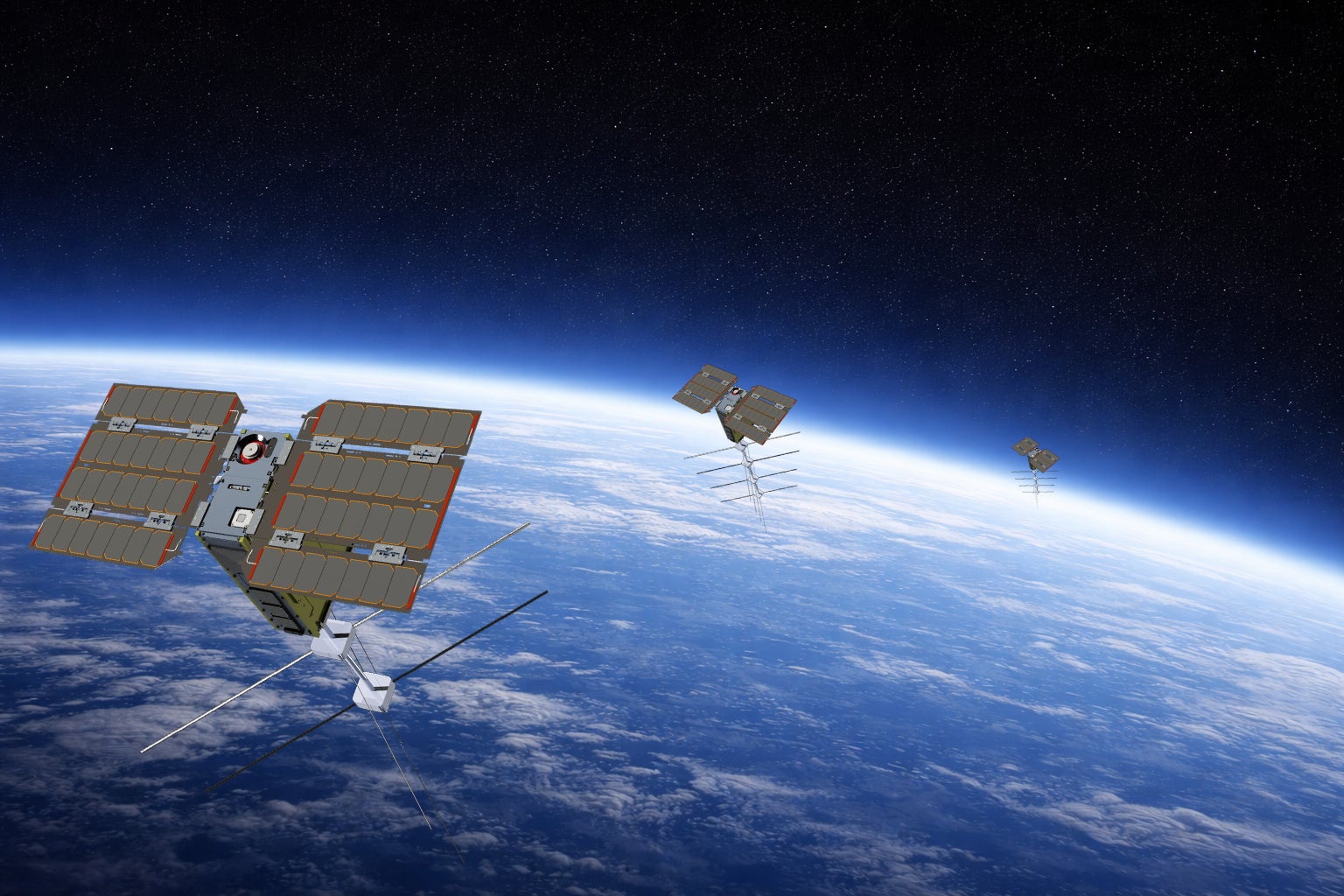
ArkEdge Space Co., Ltd. (Headquarters: Koto-ku, Tokyo; Representative Director & CEO: Takayoshi Fukuyo; hereinafter referred to as "ArkEdge Space"), a provider of comprehensive solutions from planning and design to mass production and operation of super small satellite constellations, is pleased to announce the successful launch of its super small satellite AE1a and the commencement of initial checkout through communication establishment via test radio waves.
AE1a was launched on March 30, 2026, at 20:02 JST aboard SpaceX's Falcon 9 rocket "Transporter-16." After being deployed into its designated orbit, communication was confirmed via test radio waves from our ground station. AE1a will undergo initial operations for several months, aiming to achieve its success criteria.
This satellite is a result of NEDO (New Energy and Industrial Technology Development Organization) subsidy projects: "Space Industry Technology Information Infrastructure Development and R&D Project (Support for Development and Demonstration of Universal Bus for Super Small Satellites)" / "Development and Demonstration of a 6U Standard Universal Bus and its Production/Operation System for Rapid and Efficient Multi-Type, Multi-Unit Production," and the NEDO commissioned project "Growth Program for Critical Security Technologies / Development and Demonstration of Maritime Situation Awareness Technology by Satellite Constellation for Maritime Communication Satellites."
As a result of these programs, we have achieved simultaneous operation of 8 super small satellites (9 in total). Through collaboration with our two domestic ground stations and overseas ground stations, each satellite continues stable operations, consistently generating results.
About AE1a Appearance of AE1a
AE1a is a satellite aimed at developing and demonstrating technology for wide-area, real-time tracking and communication of vessels to realize the digitalization of the maritime domain. It adopts the "Large Antenna Mount Model" of our developed 6U satellite universal bus, and in addition to demonstrating deployment antennas for the VDES (VHF Data Exchange System) business, it will also improve and demonstrate elemental technologies for VDES receivers.
In conjunction with AE1d (operational since January 2025) and AE3Va (operational since June 2025), which are already in orbit, we will proceed with demonstrations in wide maritime areas as a 3-satellite constellation.
With the addition of the AE1a satellite, in addition to previous reception demonstrations, transmission demonstrations from the satellite will be possible for the first time. This will further enhance and expand the scope of VDES demonstrations for maritime digitalization, and is expected to contribute to use case demonstrations in the actual maritime field.
Progress of VDES Demonstration The AE3Va satellite, launched earlier, is continuously acquiring AIS signals. We are accumulating reception data in multiple sea areas, including waters near Japan and congested shipping lanes on important sea routes, and are cross-referencing and analyzing the acquired data. AIS Signal Reception Data by AE3Va
In the future, the demonstration will progress from reception-centric demonstrations to bidirectional communication demonstrations, including transmission from the satellite. This will enable direct delivery of necessary information to vessels from the satellite, advancing verification for actual operations. The scope of VDES demonstrations will be further expanded, and contributions to specific use case verifications in the maritime field are also expected.
About ArkEdge Space Co., Ltd. ArkEdge Space is a space startup company that provides comprehensive solutions from planning and design to mass production and operation of super small satellite constellations.
Aiming to "realize a safer and richer future for people through satellites," we will build super small satellite constellations compatible with Earth observation, maritime satellite communication (satellite VDES), optical communication, and low-orbit satellite positioning. Furthermore, we will promote the development and utilization of space to meet diverse mission needs, such as building satellite infrastructure for lunar activities and deep space exploration.
Headquarters Location: 3F Dome Ariake Headquarter, 1-3-33 Ariake, Koto-ku, Tokyo Representative Director & CEO: Takayoshi Fukuyo Established: July 2018 WEB: https://arkedgespace.com/
FACT BOX
- Source: PR TIMES
- Category: News