Why AI Implementation Fails: Japan's EVΛƎ Proposes the Solution of "Pre-design".
Make Japan's AI design guideline 'EVΛƎ', which solves AI implementation failures with 'pre-design', a global standard.
📋 Article Processing Timeline
- 📰 Published: April 1, 2026 at 09:00
- 🤖 AI Analyzed: June 2, 2026 at 12:57 (1491h 57m after Published)
We are participating in April Dream, an initiative to share dreams on April 1st. This press release is the dream of Amulet Plus LLC.

Our Dream
Our dream is to make EVΛƎ, an AI design guideline originating from Japan, a new global standard trusted worldwide.
The more AI evolves, the freer people become.
We believe this to be true.
Ideally, AI should be a tool that expands human potential and supports creativity. However, in reality, it is often difficult to understand how AI makes its decisions, leading to situations where the final confirmation, explanation, and responsibility are concentrated on humans.
That is why we believe it is necessary to design AI not only for enhanced performance but also to embed responsibility and transparency directly into the AI's decision-making process from the outset.
The Perspective Society Needs Now
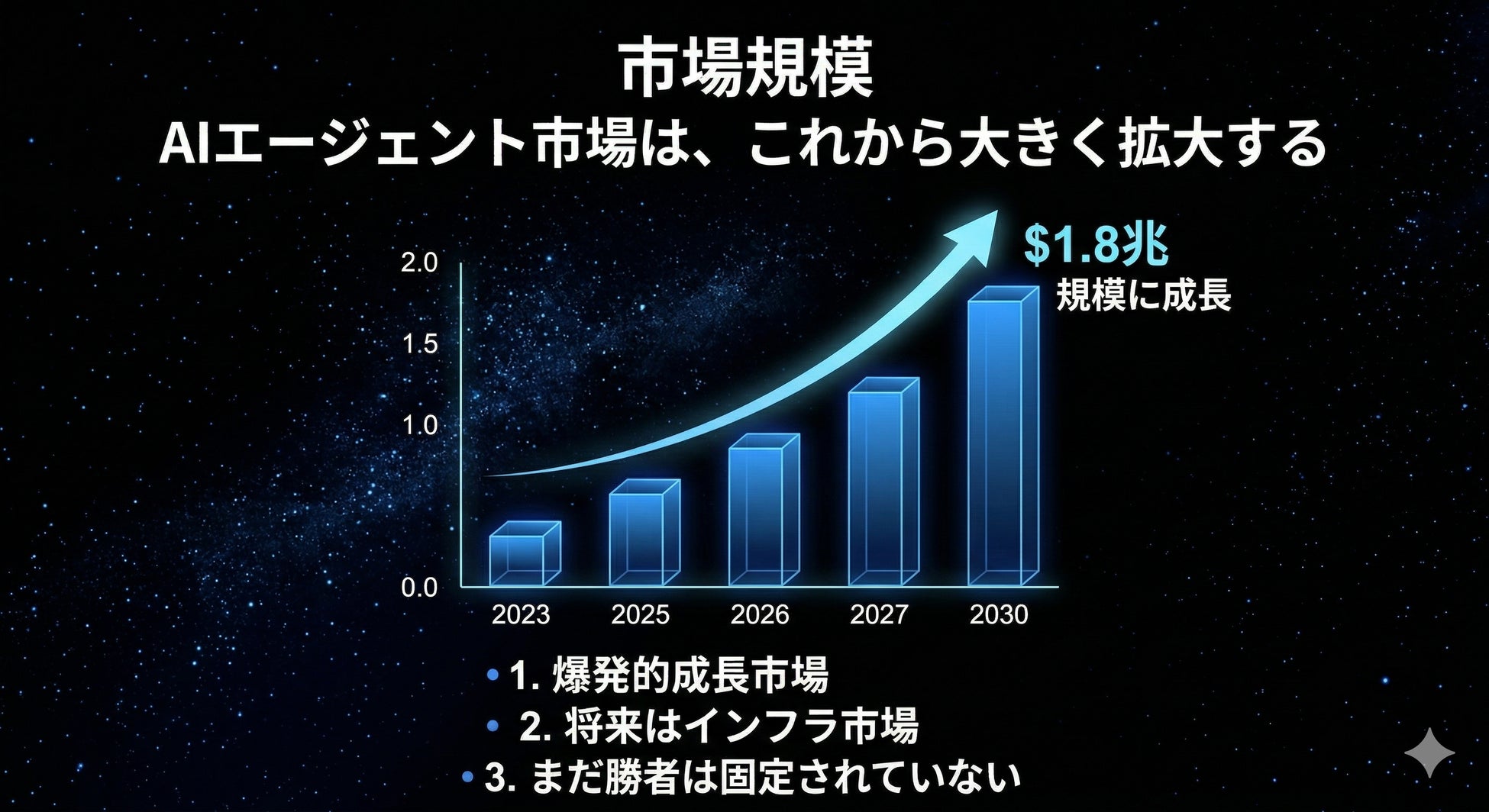
In recent years, AI utilization has rapidly expanded. Especially with the increasing use of AI agents, new challenges and troubles are becoming apparent in the field.
-
Even if AI outputs appear plausible, the reasoning behind its decisions is difficult to understand.
-
Humans taking on the burden of post-hoc confirmation, correction, and explanation actually increases their workload.
-
When problems arise, it becomes ambiguous who made the decision, where, and how.
These situations cannot be resolved by mere operational adjustments. We believe the underlying issue is that the 'decision-making structure' is not sufficiently designed before the AI operates.

The Core of the Problem: A 'Blank Area' the World Has Yet to Fully Articulate
Many people perceive AI problems as being due to the 'black box' nature, making it incomprehensible.
However, that is not the whole story.
*A 'black box' refers to a state where it is difficult to understand the reasons behind an AI's decision, and humans cannot trace the basis of its judgment.
The significant challenge facing current AI governance is the lack of adequate means to structurally define 'who decides, when, and where' before the AI is executed.
Research into 'Explainable AI (XAI)' is progressing worldwide. This is an important step forward. However, much of it focuses on explaining what happened after the fact, and does not sufficiently address establishing responsibility and authority before the decision is made.
*AI governance refers to the mechanism for managing who is authorized to make decisions, under what conditions, and to what extent when using AI.
Who Decides (Authority)
Where Can It Be Stopped (Constraints)
Who Bears Responsibility (Observation)
The lack of structuring these elements before AI operation.
We believe this uncharted design territory is a significant void in the AI society and one of the reasons why ambiguous responsibilities are concentrated on humans.

We are confident that EVΛƎ is the final piece of the puzzle to fill this global 'void'.
What We Aim For
Amulet Plus LLC's proposed 'Design by Transparency' is a philosophy that defines the necessary elements for decision-making as a structure before the AI operates, rather than adding explanations after the AI has acted.
At its core is the Japanese design guideline EVΛƎ.
EVΛƎ clarifies the following elements before AI makes a decision or executes an action:
Intent: The purpose of the decision.
Authority: Who holds the decision-making power.
Constraint: What must not be done.
Observation: How to record and leave evidence of responsibility.

From 'Capable of Execution' to 'Responsible' AI
Current AI agents, while capable of performing tasks, have ambiguous decision-making criteria and unclear lines of responsibility. EVΛƎ adds four layers – 'Intent, Authority, Constraint, and Observation' – before the AI begins operation. This imbues the AI with 'transparency determined before execution,' not an excuse made after the fact. It resolves the anxiety of AI acting autonomously and achieves a design that humans can trust.
For example, in fields requiring high reliability such as healthcare, education, finance, and administration, 'who approves the decision, where it can be stopped, and how it is recorded' are more important than 'the AI making the decision'.

By disseminating this concept throughout society,
we aim to make 'AI that operates after designing responsibility,' rather than 'AI that explains after outputting,' the new norm.
[Experience EVΛƎ Implementation: Interactive Demo Available]
■ Demonstrating Versatility Across Domains (Interactive Simulator) Experience 'responsible decision-making' behavior in various fields requiring high reliability, such as healthcare, education, autonomous driving, and space rockets.
https://evae-design-by-transparency-demo.vercel.app/demo
■ Real-world Behavior (Financial API Integration Demo) Confirm transparent, real-time decision-making processes through actual API integration in the financial sector.
https://evae-financial-demo.vercel.app/
■ Core of the Design Philosophy (GitHub & Core Simulator) The core of the design, the 'Conscious Loop,' is released under the MIT license. You can directly verify the structure that eliminates black boxes.
GitHub:
https://github.com/hiroyokoki/evae-conscious-loop
Core Structure Simulator:
https://evae-conscious-loop.vercel.app/
■ Theoretical and Rights Backing
Academic Paper (DOI):
https://doi.org/10.5281/zenodo.18115658
Delivering Trusted Design from Japan to the World
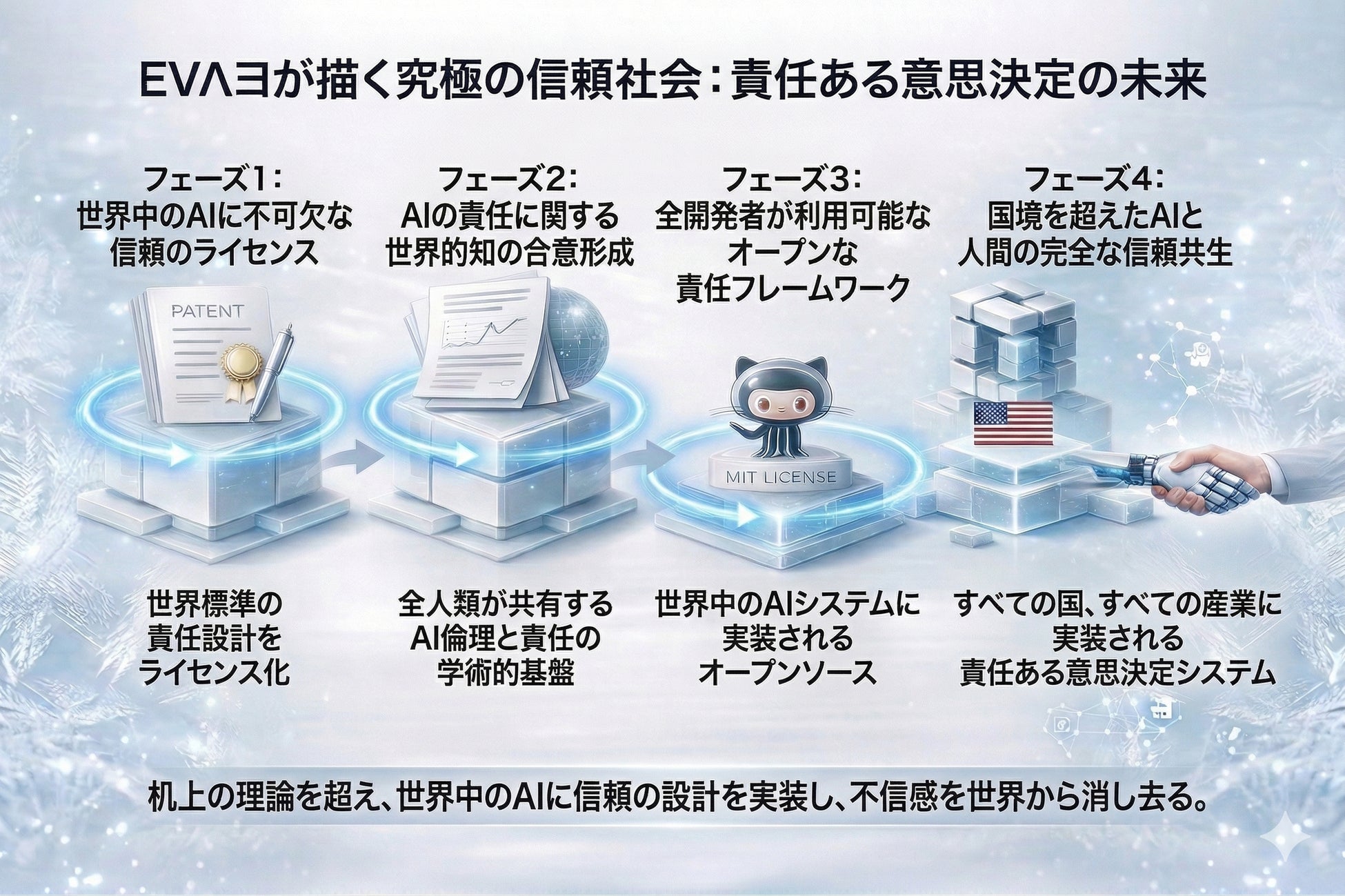
This dream is not merely an ideal. By 2030, we aim to permeate the 'Design by Transparency' philosophy into over 50% of major AI systems operating globally, making it the de facto standard for trust.
Intellectual Property Strategy | Patenting Unique Japanese Design
Patent pending (2025-160873). Protecting 'structured decision-making' as a Japanese standard.
Global Demonstration | PoC Launched in US Market
Partnership with a US startup to begin implementation verification in real-world scenarios. Moving from theory to practice.
International Co-creation | Network of Theory and Trust
Promoting joint research with overseas AI researchers. Building an 'open standard' that eliminates black boxes.
Vision | Making Japanese Design Philosophy Global Infrastructure
Transforming the meticulous 'Japanese Design Guideline' into a Trust Foundation upon which AI worldwide will stand.
Not just making AI smarter,
but ensuring AI is trusted and used responsibly within society.
We want to deliver this new norm from Japan to the world.
Finally

Let's not let AI end as just a convenient tool.
Let's evolve AI into a presence that humans can use with peace of mind, where accountability is clear, and with which we can work together under trust.
This is the future Amulet Plus LLC is seriously committed to realizing.
Through the Japanese philosophy of 'Design by Transparency' and the EVΛƎ design guideline, we will not let this dream remain a dream but will implement it globally as a mechanism essential for society, creating a future of trusted AI.
'April Dream' is a project by PR TIMES where companies share dreams they genuinely want to achieve, rather than telling jokes on April 1st.
[Seeking Partners to Build a 'Future of Trust' Together]
To elevate the Japanese design guideline 'EVΛƎ' to a global standard and build a society where AI and humans can truly coexist. This grand dream cannot be achieved by our efforts alone. We are seeking companies willing to provide platforms for demonstration experiments, partners who can co-create in both technology and philosophy, and sponsors to support this project, all who resonate with the 'Design by Transparency' philosophy. Please lend us your strength for our dream.
Company Profile
Company Name: Amulet Plus LLC
Related Links
Official Website: https://amuletplus.co.jp
LinkedIn: https://www.linkedin.com/in/amuletplus/
YouTube: https://www.youtube.com/@amuletplus
Contact
General: info@amuletplus.co.jp
Press: press@amuletplus.co.jp
Consultation: contact@amuletplus.co.jp
FAQ
What is EVΛƎ?
EVΛƎ (pronounced 'Eva') is an AI design guideline originating from Japan that aims to embed responsibility and transparency into AI's decision-making process. It forms the core of the 'Design by Transparency' philosophy, structuring the four elements of 'Intent, Authority, Constraint, and Observation' before the AI operates.
Why do AI implementations fail?
The primary reason for AI implementation failures lies in the insufficient design of the 'decision-making structure' before the AI operates. This leads to unclear AI judgment reasoning and ambiguous lines of responsibility when problems arise.
What is the concept of 'Design by Transparency'?
'Design by Transparency' is a philosophy that defines the necessary elements for decision-making (Intent, Authority, Constraint, Observation) as a structure before the AI operates, rather than adding explanations afterward. This embeds transparency and responsibility into the AI's decision-making process.
What specific problems does EVΛƎ solve?
EVΛƎ solves the problem of AI judgments becoming black boxes and the ambiguity of responsibility. By designing the responsibility structure before AI operation, it enhances the reliability of AI behavior and creates an environment where humans can confidently utilize AI.
Where can I experience a demo of EVΛƎ?
Yes, you can experience interactive demos via the following links:
- Demonstrating Versatility Across Domains (Interactive Simulator): https://evae-design-by-transparency-demo.vercel.app/demo
- Real-world Behavior (Financial API Integration Demo): https://evae-financial-demo.vercel.app/
Additionally, the core 'Conscious Loop' of the design philosophy is available on GitHub: https://github.com/hiroyokoki/evae-conscious-loop