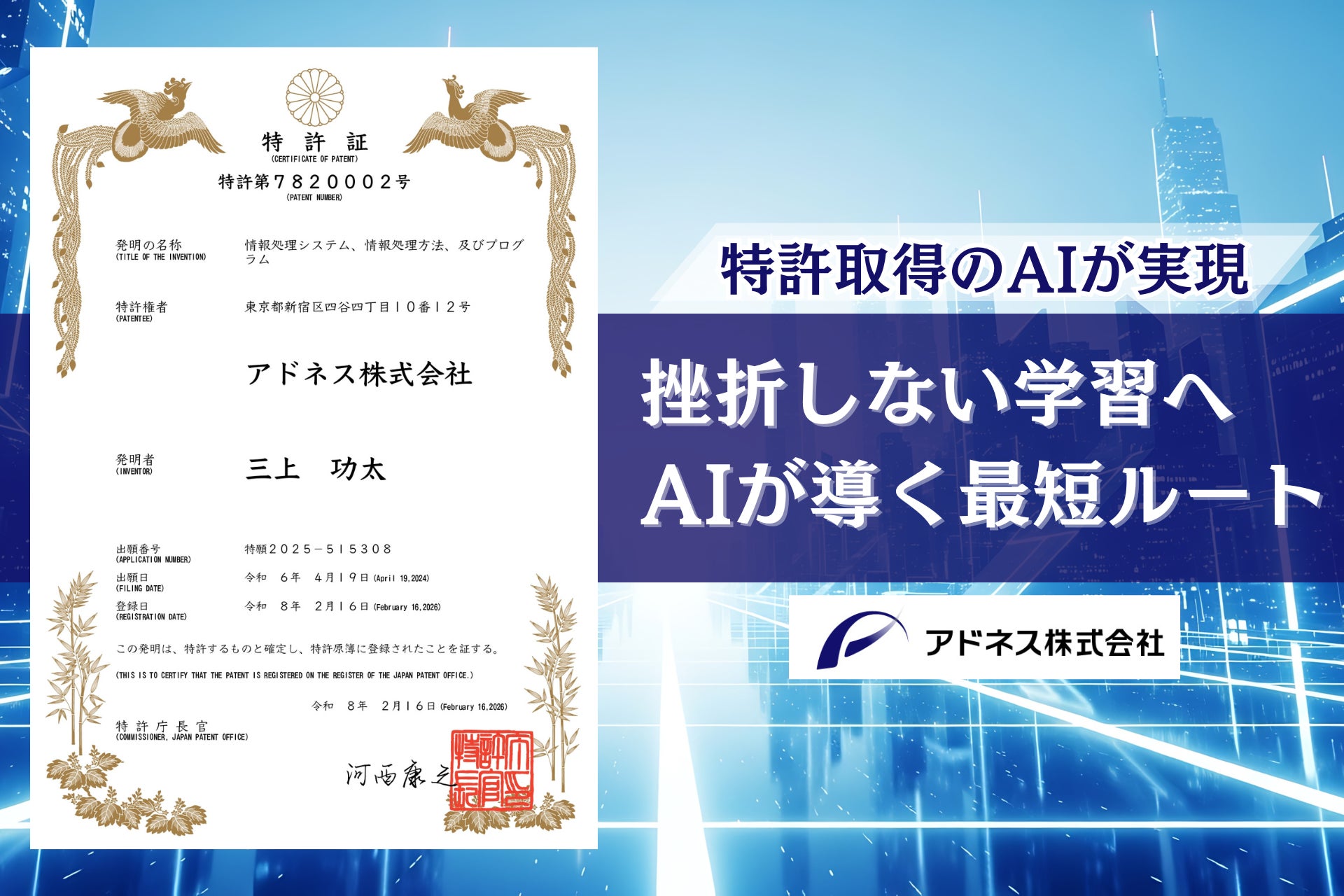
生成式 AI 創新的全球領導者 Adness 公司(總部:東京都新宿區四谷;代表取締役社長:三上功太)欣然宣布,已取得一項關於資訊處理系統的專利(專利第 7820002 號),該系統能讓 AI 根據學習者的進度和遇到的困難,自動優化和更新學習路線圖。
專利取得背景
教育現場普遍存在的「路線圖形式化」與「指導成本」問題
在傳統的人才培育和教育機構現場,提供給學員的學習路線圖在製作後很少更新,導致許多學員在遇到學習瓶頸時,其困難點未被視覺化,最終選擇中途放棄。
對此,現有的進度管理工具雖然能做到進度的「可視化」,但對於遇到困難的學員,其應對方式仍舊依賴指導者的經驗和判斷,這造成了教育品質的維持與指導成本的降低之間呈現權衡取捨的結構性限制。此外,即使單純利用生成式 AI,若僅是處理大量資訊,其準確性仍顯不足,難以生成真正實用的學習路線圖。
專利技術概要
「偵測」學習瓶頸,AI 自動「生成替代路線」
此次取得專利的技術,將學習者的提問視為「難點信號」,並由 AI 持續改善通往目標的學習路線圖。
<本專利的獨特性與創新點>
1. 動態分支路線(替代路線)生成
自動處理使用者提問,並動態地在學習路線圖中新增或更新「補充步驟」或「替代路線」。藉此建構一個讓學員能夠持續學習、不致停滯的環境。
2. 高精度「兩階段 AI 提示處理」
運用生成式 AI 時,採用了兩階段處理方式:首先將資訊結構化(第一階段提示),然後基於結構化數據生成輔助資訊(第二階段提示)。這使得生成的學習路線圖和回答,比傳統 AI 生成的準確度有壓倒性的提升。
本技術帶來的價值
減輕指導者負擔,最大化學員達成率
導入本技術後,學員將能清楚掌握「下一步該做什麼」,指導者用於個別指導的時間將大幅減少。過去的提問與回答將累積並共享在學習路線圖中,無需重複回答相同問題。因此,教育機構可期待學員中途輟學率的降低和目標達成率的提升,並能提供不依賴個人指導的高品質教育環境。
未來展望
成為支持所有「目標達成」的社會基礎設施
Adness 公司將以此專利技術為基礎,加速拓展應用範圍,不僅限於教育機構,還將擴展至企業員工培訓、新人導入等所有「個人達成目標」的場景。透過提供一個社會基礎設施,讓 AI 貼近個人願景與目標,並伴隨其行動提供支援,旨在建立一個讓任何人都能無挫折地實現自身目標的社會。
常見問題
What problem does Adness Co., Ltd.'s patented technology aim to solve?
The technology aims to solve the problems of "obsolete roadmaps" and high "instruction costs" in education. It addresses situations where learning roadmaps are not updated, leading to students getting stuck and dropping out, and where instructors' time is heavily burdened by individual support.
How does the patented technology automatically generate alternative routes?
The technology treats learner inquiries as signals of difficulty. It then uses a two-stage AI prompt processing method to first structure information and then generate supplementary steps or alternative routes dynamically within the roadmap, allowing learners to continue without interruption.
What are the key innovative points of this patent?
The key innovations are the "dynamic branch route generation," which creates alternative learning paths based on user questions, and the "high-precision two-stage AI prompt processing," which significantly improves the accuracy of generated roadmaps and answers compared to conventional AI.
What benefits can educational institutions expect from this technology?
Institutions can expect reduced student dropout rates, improved goal achievement rates, and a significant reduction in the time instructors spend on individual support. It enables the provision of high-quality education without solely relying on personalized instruction.
What are Adness Co., Ltd.'s future plans for this technology?
Adness plans to expand the application of this technology beyond educational schools to corporate training, onboarding, and any other scenario where individuals aim to achieve goals. They aim to create a societal infrastructure that supports goal achievement for everyone.