[Demonstration Results] Demonstration of "Remote Resident Services at Multiple Locations from a Single Hub" Utilizing Local 5G and Avatar Technology
avatarin Inc. successfully conducted a demonstration experiment from October to December 2025, utilizing avatar robots and local 5G technology to provide remote administrative services across multiple municipal locations in Tokyo. The trial achieved high user satisfaction and guidance success rates, demonstrating the effectiveness of a centralized operation model for multi-language support and administrative efficiency. The company plans to further develop a hybrid "Government Service AI" to integrate automated AI responses with remote human assistance for future municipal operations.
📋 Article Processing Timeline
- 📰 Published: March 31, 2026 at 20:00
- 🔍 Collected: April 1, 2026 at 13:39 (17h 39m after Published)
- 🤖 AI Analyzed: April 17, 2026 at 05:52 (376h 13m after Collected)
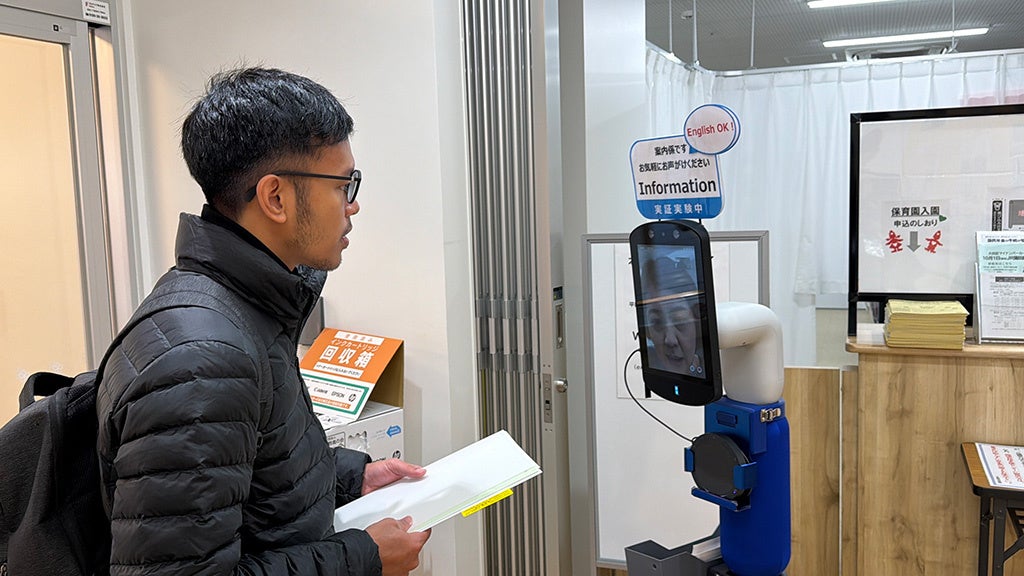
avatarin Inc. (CEO: Akira Fukabori, hereinafter "avatarin"), a startup originating from ANA Holdings, announces the results of a demonstration experiment (hereinafter "demonstration") for remote resident services utilizing next-generation communication technology, including local 5G, and avatar technology, conducted from October to December 2025.
This demonstration was conducted by avatarin, with the support of Campus Create Co., Ltd. (President and CEO: Megumi Takahashi, hereinafter "Campus Create"), which was selected as a development promoter for the Tokyo Metropolitan Government's "Tokyo NEXT 5G Boosters Project" (next-generation communication technology utilization startup support project) *1 in FY2023. The demonstration was also conducted in cooperation with Altius Link, Inc. (President and CEO: Masatoshi Natani, hereinafter "Altius Link") and the demonstration experiment field providers, Ota City and Arakawa City.
In counter operations at local governments, managing counter services in a sustainable manner has become a challenge amid labor shortages due to a declining population and the increasing multinationalization of residents. In this demonstration, we combined local 5G, which realizes large-capacity, low-latency, and simultaneous multiple connections; ultra-low latency remote communication; and the avatar robot "newme," which excels in providing proactive services through direct operation. Through this combination, we confirmed the effectiveness of "remote resident services" provided at multiple locations from a single hub.
Additionally, as part of the initiative, with the cooperation of Altius Link, we also verified the construction of an operational structure that includes external operators *2.
◆ Demonstration Overview
This demonstration was conducted in two phases, the first half and the second half, with a view to expanding the deployment range of remote resident services. In the second half, we also confirmed the possibility of the nation's first "remote resident services" spanning across different municipalities *3.
[First Half Demonstration]
Dates: October 20 to November 14, 2025
Demonstration at the Senzoku Special Branch Office started on October 27
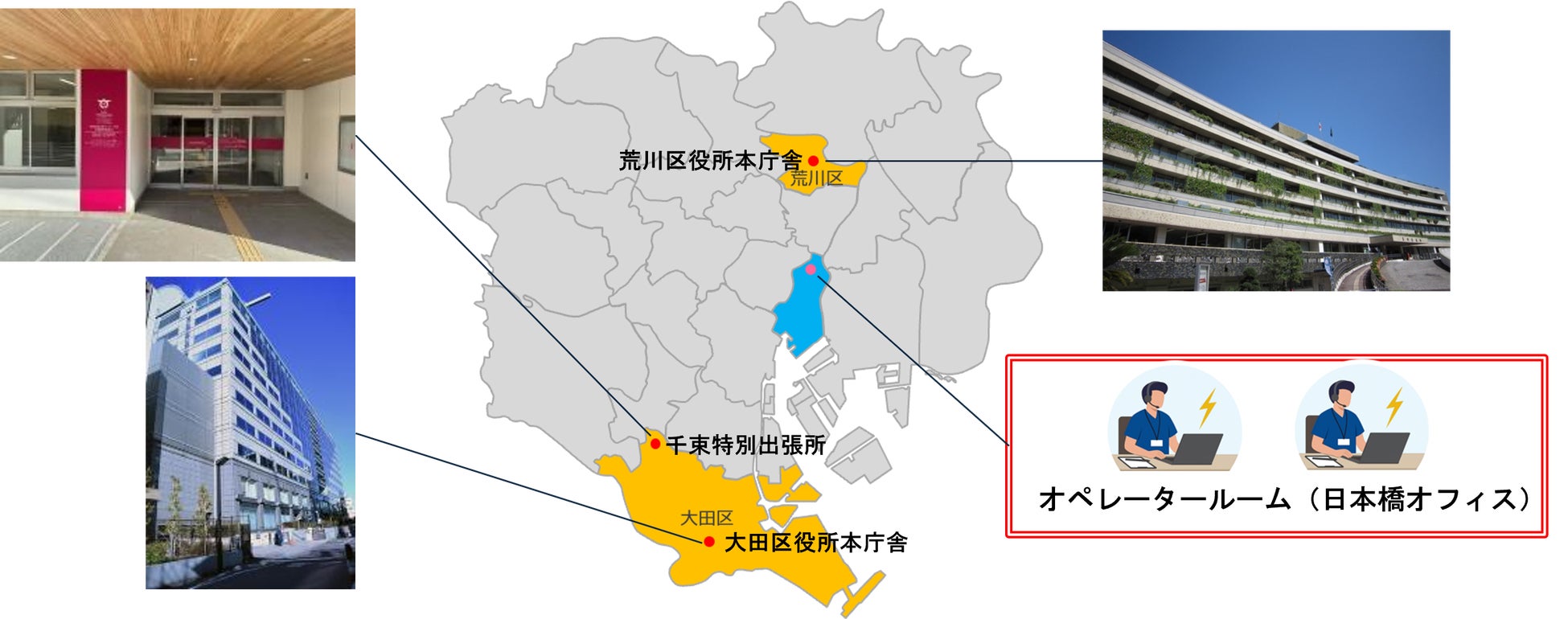
Avatar Installation Locations: 2 locations: Ota City Office Main Building and Senzoku Special Branch Office (Ota-ku, Tokyo)
Avatar Operation Location: avatarin Inc. Office (Chuo-ku, Tokyo)
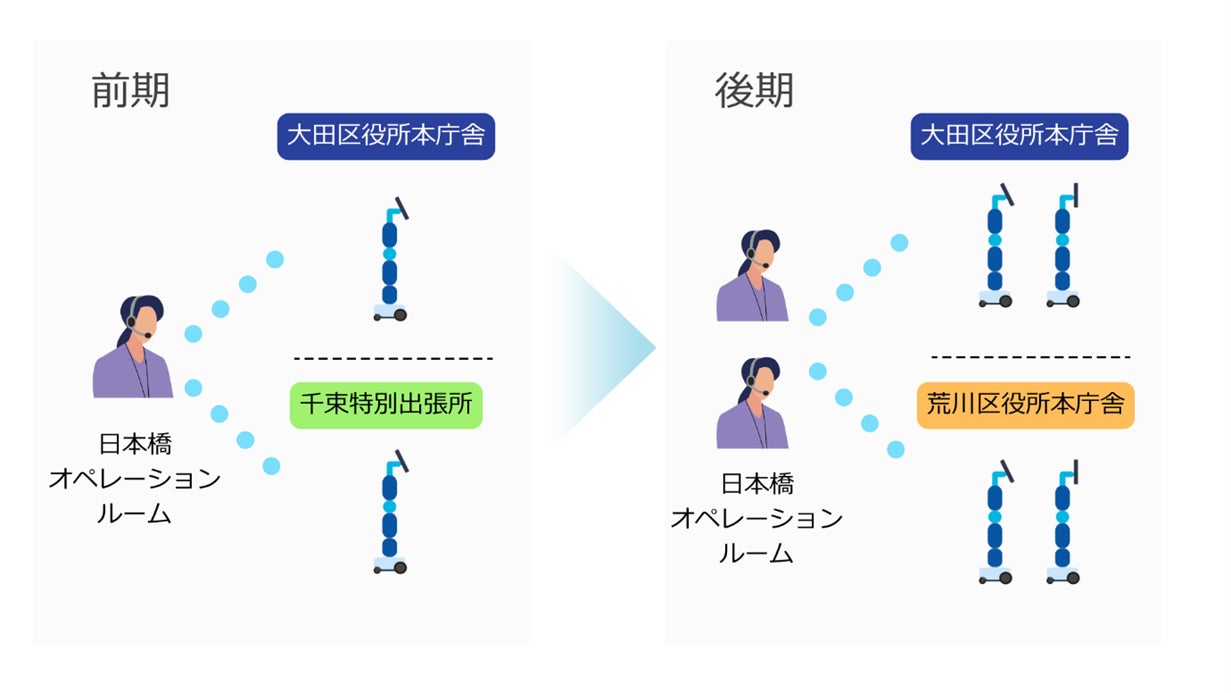
Purpose: Verification of the remote operation structure and operational flow between multiple locations within the same municipality
Structure: Operated from the operation hub established in Nihonbashi, with 2 newme units per 1 operator seat
[Second Half Demonstration]
Dates: November 17 to December 19, 2025
Avatar Installation Locations: 2 locations: Arakawa City Office Main Building and Ota City Office Main Building
Avatar Operation Location: avatarin Inc. Office (Chuo-ku, Tokyo)
Purpose: Verification of the remote operation structure for avatar robots installed in different municipalities
Structure: Operated from the same operation hub, with 4 newme units per 2 operator seats
◆ Demonstration Results
The main purpose of this demonstration was to verify effectiveness from three perspectives: 1) the effectiveness of the remote resident service operation structure at multiple locations, 2) verification of multiple location operations under a local 5G environment, and 3) user acceptance in remote resident services.
1) Effectiveness of the remote resident service operation structure at multiple locations
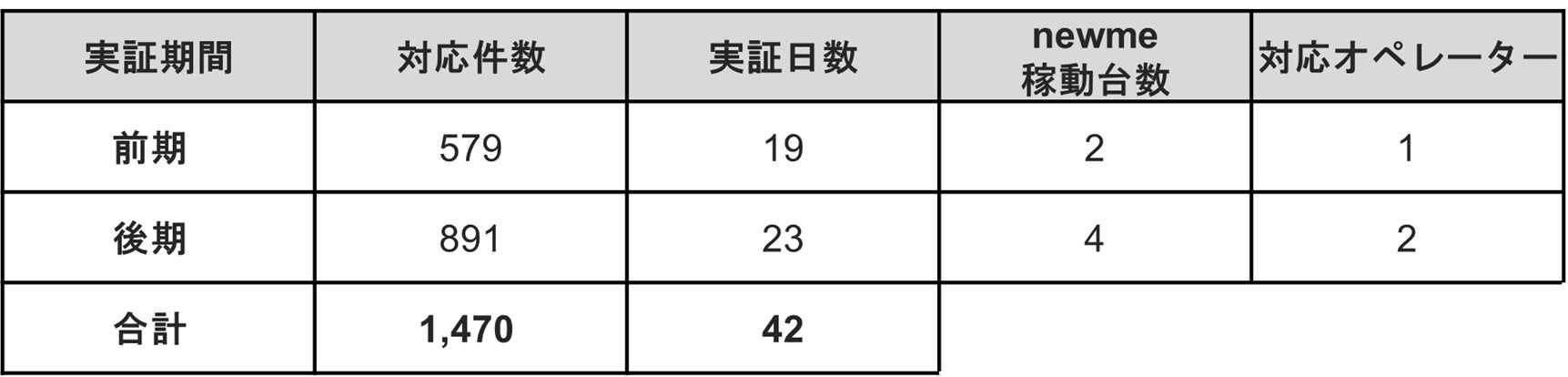
During the 42-day demonstration period, a total of 1,470 response cases were recorded. (Table 1)
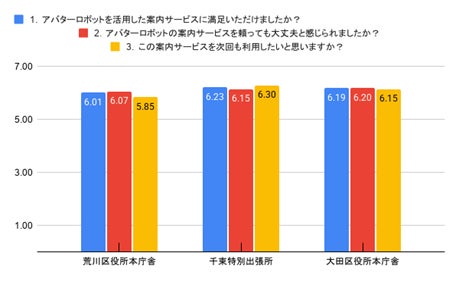
Specifically, the number of customer services per operator/day was 35.4 cases in the first half and 25.7 cases in the second half, the average guidance success rate was 96.9%, and the service satisfaction rate achieved an average of 6.1 points (out of 7 points). (Figure 3)
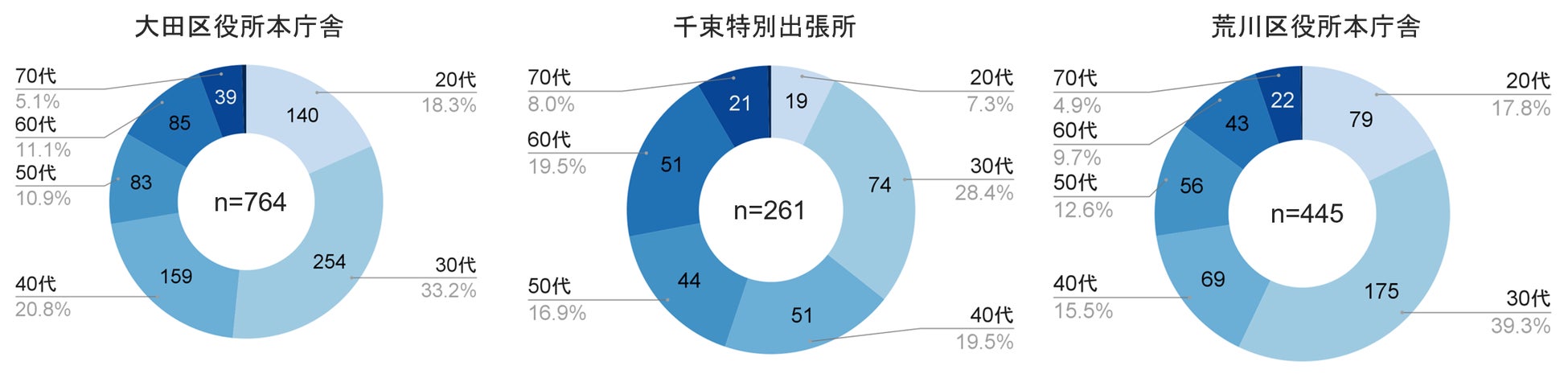
Looking at user attributes, the service was used by a wide range of age groups from their 20s to 70s, demonstrating a high level of acceptance that allows for intuitive use regardless of age. (Figure 4)
Support in English and Chinese was also implemented. By centrally managing locations with different foreigner ratios (Ota City, Arakawa City, Senzoku Special Branch Office), smooth support became possible even at small-scale locations without dedicated foreign language support staff, confirming the effectiveness of the centralized BPO model. The satisfaction rate of users who were supported in foreign languages was 7.00 points (out of 7 points), obtaining a very high evaluation.
2) Verification of multiple location operations under a local 5G environment
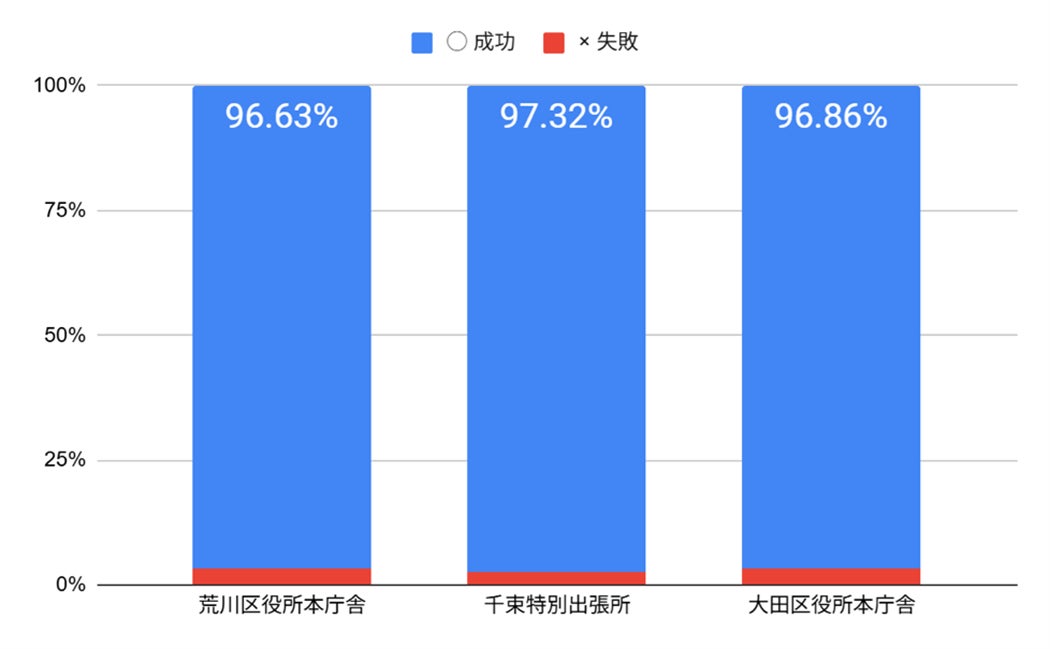
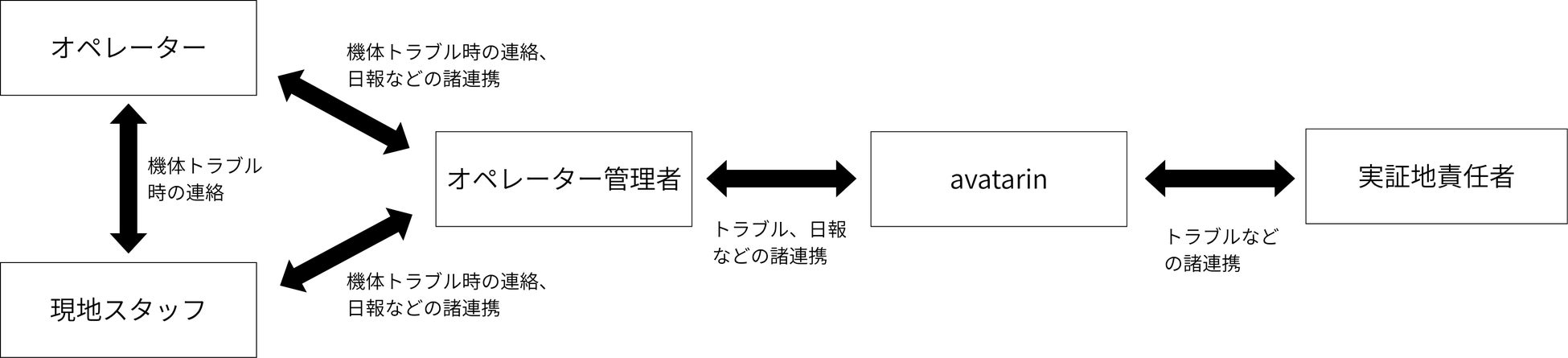
Through collaboration with Altius Link, a BPO operator, an autonomous operational structure that clarified the escalation flow in the event of trouble was established, and the failure rate converged to less than 4%. In addition, generative AI was utilized to create the avatar operation manual, succeeding in reducing the time required for creation. (Figures 5 and 6)
3) User acceptance in remote resident services
From the user survey, four values that improve the QOL (Quality of Life) of Tokyo residents were confirmed.
- A sense of security due to the intervention of a "person" visible through the robot's screen
- Intuitive guidance accompanied by the robot's movements
- Complementing the gaps to relieve the stress of waiting in line
- Multilingual support that overcomes language barriers
On the other hand, some challenges were also highlighted. Voices demanding efficiency, such as "Wouldn't it be better to use AI for guidance?", were raised by the demographic accustomed to digital technology, along with "privacy concerns due to sound leakage" specific to open spaces, and "initial confusion about being spoken to remotely."
Furthermore, in a survey of on-site administrative staff, 5 out of 6 highly evaluated the effects of the introduction. It was reported that the robot's "pre-handling" allowed them to sense the situation of visitors in advance, contributing to the reduction of the staff's mental burden and allowing them to concentrate on their original specialized duties.
◆ Looking Ahead
Through this demonstration, it was proven that cross-hub remote resident services using local 5G and avatar robots contribute multilaterally to improving the QOL of Tokyo residents and reducing the workload of staff.
To solve the challenges that have come to light this time (the pursuit of efficiency and the limitations of human response, etc.), we plan to proceed with the development of "Government Service AI" based on the accumulated response records. We aim to build a "unified resident service" model through the division of labor (hybridization) between AI and humans, where AI automates routine tasks and initial responses, while remote "humans" handle situations that require advanced consultation and hospitality.
*1
The Tokyo Metropolitan Government aims to have startups in Tokyo refine their global competitiveness while utilizing Tokyo as a field that holds city centers, suburbs, mountainous areas, and remote islands. The goal is to create new businesses and innovations utilizing next-generation communication technologies such as 5G, to generate beneficial services that contribute to improving the QOL (Quality of Life) of Tokyo residents, and to enhance the corporate value of each startup.
This project recruits and selects business operators to provide support in collaboration with the Tokyo Metropolitan Government as development promoters, who then provide multilateral support to startup companies. Over a three-year period, development promoters provide financial, technical, and matching support in cooperation with partner businesses (telecommunications carriers, demonstration field providers, research institutes, VCs/financial institutions, etc.) to accelerate the development and commercialization of the supported startups. Supported startups aim to develop and launch products and services utilizing next-generation communication technologies, etc., while receiving support from development promoters.
▼ For details, please refer here (Project Website):
https://next-5g-boosters.metro.tokyo.lg.jp/

*2
[Reference: News Release]
"avatarin and Altius Link reach basic agreement for business alliance in local government support business
- Commencing collaboration under a new framework aimed at solving social issues such as labor shortages, with a view to establishing 'Remote BPO' -"
https://about.avatarin.com/info-news/news-release/9612/
"Commencement of the nation's first cross-municipality demonstration of 'Remote Resident Services' in Arakawa City and Ota City, Tokyo
- Future administrative services realized by avatars and local 5G, transcending the boundaries of local governments -"
https://about.avatarin.com/info-news/news-release/9685/
*3
As "Provision of administrative services across municipalities using avatar robots connected to local 5G",
Conducted an independent investigation based on publicly available information on the Internet as of October 2025 (according to Ota City research)
End