Kume Sekkei Wins Two Technology Awards at the 64th Society of Heating, Air-Conditioning and Sanitary Engineers of Japan Awards
Kume Sekkei announced that two of its designed projects, the Kawasaki City Hall Main Building and Toranomon Hills Station Tower, received the Technology Award at the 64th Society of Heating, Air-Conditioning and Sanitary Engineers of Japan Awards. The awards recognize innovative and sustainable design in urban development and environmental performance.
📋 Article Processing Timeline
- 📰 Published: April 9, 2026 at 01:24
- 🔍 Collected: April 8, 2026 at 17:00
- 🤖 AI Analyzed: April 18, 2026 at 16:28 (239h 27m after Collected)
Kume Sekkei Co., Ltd. (Headquarters: 2-1-22 Shiomi, Koto-ku, Tokyo) is pleased to announce that the 'Kawasaki City Hall Main Building' and 'Toranomon Hills Station Tower,' which we designed, have received the Technology Award at the 64th Society of Heating, Air-Conditioning and Sanitary Engineers of Japan Awards.
64th Society of Heating, Air-Conditioning and Sanitary Engineers of Japan Technology Award
https://www.shasej.org/base.html?award/award.html
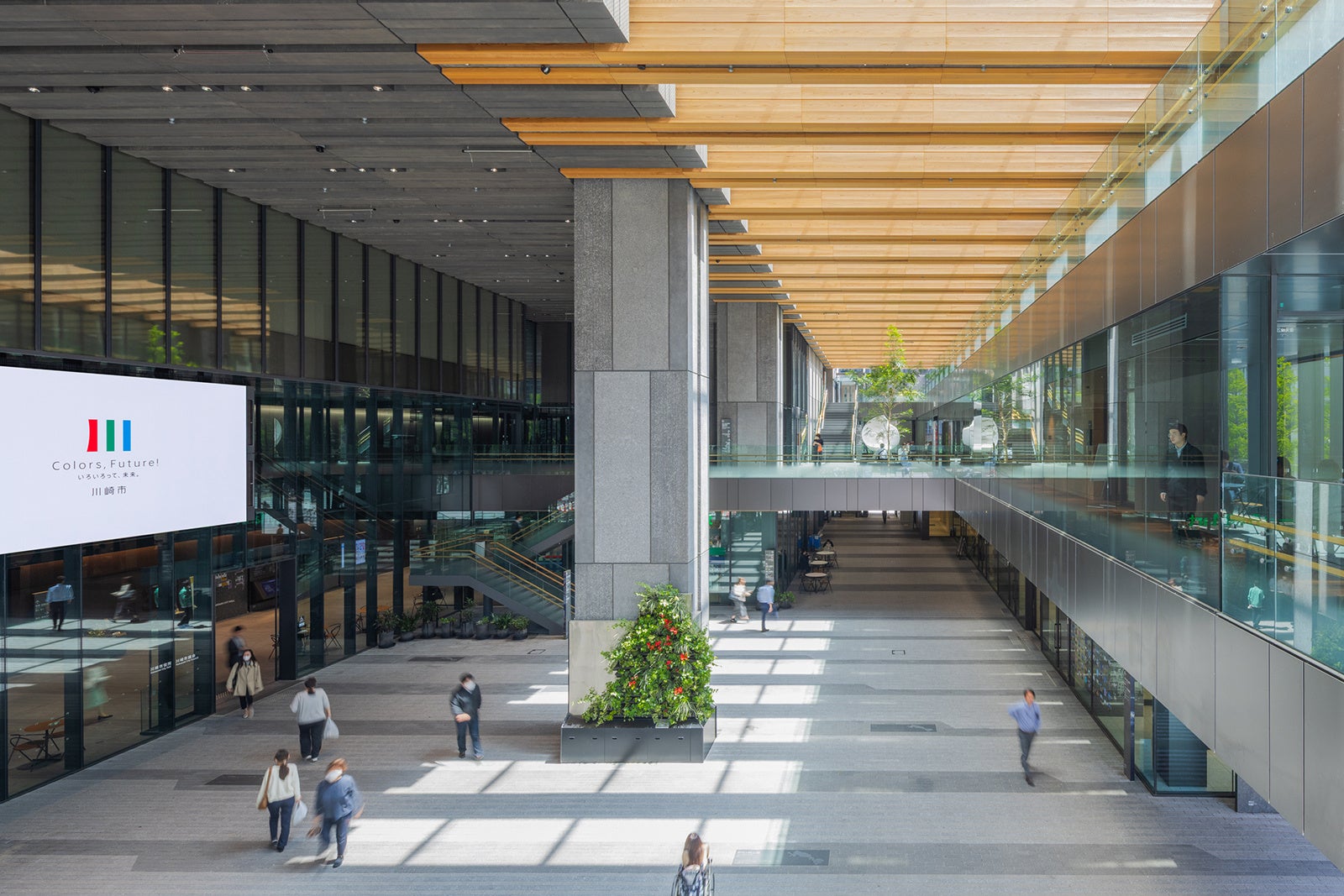
Equipment Planning and Performance Verification for Kawasaki City Hall Main Building
[Designer's Comment]
We are deeply honored to receive the Technology Award at the 64th Society of Heating, Air-Conditioning and Sanitary Engineers of Japan Awards for "Equipment Planning and Performance Verification for Kawasaki City Hall Main Building." In this project, we first identified the urban and architectural challenges of Kawasaki City, and set resilience x energy saving x resource saving as our design concept. We pursued the ideal form of an urban disaster prevention government building that can continue its operations in the face of any disaster.
The core of this project is a new exterior system called "Eco Multi-Wall," which combines disaster prevention and environmental elements. The exterior is mainly composed of concrete, designed to function as a fire wall during disasters. By creating an uneven shape, the exterior can also be used for solar radiation suppression, natural ventilation, and mechanical ventilation routes. By skillfully integrating architectural and equipment planning, we realized a large, ceiling-less office space. To my knowledge, such complex use of a large-scale exterior is unprecedented and was an extremely difficult challenge.
For air conditioning, we newly developed and introduced a personal & ambient underfloor air conditioning system. For cogeneration, we aimed to expand the use of exhaust heat, and by combining it with the use of medium-temperature chilled water, we constructed a highly efficient complex heat source system. We also reused wastewater (sewage + miscellaneous water) to achieve water resource circulation within the building and reduce the burden on regional infrastructure (water and sewage systems).
This main building incorporates not only new technologies but also many versatile technologies that can be applied to other uses. Furthermore, many of the technologies adopted to improve resilience were considered for normal use, and we believe they are practical technologies without waste. We hope that this achievement will serve as a reference for the future spread of carbon neutrality.
Finally, this project, from basic planning to the on-site inspection of this achievement, was a very long and distant journey of 11 years and 4 months. We would like to express our sincere gratitude to Kawasaki City for giving us this opportunity, and to the many people who contributed and cooperated in the planning, construction, and operation.
[Building Overview]
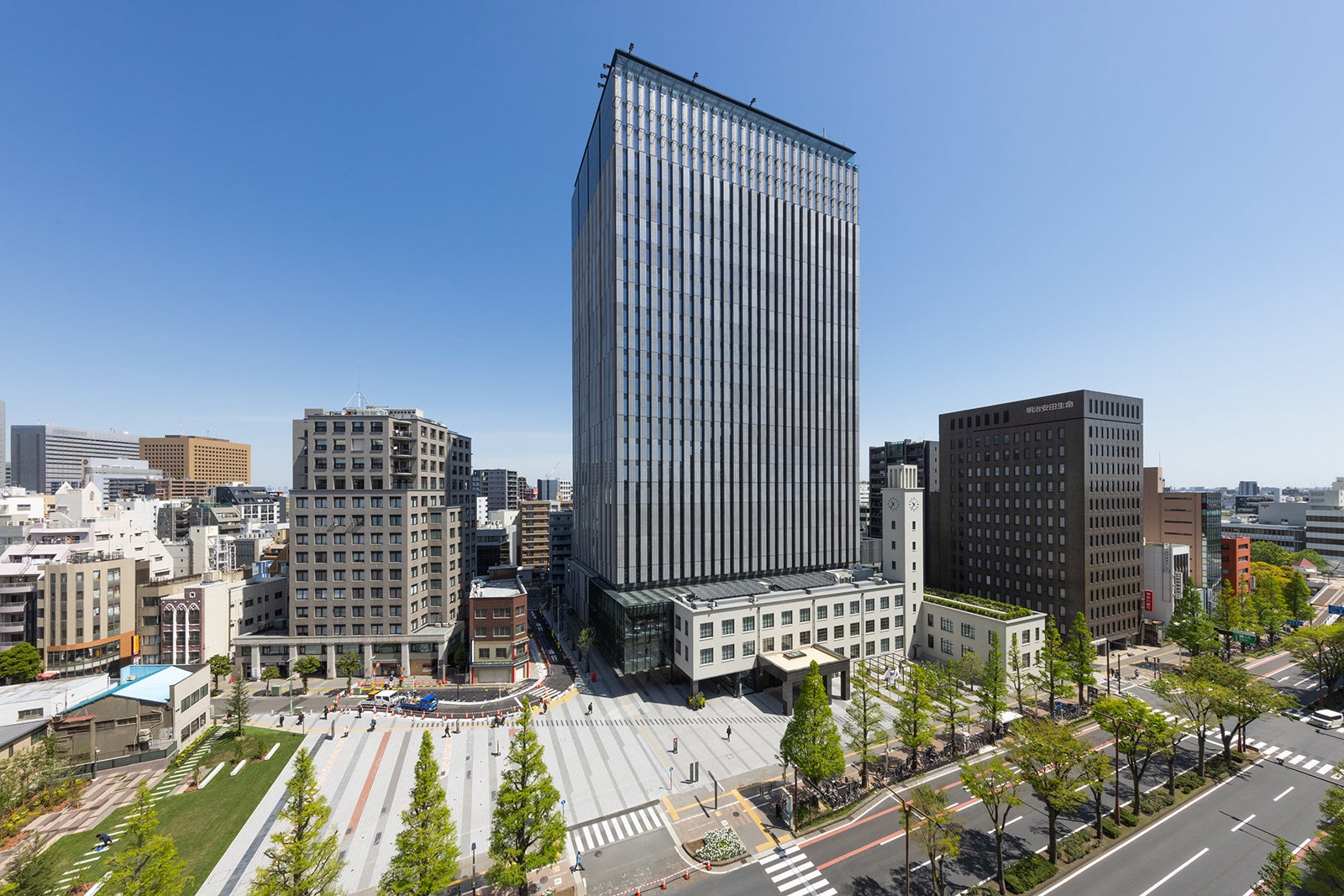
Name: Kawasaki City Hall Main Building
Location: 1 Miyamoto-cho, Kawasaki-ku, Kawasaki City, Kanagawa Prefecture
Client: Kawasaki City
Designer: Kume Sekkei Co., Ltd.
Contractor:
[High-rise Building]
Architecture: Taisei Corporation Yokohama Branch
Electrical Equipment: Electrical JV (Kandenko, Kyowa, Keikyu Denki Joint Venture)
Air Conditioning Equipment: Air Conditioning JV (Shinryo, Kawamoto, Meiwa Joint Venture)
Sanitary Equipment: Sanitary JV (Taisei On, Suga, Keikyu Joint Venture)
Elevator Equipment: Toshiba Elevator Co., Ltd.
Assembly Hall Video and Audio Equipment: Marui Densetsu Co., Ltd.
[Restored Building]
Architecture: Ogawa-gumi Co., Ltd.
Electrical Equipment: Kyosei Denki Co., Ltd.
Air Conditioning Equipment: Meiwa Kogyo Co., Ltd.
Sanitary Equipment: Toto Netsu Kogyo Co., Ltd.
Solar Power Generation Equipment: Sumiyoshi Denki Co., Ltd.
Total Floor Area: 62,356㎡
Number of Floors: 25 floors above ground, 2 floors below ground
Structure: S/partially RC/SRC
Completion: June 2023
Awards: Society of Heating, Air-Conditioning and Sanitary Engineers of Japan Technology Award / Cogeneration Award / CFT Structure Award / SDA Award / Prestressed Concrete Institute Award / Lighting Facilities Award
[Design Concept]
An urban disaster prevention government building with "vibrancy x environment x disaster prevention"
The project site is the former site of the old main government building, which has been an icon of City Hall Street since 1938 and has long been familiar to citizens. It is also an urban area where the vibrancy of the city, such as retail stores and restaurants, continues from Kawasaki Station. While inheriting the historical value of this old main government building, an atrium, a three-dimensional and open urban space, was placed between the restored building, which reproduces the old main government building, and the high-rise building, contributing to the vibrancy of the city. Furthermore, all urban disasters were anticipated, such as an intermediate floor seismic isolation structure that is not affected by flooding from the Tama River, and a ceiling-less office space where there is no risk of ceiling materials falling during an earthquake. In addition, ZEB Ready (BEI=0.47) was achieved through thorough solar radiation suppression, such as a natural ventilation system of the Eco Multi-Wall, which uses the inside of the precast concrete panel exterior wall in a U-shape as a ventilation void, and deepening the carvings around the windows. The ideal form of a new urban disaster prevention government building that connects the "vibrancy" of the city and is equipped with "disaster prevention" and excellent "environmental" performance in an urban area was realized.
[Design Story]
Architecture that integrates disaster prevention and environment
https://www.kumesekkei.co.jp/designstory/kawasaki_city_hall.html
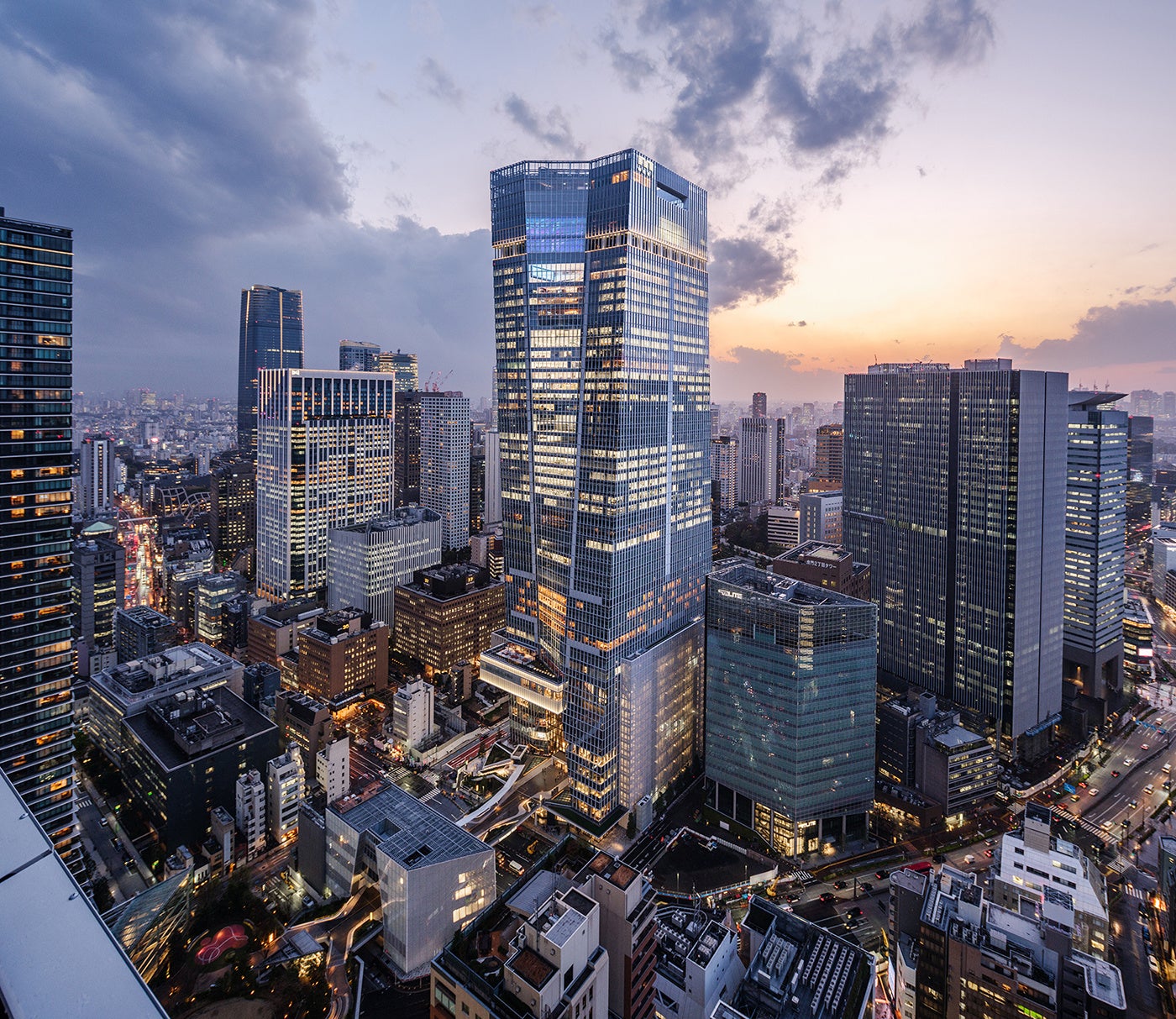
Environmental Equipment Planning and Energy Management at Toranomon Hills Station Tower
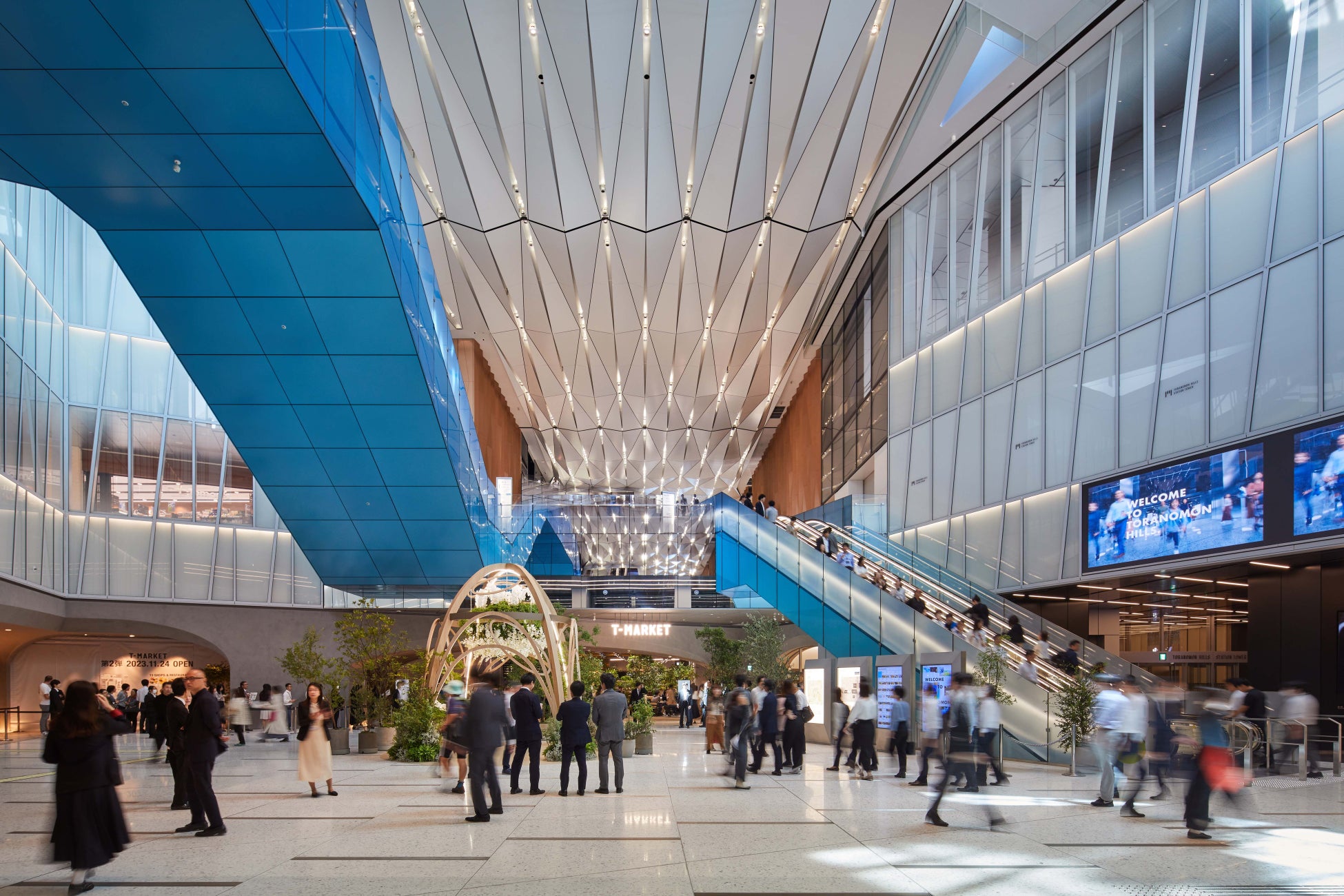
[Designer's Comment]
We are deeply honored that Toranomon Hills Station Tower has received the prestigious Technology Award at the 64th Society of Heating, Air-Conditioning and Sanitary Engineers of Japan Awards.
This achievement involved designing an extremely complex large-scale super high-rise mixed-use facility, which intersects many specialized fields, in a short period. Therefore, it was realized through close collaboration and highly precise and dense discussions with various stakeholders, as well as accumulated verification during the operational phase through post-completion commissioning.
In particular, for the tenant areas, which account for the majority of the facility, such as offices and commercial spaces, we focused on controlling supply and exhaust air in private areas, which was previously difficult for building designers to be involved in, and on developing an easy-to-operate control panel for restaurant tenants. We have strived for thorough energy saving and improvement of environmental performance.
Once again, we would like to express our sincere gratitude to all those involved in this project, including the client and contractors, for their efforts, which led to this complex urban project being highly evaluated not only in the architectural field but also in the environmental technology field. This award is a testament to the hard work of each and every person involved.
We will continue to strive as engineers who support the activities of diverse people and propose the future of urban development.
[Building Overview]
Name: Toranomon Hills Station Tower
Location: 2-6-1 Toranomon, Minato-ku, Tokyo
Client: Mori Building Co., Ltd.
Design: Mori Building Architects & Engineers, OMA, Kume Sekkei
Contractor: Kajima Corporation, Sanken Setsubi Kogyo, Kindai
Total Floor Area: Approximately 236,640㎡
Number of Floors: 49 floors above ground, 4 floors below ground
Structure: S/SRC/RC/CFT
Completion: July 2023
Awards: 66th BCS Award / Japan Institute of Architects Excellent Architecture Award / AACA Special Award / Good Design Award / Society of Heating, Air-Conditioning and Sanitary Engineers of Japan Technology Award / CFT Structure Award / FY2024 Fire and Disaster Management Agency Commissioner's Award for Excellent Firefighting Equipment / Lighting Facilities Award
[Design Concept]
As the fourth development in the Toranomon Hills area, this is a large-scale super high-rise mixed-use facility integrated with a new subway station. The concept can be broadly divided into three points: ①両立➁LEED and WELL Platinum certification ③Inheritance of existing facility technology and problem solving. In particular, for ③, since tenant areas occupy the majority, it was necessary to improve the quality of standard design that is not affected by interior design and construction, and to create a new system that does not leave everything to the users. In addition, since multiple buildings of various sizes were being developed simultaneously, consideration for energy, resources, and the environment at the city level was required.
For office tenants, a newly developed low-boy type perimeter air conditioning system, which utilizes the distinctive architectural facade, incorporates further improvements in energy saving and high functionality based on existing knowledge. Furthermore, AI is used for over 2,000 pieces of equipment to achieve further energy saving and to reduce labor and advance maintenance management. Due to the COVID-19 pandemic during construction, a wellness-oriented system was introduced. This system ensures a more reliable ventilation volume than ventilation volume control based on CO2 concentration by controlling the amount of outside air based on the number of people using image sensors for lighting control.
For commercial tenants with high energy consumption density, we introduced kitchen supply and exhaust air volume control that tenants can operate themselves, developed a non-contact, handheld switch, and developed a system where settings can be changed for each tenant. Different supply and exhaust air volume control systems have also been introduced for hotel uses and high-end restaurants, allowing for system selection based on tenant type and turnover, which is a highly ripple-effect initiative.
As a key point for the planar use of energy in the Toranomon Hills area, the second plant of the district heating and cooling facility is located on the 4th basement floor. This is an attempt to reduce labor and save energy through advanced operation management by linking with the first plant in the Toranomon Hills area and utilizing AI in its operation. A system has also been built to address demand response in a trinity of plant, demand-side, and tenants, which can contribute during times of tight electricity demand in the city.
Although international standard environmental certifications are no longer rare in Japan, the Station Tower is the first domestic case to simultaneously receive the highest platinum rank in LEED-ND, LEED-BD+C, and WELL-Core. For disaster response, the facility can continue to function for 7 days in actual operation during a disaster. As a contribution to urban infrastructure, various alternative water supply mechanisms have been adopted, and the use of city water for miscellaneous water is 0%. In addition, the ZWB achievement rate was a high 54%. Regarding the ZEB achievement rate, the annual primary energy consumption is equivalent to ZEB-Oriented, making it a building with high environmental performance in terms of energy consumption.
Because energy-saving methods and initiatives to improve environmental performance are implemented in all mixed-use applications, it is a facility with a layered accumulation of technologies that have a high degree of social contribution and practical value.