Old Folk House? No, 'True House'! Hidden 'True House Restaurants' That Look Like Ordinary Homes Showing Signs of Popularity
Key facts
- Old Folk House? No, 'True House'! Hidden 'True House Restaurants' That Look Like Ordinary Homes Showing Signs of Popularity
- Recruit releases survey results regarding 'True House' (Do-minka) restaurants.
- Date: March 30, 2026
Direct answer
Recruit releases survey results regarding 'True House' (Do-minka) restaurants.
- Citation
- Old Folk House? No, 'True House'! Hidden 'True House Restaurants' That Look Like Ordinary Homes Showing Signs of Popularity (March 30, 2026)
- Source
- PR Times
- Date
- March 30, 2026
Recruit releases survey results regarding 'True House' (Do-minka) restaurants.
📋 Article Processing Timeline
- 📰 Published: March 30, 2026 at 05:11
- 🤖 AI Analyzed: May 26, 2026 at 21:27 (1384h 16m after Published)
Hot Pepper Gourmet Food Service Research Institute, a research organization for the dining-out market under Recruit Co., Ltd. (Headquarters: Chiyoda-ku, Tokyo; President and CEO: Keiichi Ushida), holds 'Trend Roundtables' to announce dining trends by gathering food service professionals. This time, we report on the results of a survey conducted with 1,035 men and women in their 20s to 60s regarding 'Do-minka' (True House) Restaurants.
■ Polarized Popularity Trend for 'Hidden Restaurants Like Single-Family Houses'
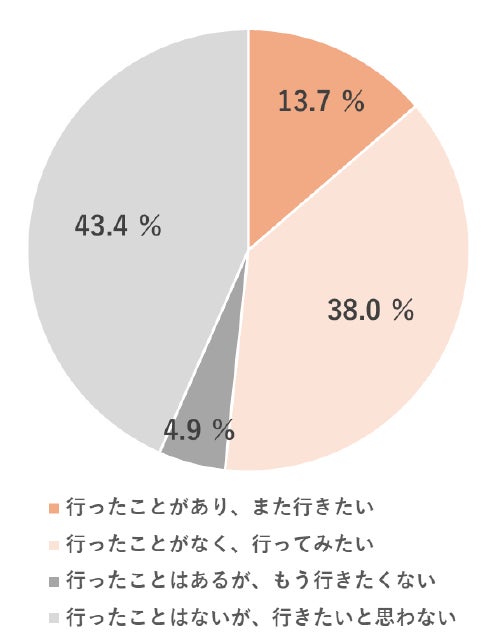
To the question, 'Have you ever visited a hidden restaurant located in a somewhat hard-to-find spot, such as a corner of a residential area, where the exterior looks like an ordinary apartment room or a single-family house?', 13.7% replied 'I have been and want to go again,' and 38.0% replied 'I haven't been but want to go.' This shows that approximately half (51.7%) have a positive interest. On the other hand, 'I haven't been and don't want to go' was the most common response at 43.4%, highlighting a clear split between interested and uninterested groups. Only 4.9% said 'I have been but don't want to go again,' suggesting relatively high satisfaction among those who have experienced it. These results suggest that while True House Restaurants may not be for everyone, there is demand among a certain segment, making it a business category with polarized popularity.
*n=1,035 / single choice
■ Commentary from the Director of 'Hot Pepper Gourmet Food Service Research Institute'
Signs of Popularity for 'True House Restaurants' That Look Almost Like Private Homes? Turning 'Inconvenience' and 'Anxiety' into Experiential Value
In recent years, hidden restaurants located in hard-to-find spots like residential corners—where the exterior is just a room in a mansion or apartment, or looks like a single-family home—have been appearing one after another. At the Hot Pepper Gourmet Food Service Research Institute, we have dubbed these 'Do-minka' (True House) Restaurants, playing on the word 'Kominka' (old folk house), and conducted a survey.
The survey results reveal that while True House Restaurants have a 'difficulty of entry,' that very hurdle has become part of their value. In recent years, dining out has been pre-visualized through social media and review sites, making 'choosing a restaurant where you won't fail' the mainstream approach. Meanwhile, as prices continue to rise, there is also an increasing awareness of wanting to 'choose a place with experiential value if I'm going to dine out.' True House Restaurants require courage due to their hard-to-understand locations and closed-off exteriors, but this creates a sense of exclusivity—the feeling of 'I found it myself' or 'only those in the know can go.' Precisely because we live in an age overflowing with information, there seems to be a segment of the population that finds value in 'slightly inconvenient' and 'slightly anxious' experiences. As the dining market moves toward pursuing efficiency and peace of mind, True House Restaurants are promoting analog charms such as 'discovery' and a 'sense of secrecy.'

FAQ
What is the definition of a 'Do-minka' (True House) Restaurant according to the article?
A 'Do-minka' (True House) Restaurant is described as a hidden restaurant located in a hard-to-find spot, such as a residential area, where the exterior resembles an ordinary apartment room or a single-family house.
What percentage of respondents expressed a positive interest in visiting 'Do-minka' Restaurants?
Approximately half of the respondents, specifically 51.7%, showed a positive interest, with 13.7% having visited and wanting to go again, and 38.0% having not visited but wanting to go.
What was the most common response regarding 'Do-minka' Restaurants among those who have not visited?
The most common response among those who have not visited was 'I haven't been and don't want to go,' which accounted for 43.4% of the respondents.
What does the article suggest about the satisfaction level of customers who have already experienced 'Do-minka' Restaurants?
The article suggests a relatively high satisfaction level among those who have experienced 'Do-minka' Restaurants, as only 4.9% stated they had been but did not want to go again.
What is the overall popularity trend of 'Do-minka' Restaurants as indicated by the survey results?
The survey results indicate a polarized popularity trend for 'Do-minka' Restaurants, with a clear split between those who are interested and those who are uninterested, suggesting it's a business category not for everyone but with demand from a certain segment.