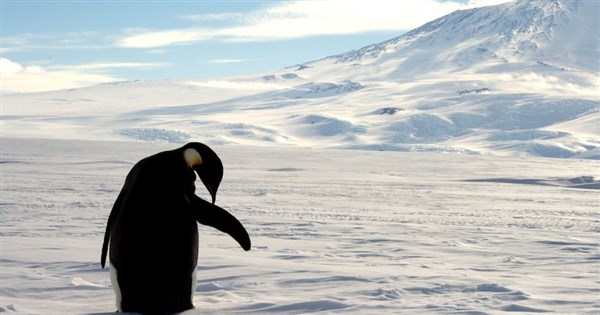
Agence France-Presse reported that global warming is having a profound impact on Antarctica. The International Union for Conservation of Nature (IUCN) has reclassified the emperor penguin's threat level from "near threatened" to "Endangered," highlighting the existential threat faced by species dependent on ice for survival. Emperor penguins rely on sea ice for habitat, foraging, and breeding. The premature breakup and disappearance of these marine ice layers have already led to a sharp decline in emperor penguin populations. IUCN, a global network of scientists, governments, and conservation organizations, stated that due to climate change-induced sea ice changes, emperor penguin populations are expected to halve by the 2080s. Philip Trathan, a member of the IUCN expert group involved in the assessment for the "IUCN Red List of Threatened Species," stated that they "concluded that human-caused climate change poses the most serious threat to emperor penguins." The "Red List," maintained by IUCN, is the world's most comprehensive source of information on the extinction status of animals, plants, and fungi. Emperor penguins are the largest and heaviest of all penguin species, and their distinctive golden-orange plumage on their necks and chests has become a symbol of survival and reproduction in the extreme Antarctic environment. (Compiler: He Hong-ru) 1150409
FACT BOX
- Source: CNA (Central News Agency)
- Category: research