Student Volunteers Achieve Cumulative Planting of 25,000 Trees in Borneo: "Orangutan Forest Restoration Project"
The Nippon Foundation Volunteer Center dispatched its 10th group of student volunteers to Borneo in March 2026 for the "Orangutan Forest Restoration Project." This effort has resulted in a cumulative total of 25,000 trees planted, contributing to rainforest protection and orangutan habitat regeneration.
📋 Article Processing Timeline
- 📰 Published: April 1, 2026 at 01:45
- 🔍 Collected: April 1, 2026 at 01:06
- 🤖 AI Analyzed: April 22, 2026 at 06:50 (509h 44m after Collected)
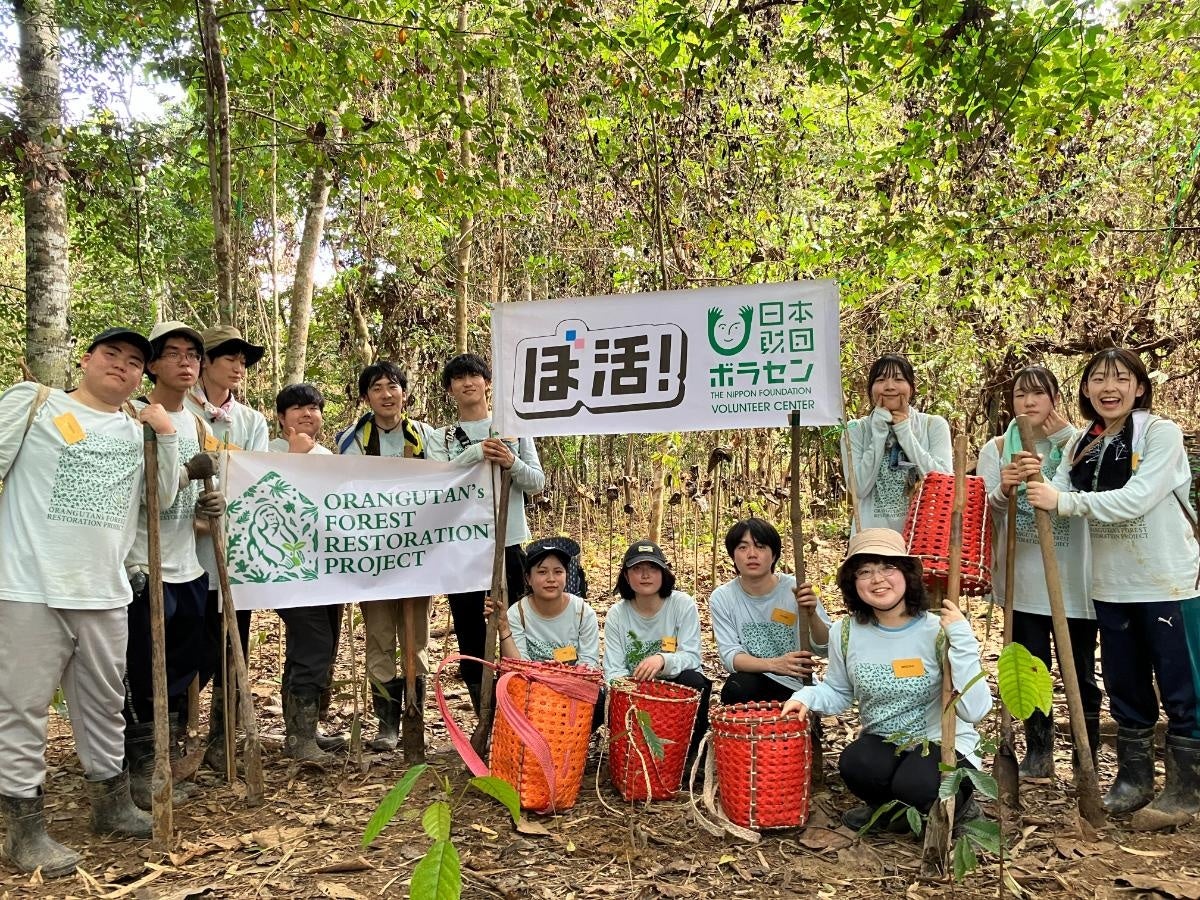
The Nippon Foundation Volunteer Center (hereinafter, Nippon Foundation Volacen / Minato-ku, Tokyo / Chairman Yasushi Yamawaki) dispatched its 10th group of student volunteers in March 2026 for the "Orangutan Forest Restoration Project" being carried out on Borneo Island (Sarawak, Malaysia).
As a result, the cumulative number of trees planted has reached 25,000.

This project aims to regenerate and protect tropical rainforests, safeguarding the habitat of orangutans. With a goal of planting 100,000 trees in 10 years, continuous efforts have been underway since February 2024.
Decrease in Tropical Rainforests Closely Linked to Japanese Lifestyles
In Borneo Island (Kalimantan Island), where the majority of the island is covered by tropical rainforests, forests inhabited by diverse species have been rapidly decreasing in recent years due due to the expansion of oil palm plantations, and the habitat of orangutans is also facing a crisis.

One of the factors is the expansion of oil palm production, which is the raw material for "palm oil." Palm oil is widely used in foods and daily necessities, making it a familiar presence in our lives. This means that the decrease in tropical rainforests is closely linked to the consumption behavior of us living in Japan.
On the other hand, for local people, oil palm production is also the foundation of their livelihoods. Therefore, it is very important how to continue forest conservation and tree-planting activities while protecting their livelihoods.