Tokyo Institute of Technology Startup Tsubame Lab Launches Cloud-Based Research Automation Platform
Tsubame Lab launches its cloud-based research automation platform, 'Tsubame Cloud Lab'.
📋 Article Processing Timeline
- 📰 Published: April 1, 2026 at 08:00
Tsubame Lab Co., Ltd. (Headquarters: Meguro-ku, Tokyo; Representative Director: Koshiro Narasaki; hereinafter referred to as "Tsubame Lab") is pleased to announce the launch of its cloud-based automated experiment platform, "Tsubame Cloud Lab".
This platform is a research infrastructure that allows researchers to design, execute, and manage data for experiments online, regardless of their location. By integrating all the lab automation systems we introduce into a single cloud platform, we are fully launching Japan's first "distributed cloud lab network".
What's Happening in Research Labs - Researchers' Time is Mostly Spent on 'Tasks'
The daily lives of researchers working in university laboratories and corporate R&D departments are very different from what many people imagine. Formulating hypotheses, designing experiments, analyzing the data obtained to derive new insights – the time dedicated to these "essentials of research" is actually very limited within a day. It is said that less than 10% of a researcher's time is spent on creative activities.
So, what is the remaining time used for? Weighing and preparing reagents, preparing culture media, dispensing liquids with pipettes, operating centrifuges and incubators, cleaning and sterilizing instruments, handwriting records in lab notebooks, manually entering data – these repetitive tasks occupy the majority of a researcher's day. While each of these tasks is simple, they require accuracy, allow no room for error, and consume an enormous amount of time.
This problem is not just about "researchers being busy." Research processes that rely on manual labor threaten the reliability of science itself. Research reproducibility – whether the same results can be obtained with the same procedure – is a fundamental principle of science, but in reality, many researchers have experienced being unable to reproduce others' experiments, and it is not uncommon for them to be unable to accurately reproduce their own past experiments. The causes are often subtle variations in experimental conditions, incomplete records, and protocols that rely on tacit knowledge. These are all structural problems stemming from the fact that the research process depends on manual labor and human memory.
What is Lab Automation - Technology to Free Research from 'Manual Labor'
The technology domain that emerged to solve these challenges is called "lab automation."
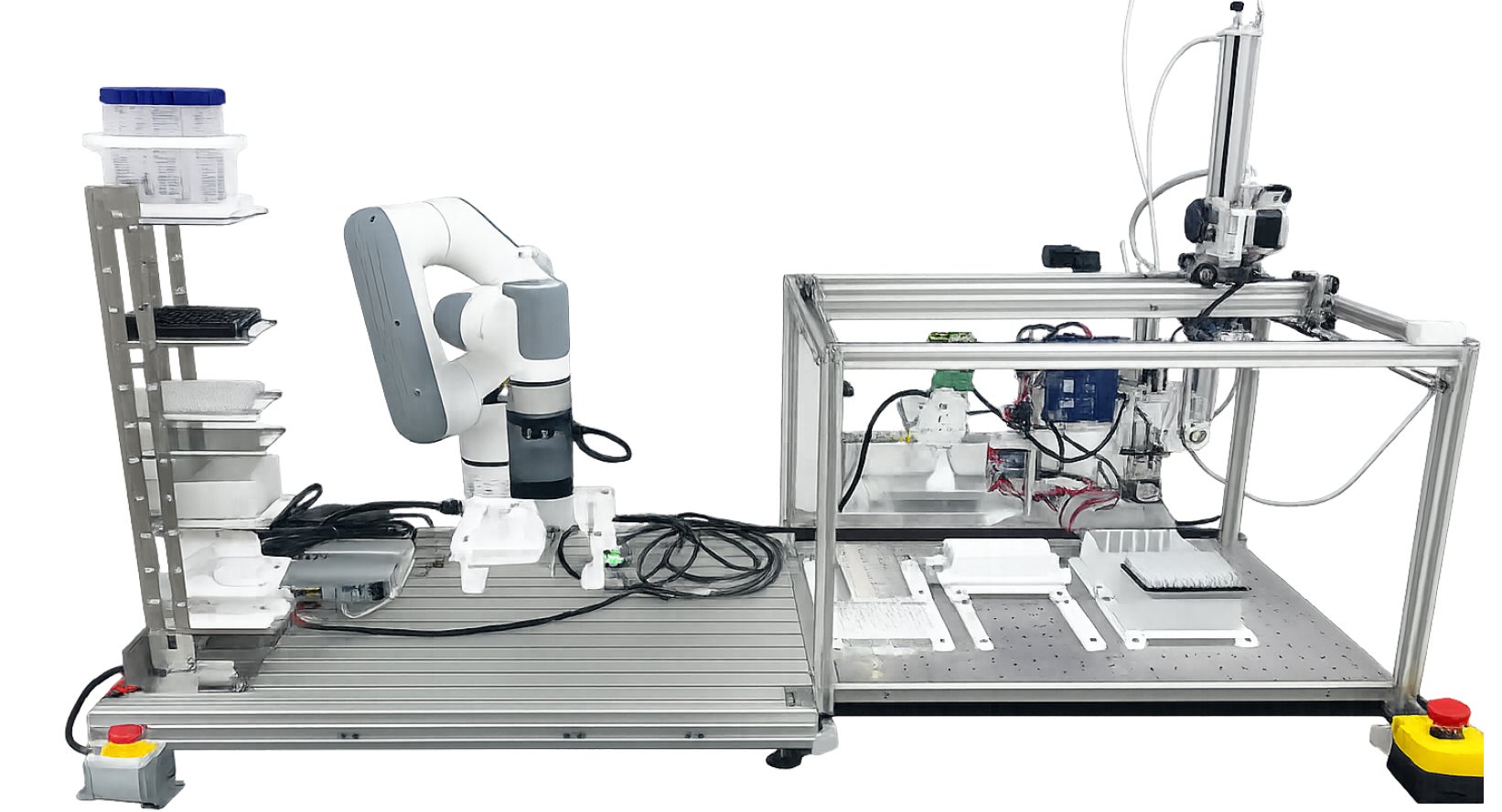
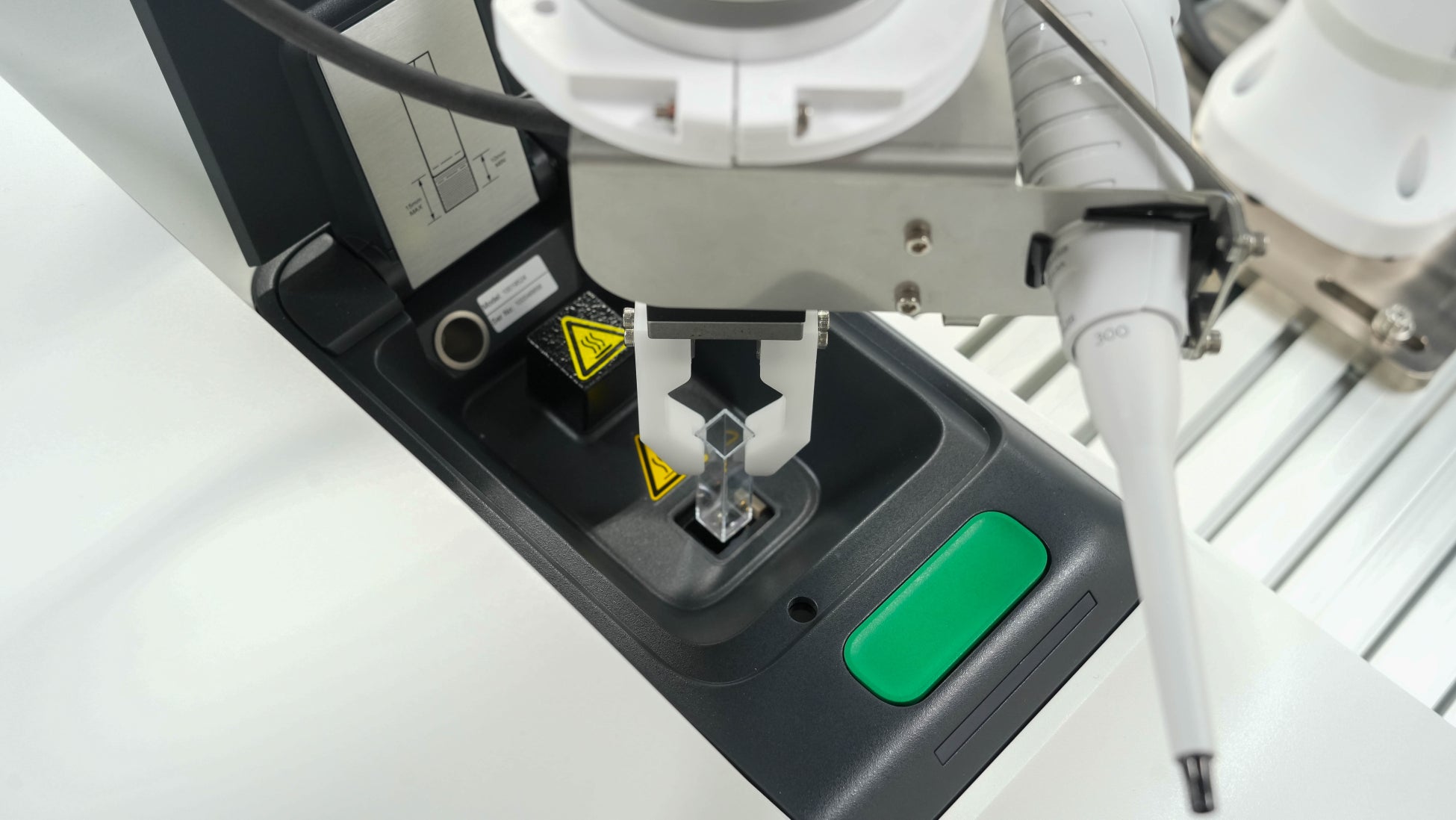
Lab automation is a general term for technologies that combine robotic arms, automated dispensers, sensors, control software, etc., to automate experiment preparation, execution, measurement, and recording. By having robots replace tasks performed manually by humans, not only is continuous operation 24/7/365 possible, but complete reproducibility of experimental conditions is also guaranteed. The amount of reagents, temperature, time, and order of operations – everything is digitally controlled and recorded, enabling experiments that "yield the same results regardless of who performs them."
In Europe and the United States, lab automation is already an indispensable infrastructure for drug discovery screening in pharmaceutical companies and material exploration in material manufacturers. In recent years, with the integration of AI, "Self-Driving Labs," where experiments are analyzed in real-time and AI automatically proposes and executes the next experiments, are also being put into practical use.
On the other hand, the introduction of lab automation in Japan is still in its early stages. The biggest barriers are the cost and the high hurdle to adoption. Conventional lab automation systems are mainly semi-customized to fit the experimental protocols of each laboratory, with prices ranging from tens of millions to hundreds of millions of yen, and implementation periods typically taking one to two years. Furthermore, maintenance and software updates after installation require specialized personnel, making them virtually unattainable for university laboratories and small and medium-sized enterprises, except for some research institutes in large corporations.
As a result, many experiments in Japanese research settings are still performed manually, and the productivity gap with Europe and the United States is widening year by year.
What is a Cloud Lab - The Laboratory Beyond the Internet
A concept that goes beyond lab automation is the "Cloud Lab."
A Cloud Lab is a system that provides fully automated experimental equipment as a cloud service, allowing researchers to design, order, execute, and acquire data for experiments via the internet. Researchers do not need to install expensive equipment in their own laboratories; they can execute necessary experiments from anywhere in the world through a browser or API.
This is essentially the same transformation that cloud computing brought to the IT industry. In the past, companies had to purchase and manage their own servers, but with the advent of cloud services, they could use computing resources as needed, when needed. Cloud Labs achieve the same thing in the realm of "experiments." It's a world where you can instantly execute experiments without owning your own lab, or experiments that cannot be performed with your own equipment, simply by accessing a Cloud Lab.
The benefits of Cloud Labs are not limited to cost reduction. Since all experiments are described as digital protocols and execution conditions and results are automatically recorded, complete reproducibility and traceability are guaranteed. Furthermore, as researchers worldwide conduct experiments on the same platform, data sharing and collaborative research become dramatically easier.
In the United States, several Cloud Lab services are already commercially available and are routinely used by pharmaceutical companies and biotech startups. On the other hand, there are no services in Japan that can be called Cloud Labs yet.
Tsubame Lab is a startup that is the first in Japan to comprehensively deploy both "Lab Automation" and "Cloud Labs".
Our Approach - Expanding the Platform, Not Being an SIer
What is important here is that Tsubame Lab is neither a company that simply undertakes the introduction of lab automation nor a company that simply operates a Cloud Lab.
Traditionally, these two have been treated as separate businesses in the lab automation industry. The SIer (System Integration) business, which installs systems in customer research facilities, and the service business, which operates Cloud Labs in its own facilities, have existed as completely separate businesses with different technology stacks and business models. The installed systems were confined within that company and were not connected to other facilities or external users.
Tsubame Lab fundamentally overturns this division.
All automation systems we introduce are connected to the cloud from day one and integrated into a single platform. In other words, we are not operating as an SIer; we are building a distributed cloud lab network that expands with each installation.
A Network Composed of Two Cloud Labs
Tsubame Cloud Lab expands its network in the following two forms:
1. Networked Cloud Lab
These are automation systems installed within the facilities of companies and research institutions. At first glance, they may look the same as conventional lab automation installations. Robotic arms line up, dispensers operate, and researchers use these systems to automate their daily experiments – up to this point, it's the same as before.
However, the crucial difference is that all systems are connected to our cloud platform. This enables the following, which were impossible with conventional lab automation:
Remote Access: Researchers can design, execute, and monitor experiments from anywhere, such as home or while on a business trip. Experiments conceived late at night can be automatically executed by the time they arrive at work the next morning.
Centralized Data Management in the Cloud: All experiment design conditions, equipment operation logs, and measurement data are automatically accumulated and organized in the cloud. There is no need for handwritten records in paper lab notebooks, and data can be searched, shared, and reused instantly.
Cross-Departmental Use within an Organization: Multiple research teams within the same organization can share the same automated system via the cloud. Equipment reservation and scheduling are also completed online, significantly improving the utilization rate of expensive equipment.
For companies with strict security requirements – such as pharmaceutical companies where intellectual property protection is paramount, or defense-related research institutions conducting highly confidential research – we can also provide a fully on-premises configuration (facility-internal completion type). Even in this case, the system is designed on the same architecture, so significant system modifications are not required when migrating to cloud connectivity in the future.
And there is a most important point. Systems connected to the cloud can not only be shared between departments but can also be opened to external users during times when the equipment is not in operation. For example, the idle time during nights and holidays of an automation system installed by a pharmaceutical company could be used by startups or university researchers via the cloud – this is technically feasible.
In other words, the introduction of a Networked Cloud Lab is not just a system delivery. Each customer's lab becomes a "node" (connection point) in our Cloud Lab network.
2. Core Cloud Lab
This is a fully automated experimental facility built and operated by Tsubame Lab itself. While Networked Cloud Labs are distributed within customer facilities, Core Cloud Labs function as central hubs directly managed by our company.
Users can access the equipment in the Core Cloud Lab from their own laboratories via the cloud, send experiment protocols for execution, and receive results in real-time. This serves as the easiest entry point for researchers to experience Cloud Labs, whether they don't have their own automated equipment or want to try specific equipment or methods.
We currently have our own lab within the Tokyo Institute of Technology campus, as well as wet lab and R&D facilities in Tokyo (TIP-Lab in Yushima, Bunkyo-ku, and ARIAKE R&D CENTER in Arakawa-ku). Under a development system directly linked to the university's research environment, we are creating an environment that allows for integrated and rapid execution of research, prototyping, and verification. In the future, we plan to sequentially add facilities in response to expanding demand and increase the capacity of our Core Cloud Labs.
Same Platform, Same Technical Foundation - Why This is Important
There is a most important principle in the design of Tsubame Cloud Lab: Networked Cloud Labs and Core Cloud Labs operate on the exact same platform.
Same Technical Stack: Common software architecture used from hardware control to data processing.
Same Data Infrastructure: All experimental data is stored and managed in the same format.
Same User Interface: Access to both labs is possible with the same operational experience through our AI-equipped experiment design software, "T-Lab Studio."
Same AI Layer: AI functions that optimize protocols and detect anomalies based on accumulated experimental data are applied commonly to all labs.
What this design means is that from a business perspective, this is not two separate businesses but a single integrated platform. The knowledge gained from data and protocols accumulated in Networked Cloud Labs introduced to client companies contributes to improving the AI accuracy of the entire platform, and the benefits are returned to users of Core Cloud Labs. The reverse is also true. The more the network expands, the more the value of the entire platform increases – this is the structural strength of Tsubame Cloud Lab.
Why This Model is Important - The Fundamental Difference from Traditional SIers
Traditional SIer-type businesses in lab automation have structural limitations.
First, everything is project-based. Specifications are designed for each customer, systems are built, and then delivered. After delivery, even with a maintenance contract, the relationship essentially ends there. The next customer starts from scratch again.
Second, data is not accumulated. Each customer's system is independent, and knowledge gained at one company is not utilized for the efficiency of another company.
Third, the structure is difficult to scale. Sales are proportional to engineer's working hours, so growth requires an increase in personnel, and there is a limit to improving profit margins.
The model Tsubame Lab aims for is fundamentally different in all these aspects.
The network expands with each installation: Each time a system is introduced to a new customer, a new node is added to the Cloud Lab network. The scale and capability of the entire network grow in proportion to the increase in customers.
Experiment data is accumulated on the platform: Data from experiments conducted in all labs (of course, with appropriate access control) is accumulated on the platform. This data generates diverse value, such as protocol optimization, predictive maintenance of equipment, and development of new experimental methods.
AI utilizes accumulated data to continuously improve automation accuracy: As data increases, the accuracy of AI models improves, leading to higher experiment success rates and efficiency. This creates a virtuous cycle that benefits both individual customers and the platform as a whole.
In the future, the formation of a marketplace is also envisioned: As the idle time of each lab on the network becomes visible, a "marketplace for experimental resources" will naturally form. Companies with automated equipment can monetize their idle time, and researchers without equipment can access the resources they need when they need them. A rational ecosystem will be created for both parties.
In a word, we are building a global network of cloud-connected laboratories. Core Cloud Labs and Networked Cloud Labs are merely two means to expand that network.
About Tsubame Lab
Tsubame Lab is a Tokyo Institute of Technology certified venture (15th certification). With its own lab located on the university campus, it simultaneously promotes technology development and business verification in a system directly linked to the university's research environment.
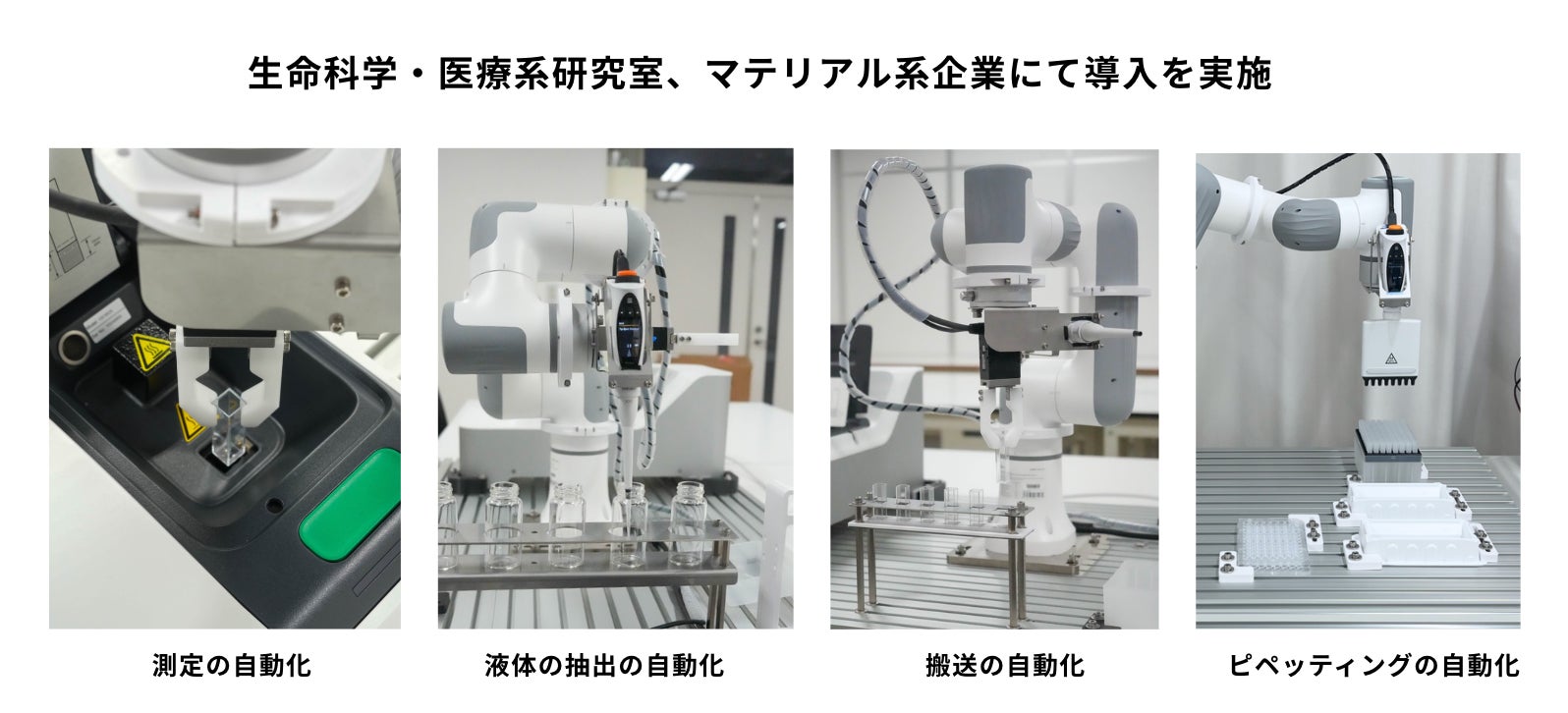
We already have paid installation achievements for life science/medical research laboratories and material-related companies, and inquiries and joint discussions regarding total lab automation are ongoing with pharmaceutical companies and chemical manufacturers (including listed companies).
Future Outlook
Tsubame Lab aims for full SaaS deployment of Cloud Lab and will expand its network in stages.
First, within Japan, while accumulating installation achievements for Networked Cloud Labs, we will increase the number of Core Cloud Lab facilities and expand the range of experiments we can handle. In parallel, we will strengthen the AI functions of T-Lab Studio and sequentially implement advanced features such as automatic optimization of experiment protocols and automatic proposal of next experiments based on experimental results.
In the medium to long term, we are also planning overseas expansion. In the US market in particular, the use of Cloud Labs is rapidly expanding, and we are preparing to enter as a Japan-originated platform.
"A research infrastructure that allows researchers worldwide to conduct experiments anytime, anywhere, online" – Tsubame Lab will continue to take on the challenge of realizing this vision.
Please contact us here:
https://tsubamelab.com/%E3%81%8A%E5%95%8F%E3%81%84%E5%90%88%E3%82%8F%E3%81%9B/
FAQ
What is Tsubame Cloud Lab?
Tsubame Cloud Lab is a cloud-based automated experiment platform that allows researchers to design, execute, and manage data for experiments online, regardless of their location. It functions as Japan's first 'distributed cloud lab network'.
How does Tsubame Lab's approach differ from traditional SIers?
Unlike traditional SIers who focus on individual system installations, Tsubame Lab connects all introduced automation systems to the cloud and integrates them into a single platform, thereby building a distributed cloud lab network that expands with each installation.
What is the difference between Networked Cloud Lab and Core Cloud Lab?
Networked Cloud Lab refers to automation systems installed within customer facilities that are connected to the cloud platform. Core Cloud Lab is a fully automated experimental facility built and operated by Tsubame Lab itself.
What are the benefits of Tsubame Cloud Lab?
It enables remote access regardless of location, centralized data management in the cloud, and cross-departmental use within an organization. It also guarantees experiment reproducibility and traceability, facilitating data sharing and collaborative research.
What track record does Tsubame Lab have?
Tsubame Lab has a track record of paid installations for life science/medical research laboratories and material-related companies, and is also receiving inquiries from pharmaceutical and chemical manufacturers.