Opening the Future of Sustainable Chemical Industry with Iron Catalysts: TSK's Challenge to Create New Options for Coexisting with the Earth, Breaking Away from Rare Metal Dependence
TSK Corporation is challenging the chemical industry's reliance on rare metal catalysts by developing and utilizing iron-based catalysts. Their dream is to create a sustainable future where abundant iron is a common catalyst, leading to eco-friendly materials for organic EL and agriculture, thus fostering industries that coexist with the Earth.
📋 Article Processing Timeline
- 📰 Published: April 1, 2026 at 18:00
- 🔍 Collected: April 1, 2026 at 09:36
- 🤖 AI Analyzed: April 16, 2026 at 20:34 (370h 58m after Collected)
We support April Dream, which aims to make April 1st a day to share dreams. This press release is the dream of TSK Corporation.
Making the future of chemistry gentler with iron.
The dream we at TSK Corporation envision is a world where the chemical industry has options that are kind to both the Earth and people.
Currently, much of the chemical industry is supported by rare metal catalysts.
On the other hand, issues such as uneven resource distribution, soaring prices, and environmental impact are growing year by year.
"Can we pass this on to the next generation?"
That question is our starting point.
TSK's challenge is to use 'iron,' which is abundant on Earth, as a catalyst to create cutting-edge materials.
Iron is an inexpensive, abundant, and easy-to-handle material.
Based on research cultivated over many years at Kyoto University, we have implemented iron catalyst reactions, which have been difficult to control until now, at an industrial level.
We have expanded this to various fields, including organic EL materials, agricultural materials, and biomass materials.
Organic EL Materials

In organic EL materials, we aim for manufacturing that does not depend on rare metals, while balancing high performance and cost competitiveness.
Agricultural Field
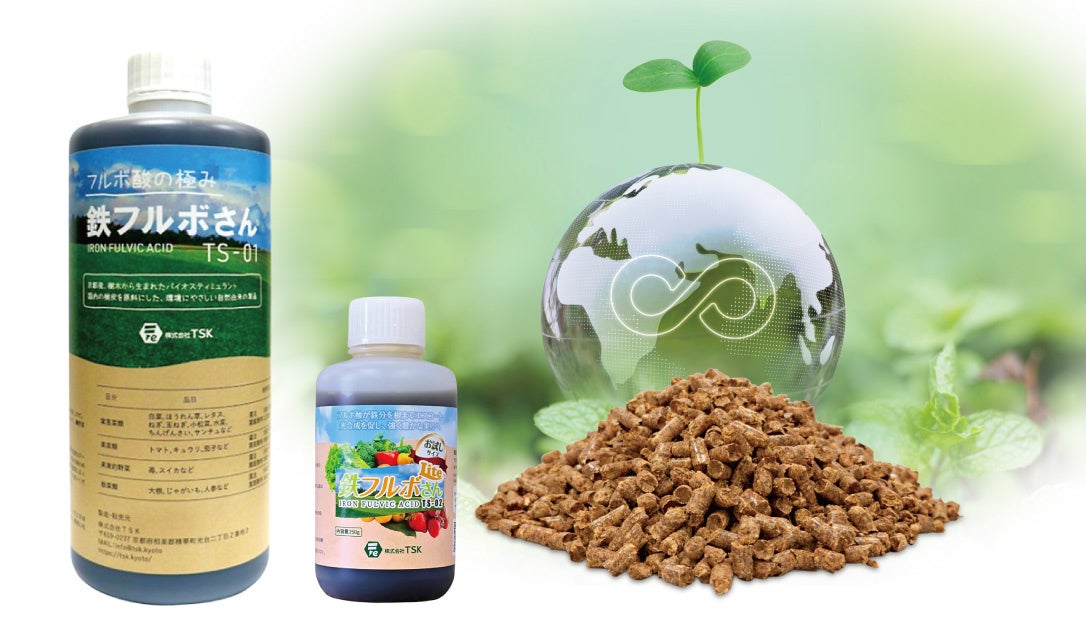
In the agricultural field, we deliver materials that draw out crop vitality, using underutilized biomass as raw material.
All of these are connected to our desire to increase "chemistry that can be sustained without difficulty" in society.
Our April Dream is to create a future where iron catalysts become a "commonplace option," not a special technology.
Industries grow by utilizing what the Earth already has, rather than competing for resources.
Believing in that future, we continue to work with iron every day.