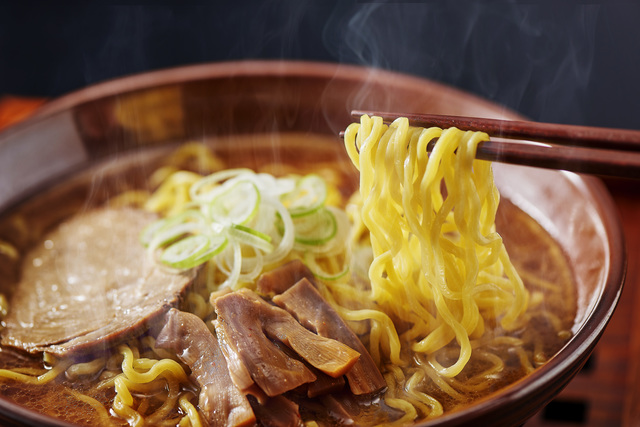
Teikoku Databank, Ltd. conducted a survey and analysis of the nationwide "ramen shop" market.
[Survey Target] Companies operating "ramen businesses," including nationwide chain stores and local ramen shops. This includes Chinese restaurants that primarily serve ramen. Ramen shops that also offer similar menus such as tsukemen are included. Companies identified as exclusively FC (franchisee) stores were excluded from the survey.
[Note] Data on business performance, etc., was compiled based on company profile files (COSMOS2, approximately 1.51 million companies), company credit investigation reports (CCR, approximately 2 million companies) held by Teikoku Databank as of May 2026, and external information.
Furthermore, ramen shop performance and store count data include some estimated and projected values.
SUMMARY
The "ramen shop market" is booming. The "ramen shop market" (based on operator sales, as of May), which includes nationwide chain stores, local ramen shops, and Chinese restaurants primarily serving ramen, is projected to reach a record high of 885.5 billion yen in FY2025. It is possible that the ramen shop market will reach the 1 trillion yen mark for the first time as early as FY2027.
Ramen Shop Market to Reach 885.5 Billion Yen in FY2025, Approaching "1 Trillion Yen Market"
The "ramen shop market" is booming. The "ramen shop market" (based on operator sales, as of May), which includes nationwide chain stores, local ramen shops, and Chinese restaurants primarily serving ramen, is projected to reach 885.5 billion yen in FY2025. This is a 63.4% increase from 541.8 billion yen in FY2010, setting a new record high since data collection began in FY2010. If this pace continues, the market could reach 1 trillion yen for the first time as early as FY2027.
In terms of profit (total net income), it is expected to be 17.1 billion yen in FY2025 (for companies where data is available), a decrease of nearly half from 35.6 billion yen in the previous fiscal year. While market size is at a record high, profits have continued to significantly decline due to rising costs.
Looking at the number of stores in major chain stores among the top 50 ramen shop businesses by sales, it reached 6,305 stores by the end of FY2025. This is an increase of 183 stores, or 3.0%, from FY2024 (6,122 stores), which was the first time exceeding 6,000 stores since 2010, setting a new record. Ramen shops continue to actively open new stores, with expansion being active in tourist areas, near stations, and in entertainment districts. On the other hand, competition is intensifying in suburban roadside locations, and rising rents, labor costs, and utility costs are making it difficult to recoup store opening investments, leading some companies to carefully consider new store openings, and the pace of store growth has slowed compared to the previous year.
Shift from Pursuit of Taste to Cost Management
Looking at the business performance trends of ramen shops in FY2025, 38.8% saw an increase in sales compared to the previous year. This is a decrease for the second consecutive year from the peak in FY2023 (56.3%), and it remained in the 30% range for the first time in four years. On the other hand, "similar to the previous year" (47.2%) was the highest in the past 20 years, and "decrease in sales" (14.0%) increased for the second consecutive year. Ramen shops that increased sales continued to benefit from the growing international recognition of Japanese ramen and strong customer traffic, particularly from tourists in Asian countries such as South Korea, Taiwan, and Hong Kong, driven by inbound tourism. On the other hand, due to the impact of price increases on menus stemming from rising raw material costs amidst a trend of dining out less due to inflation and growing health consciousness, some shops struggled to maintain customer traffic, especially among local regular customers, resulting in sales remaining similar to the previous year for many ramen shops.
In terms of profit and loss, "increase in profit" accounted for the largest proportion at 38.5%, but the percentage decreased from the previous year. Companies that continued to increase profits secured them through strategic price increases such as enhancing limited-time menus and toppings, and charging for previously free services like "free rice," as well as closing unprofitable stores. Meanwhile, "decrease in profit" accounted for 34.8%, a significant increase from the previous year. The proportion of "loss-making" businesses decreased for the second consecutive year.
In ramen shop management, in addition to the rise in procurement prices for raw materials, etc., which began in earnest from FY2022, there has been a notable increase in various costs such as utility costs for simmering soup and labor costs. The cost of ramen has remained high due to significant price increases not only for ingredients like pork and back fat, which were previously inexpensive, but also for a wide range of raw materials including noodles, nori, and bamboo shoots, from soup ingredients to toppings.
In this context, ramen shop management is shifting from a mere "competition of taste" to a diversification of sales channels, cost management, and labor-saving measures. Local chain stores with multiple locations are aiming to minimize store operating staff while stabilizing quality and securing profits by implementing order systems using tablet terminals and chat tools like LINE in addition to ticket vending machines, and consolidating preparation work through the introduction of central kitchens. Ramen shops for which such large-scale investments are difficult to undertake independently are placing themselves under the umbrella of major food service companies or strong local chains, entrusting them with cost management such as ingredient procurement and marketing, while focusing on the pursuit of taste themselves, indicating a division of roles.
Ramen Shop Bankruptcies Decrease for Second Consecutive Year in FY2025
In FY2025, there were 55 bankruptcies (liabilities of 10 million yen or more, legal proceedings) of "ramen shops," marking a decrease for the second consecutive year from the record high of 75 cases in FY2023. However, this remains at a high level compared to the pre-COVID era. While it is believed that a larger number of ramen shops actually exited the market, including the closure of individual stores, the ramen shop industry is entering a transitional phase away from the "storm of elimination" of rapidly increasing bankruptcies.
Looking at the company size of bankrupt ramen shops, approximately 80% were small businesses with capital of less than 10 million yen, including individual stores. Many cases involved businesses that were unable to keep up with price increases for raw materials and labor costs, leading to financial difficulties.
Ramen Prices Show "Trivialization" Trend; "Around 1,000 Yen" Faces Challenges
Currently, major ramen shop operators, food service chains, and investment funds aiming to acquire new flagship brands are acquiring and integrating small and medium-sized ramen shops facing succession issues and high costs, and are working to revitalize them by introducing management know-how, including DX. Furthermore, with the expansion of store networks by major chains both domestically and internationally, and the entry of food service companies from non-noodle-based businesses, market expansion is expected to continue in FY2026.
On the other hand, as cost management is advanced by leveraging economies of scale through the expansion of store networks, and low-cost operations are promoted through operational efficiency, a gap is widening between chain stores and small and medium-sized individual stores in terms of "profitability per bowl of ramen (earning power)."
In such an environment, a change in price perception symbolized by the "1,000 yen barrier" for a bowl of ramen, and a flexible pricing strategy to match it, are required. Traditionally, ramen had a psychological upper limit of "over 1,000 yen is expensive" – the "1,000 yen barrier." However, in recent years, in addition to the low-price range of around 500 yen and the standard price range of around 1,000 yen, there is a growing trend towards targeting the high-price range of 1,500 yen or more, aimed at inbound demand and affluent customers, leading to a trivilization of prices according to the value offered. In such a situation, price increases for standard ramen, which were previously offered around 1,000 yen, tend to be positioned as lacking "premium feel." As a result, some cases have been observed where customer traffic and profits have worsened compared to before the price increase, facing the dual risks of "declining competitive advantage within the same price range" and "customer outflow to the premium segment."
Going forward, strategic choices will become increasingly important: whether to aim for premiumization through the creation of added value with clear differentiation, or to pursue economies of scale in the low-price segment through thorough operational efficiency. The polarization of the market, accompanied by a shrinking middle price range of around 1,000 yen, may further accelerate in the future.
FACT BOX
- Source: PR TIMES
- Category: 市場動向