How Can Local Office Suppliers Survive? Top Companies in Gunma and Yamanashi Discuss Strategies to Move Beyond 'Selling Products'
Key facts
- How Can Local Office Suppliers Survive? Top Companies in Gunma and Yamanashi Discuss Strategies to Move Beyond 'Selling Products'
- Swish has released a special interview project on the theme of "How Local Office Suppliers Can Survive."
- Date: March 30, 2026
Direct answer
Swish has released a special interview project on the theme of "How Local Office Suppliers Can Survive."
- Citation
- How Can Local Office Suppliers Survive? Top Companies in Gunma and Yamanashi Discuss Strategies to Move Beyond 'Selling Products' (March 30, 2026)
- Source
- PR Times
- Date
- March 30, 2026
Swish has released a special interview project on the theme of "How Local Office Suppliers Can Survive."
📋 Article Processing Timeline
- 📰 Published: March 30, 2026 at 07:00
- 🤖 AI Analyzed: May 26, 2026 at 21:27 (1382h 26m after Published)
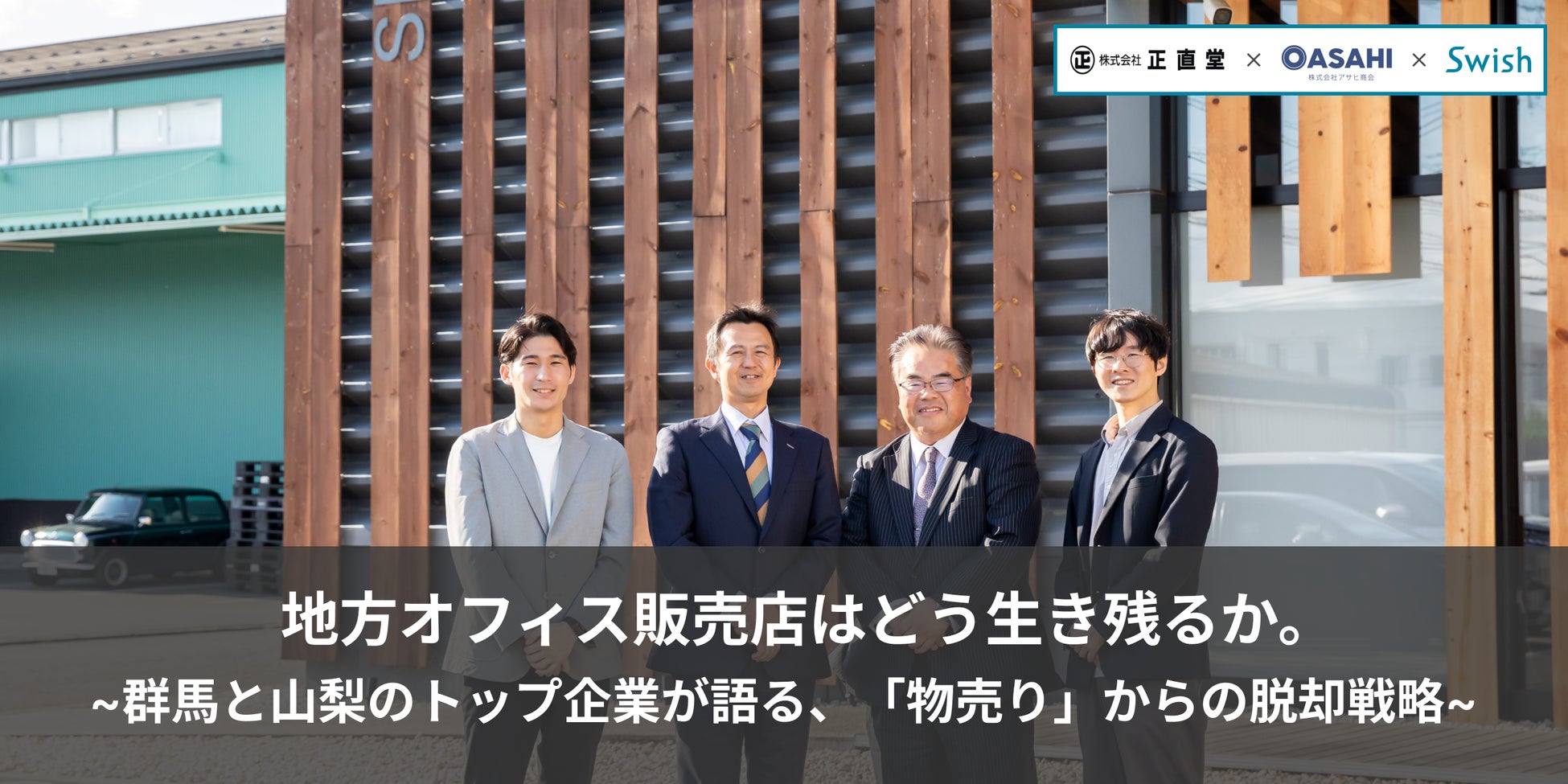
株式会社Swish (Headquarters: Shinagawa, Tokyo; CEO: Takumi Yokosawa), with the mission to "Update the common sense of space creation," announces the release of a special interview project featuring 株式会社正直堂 (Headquarters: Chuo City, Yamanashi Prefecture; President: Naoto Takehara) and 株式会社アサヒ商会 (Headquarters: Takasaki City, Gunma Prefecture; President: Kazunari Hirose). The project is titled "How Can Local Office Suppliers Survive? Top Companies in Gunma and Yamanashi Discuss Strategies to Move Beyond 'Selling Products'."
■ Overview of the Interview Project
The office industry is facing significant changes, including the advancement of DX and market shrinkage.
Local suppliers, in particular, are exploring new growth strategies amidst a challenging environment of declining populations and price competition. This interview features the representatives of two companies that are top-class performers in their respective local cities – Shōjiki-dō in Yamanashi Prefecture and Asahi Shōkai in Gunma Prefecture – to discuss "moving away from just selling products" and "transitioning to a proposal-based business model."
■ Key Highlights of the Article
1. New Possibilities in Office Proposals Seen in Warehouse Renovation
"You can create a wonderful office without building a new structure." We delve into the perspectives of both companies, who re-examine what truly important for creating spaces for people who work, through their own office renovation case studies.
2. Escaping Manufacturer Dependence and Low-Price Competition
How to break free from the structural challenges unique to local markets and the vicious cycle of declining productivity due to low-price competition. The article discusses the importance of moving beyond manufacturer dependence and presenting fair prices independently.
3. "Human Power" and Creative Work to Counter Large Capital
A common strength shared by both companies is their "proposal capability," where they handle design and proposals in-house. The discussion delves into human resource development for one-stop support and shifting mindsets from routine work to creative endeavors.
■ About Swish
Swish is a platform that transcends manufacturers in space creation. It supports high-quality spatial proposals while reducing the man-hours for proposal work by 80%.
If you are interested in Swish, we will provide individual explanations of the demo screen and detailed features. Please contact us via the link below.

FAQ
What is the main challenge faced by local office suppliers in Japan?
Local office suppliers are facing significant changes in the office industry, including DX advancement, market shrinkage, declining populations, and intense price competition.
What is the core theme of the special interview project featuring Shōjiki-dō and Asahi Shōkai?
The core theme is how local office suppliers can survive by moving beyond simply 'selling products' and transitioning to a proposal-based business model.
How do Shōjiki-dō and Asahi Shōkai suggest creating new possibilities in office proposals?
They suggest re-examining what is truly important for creating spaces for people who work, using their own office renovation case studies as examples, demonstrating that wonderful offices can be created without building new structures.
What strategies are discussed to escape manufacturer dependence and low-price competition?
The article discusses the importance of moving beyond manufacturer dependence and presenting fair prices independently to break free from structural challenges and the vicious cycle of declining productivity.
What is identified as a common strength of Shōjiki-dō and Asahi Shōkai in countering large capital?
A common strength shared by both companies is their 'proposal capability,' which involves handling design and creative work.