[Event Report] "Opening Up Places to Belong in Gifu" ~Considering Places to Belong Between Healthcare, Welfare, Education, and the Community~
This report details an event titled "Opening Up Places to Belong in Gifu," which brought together healthcare, welfare, and education professionals to discuss the creation of community spaces for support. Three organizations presented their diverse approaches to providing safe havens, youth support, and community connection through food, highlighting challenges in funding and staffing but emphasizing the vital role of these spaces in fostering belonging and social participation.
📋 Article Processing Timeline
- 📰 Published: March 31, 2026 at 22:52
- 🔍 Collected: April 1, 2026 at 13:39 (14h 46m after Published)
- 🤖 AI Analyzed: April 17, 2026 at 01:58 (372h 18m after Collected)
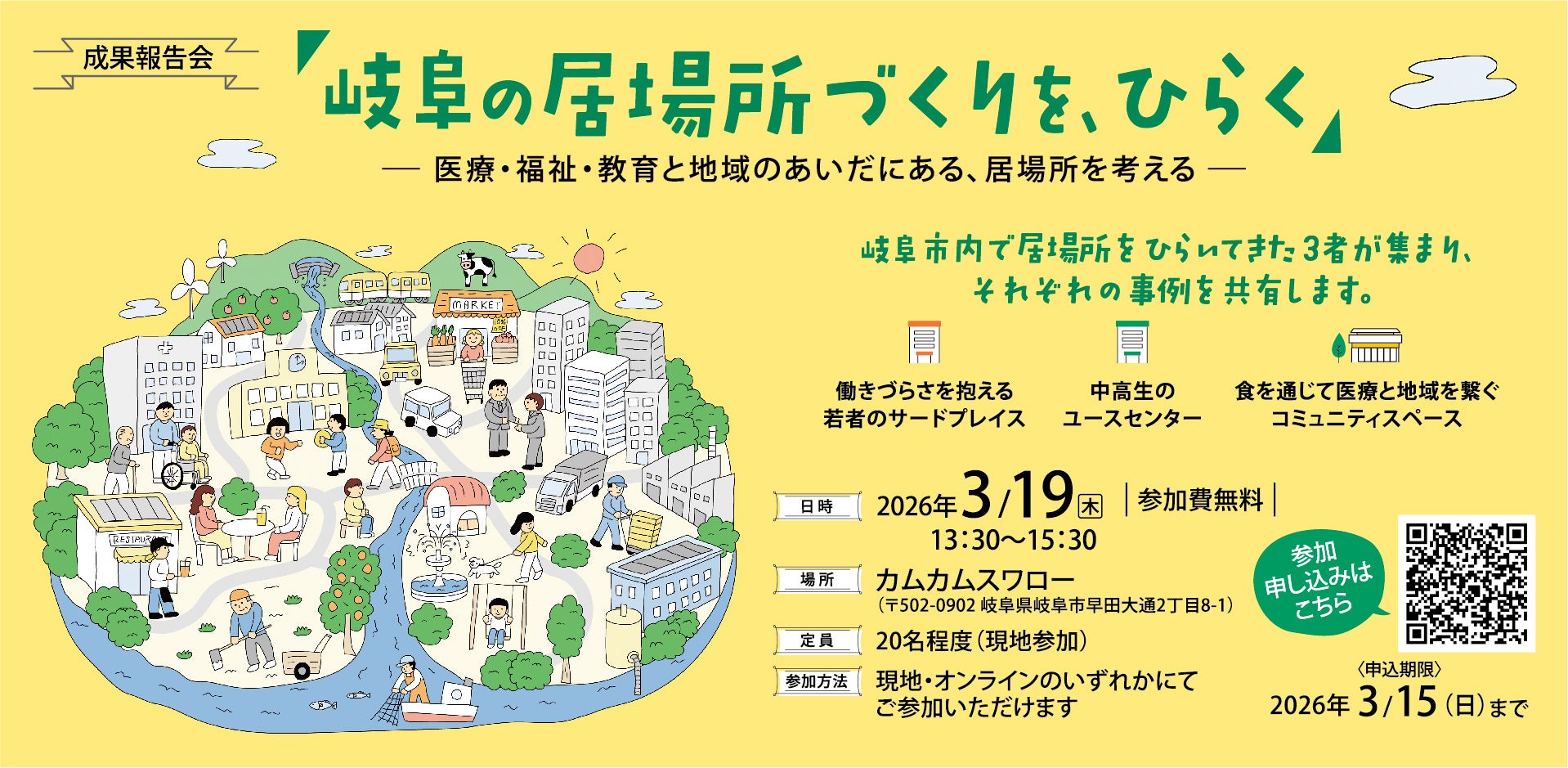
On March 19, 2026, the results report meeting "Opening Up Places to Belong in Gifu" was held in a hybrid format, combining in-person and online participation. The event, organized by Sustainable Support General Incorporated Association, attracted approximately 20 people to the venue and about 50 online, indicating a high level of interest in creating places to belong. This article will deliver reports on the practices of three organizations that have opened places to belong through different approaches within Gifu City, and a cross-talk session where they discussed the real challenges and prospects of operation.
"Why a Place to Belong Now?" - Background of the Event
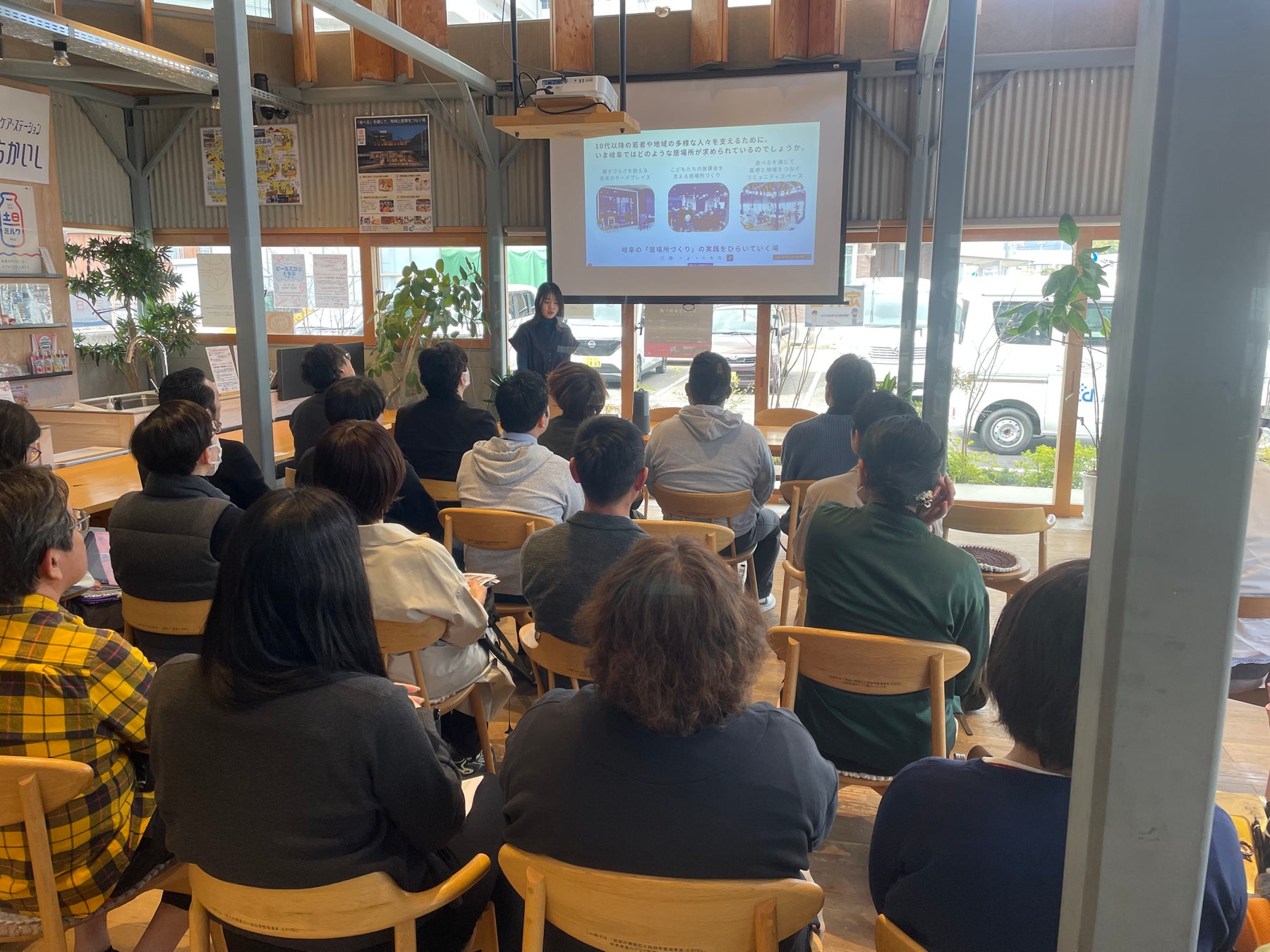
At the beginning of the event, Goto from Sustainable Support, the organizer, explained the purpose of today's event. The organization began with employment support for young people facing difficulties in employment and for individuals on the grey zone of developmental disabilities who tend to fall through the cracks of existing systems. However, they faced the challenge that "there are people who cannot be supported by employment frameworks alone," and have continued to operate "places to belong (third places)" for young people.
In practicing the creation of these places, they realized the diversity of their forms and the operational difficulties. This event was planned not just as a sharing of successful cases, but as a forum to think together with participants about "what kind of places to belong Gifu will need from now on," by inviting guests who operate open places to belong from different specialized fields such as healthcare, welfare, and education, and incorporating their respective practices.
Creating a "Safe Base for Young People Where They Can Drop In Without a Specific Purpose" (Gifu Career Step Center)
First, Watanabe from Sustainable Support reported on the results for fiscal year 2025 for "Gifu Career Step Center" (commonly known as "Gifu Cali"), a third place in the city center for young people who have difficulty working.
Gifu Cali, a multifaceted safety net to prevent "invisible isolation," is a free place to belong for young people aged 15 to 35, established in the Yanagase shopping street in Gifu City, utilizing grants from the Japan Organization for Medical and Dental Education (WAM). It is equipped with PCs, books, games, Wi-Fi, etc., serving as a "safe base" where people can drop in casually without an appointment or specific purpose. Existing public support suffers from low awareness and the issue of young people who cannot spontaneously ask for help falling through the cracks. Therefore, it is operated with the background that building multifaceted relationships starting with "food" and "a place to belong" is essential.
This year, partly due to the impact of rising prices, they started offering "light meals" of handmade onigiri and miso soup as a new initiative. This fosters natural communication through food, and participatory cooking events also serve as opportunities for interaction. This year's achievements (as of March 6, 2026) include 59 registered users, a total of 495 visits to the third place, and 158 meal servings.
Four User Models and Provided Value User needs are diverse, and Gifu Cali supports users by classifying them into four models.
-
Entry/Initial Contact Type: Unemployed individuals or students not connected to other support services use it as their "first step" to go out.
-
Concurrent Use/Accompaniment Type: Used in conjunction with other employment support organizations as "lubricant" to maintain motivation and organize thoughts.
-
Community Engagement Type: Frequent visitors who build friendships beyond their roles and enjoy interaction.
-
Social Participation Expansion Type: Individuals in recovery who play a peer role, connecting users with each other.
The value provided by Gifu Cali is the synergistic effect of "a place to belong," "employment support," and "food support." It creates a virtuous cycle where "a sense of belonging" through unconditional acceptance forms the foundation, food support expands connections, and ultimately supports the step just before social participation. Future challenges include securing stable financial resources independent of grants and expanding the support system to meet needs.
"A Little Project' Can Change Children, A Place for Teens" (Hitonone)
Next, Hanako Shinoda, Representative Director of Hitonone General Incorporated Association, reported on their initiatives in creating places to belong that support children's after-school hours.
Supporting the growth of children whose struggles are hard to see Hitonone was founded in 2018 with the philosophy of "A society where we grow together," developing after-school care, day services for children with disabilities, and individual tutoring schools. In recent years, they have focused on the "poverty and inequality" and "loneliness" that teenagers face. Surveys show that about 40% of junior and senior high school students feel they "have nowhere to go after school," and there is a strong demand for safe places for children with developmental disabilities, school refusal, or those who are young carers, whose struggles are often unseen.
In response, Hitonone launched "Creators Club," a place for art activities for junior and senior high school students, and began operating a "Youth Center" in Minokamo City. The Minokamo City base hosts events twice a week, with an average of 13.5 attendees each time, who spend their time as they wish, playing table tennis, chatting, and eating.
"A Little Project" Elicits Changes in Children Ms. Shinoda emphasized that "little projects" undertaken within these places, along with interactions with local people, significantly change children. For example, junior and senior high school students who met at Hitonone formed a music unit called "Hoshino-ne," and with the involvement of a local video creator, it developed into the production of a promotional video, boosting the children's confidence. Another example: based on the desire to "have a barbecue," the children themselves wrote a grant proposal and, in collaboration with experts from the Forest Culture Academy, realized a one-night, two-day forest camp. Through this successful experience and intensive communication, a junior high school student who had been truant resumed attending school of their own volition, showing remarkable growth.
Furthermore, they also spoke about the importance of initiatives to expand "visible relationships" by collaborating with nearby welfare facilities like "Ibuki Welfare Association" and "CamCamSwallow," the venue for this event, where children challenged themselves to create signs for the place or participated in local festivals.
"Don't Give Up on the Joy of Eating, Connecting Communities Through Food" (CamCamSwallow)
The third guest was Mr. Masato Chishiki, a director of Chishiki Hospital and a dentist. He spoke about the challenge of "CamCamSwallow," a community space connecting healthcare and the local community through "eating."
Challenges in "Eating Experiences" Unsolvable by Healthcare Alone Mr. Chishiki specializes in swallowing rehabilitation. With the aging population, it is estimated that about 10 million people in Japan have swallowing disorders, with approximately 35,000 in Gifu City alone. However, within the normal framework of medical and nursing care, the goal is often "safe nutritional intake," frequently leading to the provision of pureed meals, thus losing the joy of eating.
"What healthcare can support is merely the entrance – the ability to eat. What is truly important is the eating experience itself: 'Who, where, and what you eat,'" Mr. Chishiki pointed out.
Connecting with the Community Starting with "Eating" To solve this issue together with the community, "CamCamSwallow" was established adjacent to Chishiki Hospital. As a cafe that can provide dysphagia-friendly meals (soft foods), it has created a space where people with and without disabilities can enjoy delicious meals at the same table.
Activities extend beyond cafe operations to include "Cancer Cafes" for sharing concerns during cancer treatment, nutritional support for high school baseball teams, and promoting dysphagia-friendly menus at local restaurants. Furthermore, they are promoting region-wide initiatives, such as collaborative events with Zenkoji Temple, and supporting travel experiences for people with swallowing disorders in collaboration with Nagaragawa Onsen inns and NEXCO Central Nippon. CamCamSwallow plays a significant role as a "foundation of relationships" that supports anxieties and isolation outside the medical sphere with community connections, starting with eating.
Cross Talk: The Value of Places to Belong and Future Prospects
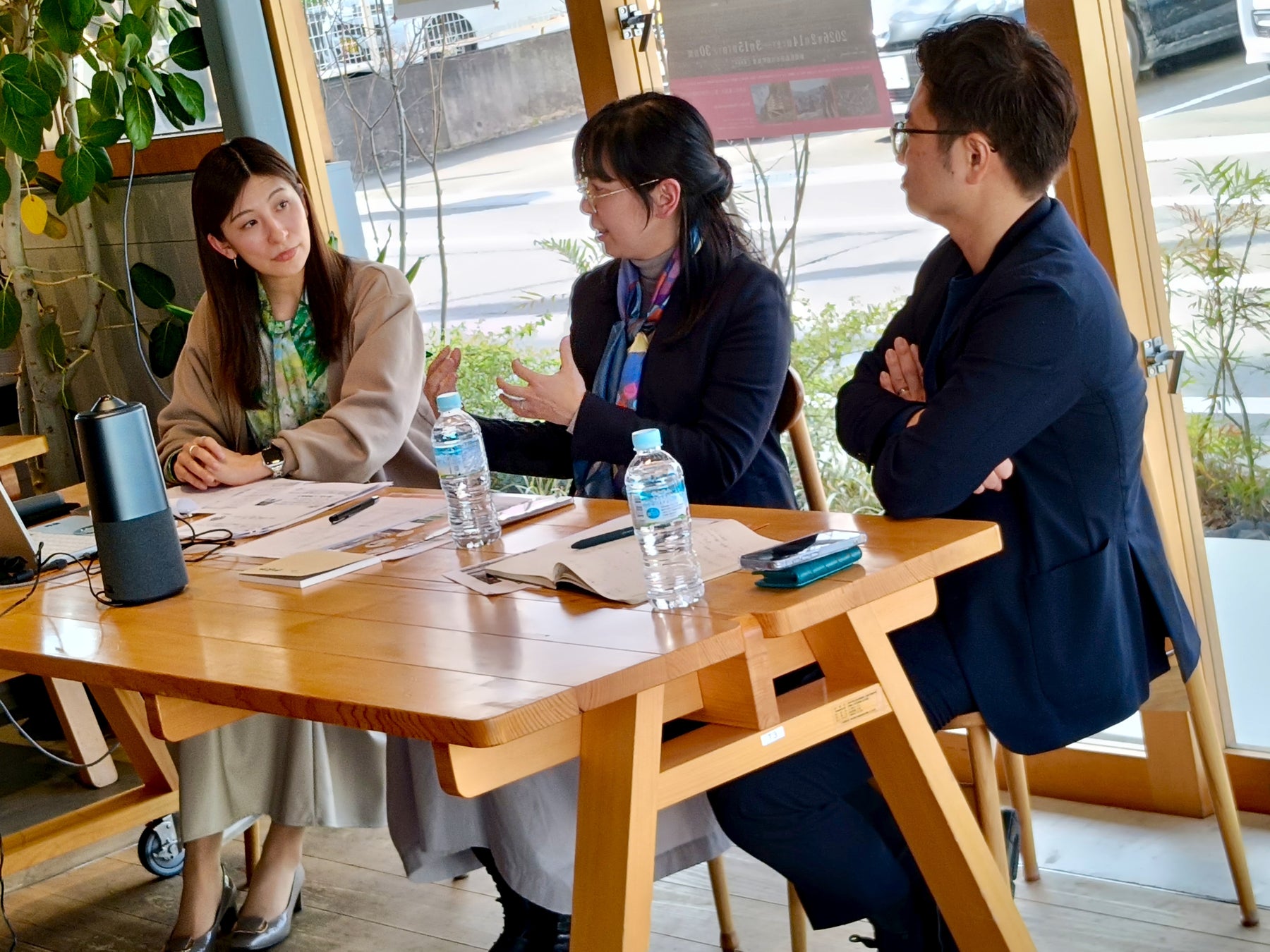
In the latter half, a cross-talk session was held among the three speakers, moderated by Goto of Sustainable Support.
The Distance and Target Setting of "Support" in Places to Belong The first theme was "What is valued in a place to belong." Ms. Shinoda cited "being a place where one can always return" and "the function of listening to voices without judgment and from a non-interested standpoint." Mr. Goto echoed this, emphasizing the importance of consciously avoiding appearing as a "supporter" and maintaining a posture of observation without over-intervention towards young people. Mr. Chishiki also stated that while medical professionals tend to want to be "meddlesome," it is crucial to leave "space" that is not pushy.
The difficulty of target setting, i.e., "who to open the place to," was also discussed. Hitonone clearly separates spaces and times for junior/senior high school students and elementary school students, and Gifu Cali has an age limit of 35 for young people support. However, in practice, there are many situations where drawing lines is difficult. On the other hand, CamCamSwallow achieves a space where diverse citizens mingle by having a clear concept (core) of "enjoying meals regardless of disability."
The Hurdles of "Financial Resources" and "Human Resources" for Sustainable Operation The biggest hurdles in operation, commonly cited by all three, were "securing financial resources" and "securing human resources." It is difficult to make the business viable solely through cafe sales and grants, requiring corporate donations and multifaceted fundraising. Furthermore, Ms. Shinoda spoke about the difficulty of staffing youth workers with appropriate skills during evening and night hours, as places for junior and senior high school students are particularly open during these times. There was agreement that collaboration and support from the government are indispensable for sustaining such low-profit safety net businesses.
To Those Starting Places to Belong, and Towards the Future As advice for those who want to start creating places to belong, Ms. Shinoda proposed "starting small, in a way that suits your circumstances." She stated that increasing collaborators gradually, rather than immediately renting a large space, is the key to continuation. Mr. Chishiki emphasized "building connections" and shared an anecdote from the startup phase where he personally visited various places in the community and "distributed business cards like shuriken."
Regarding future prospects, Mr. Chishiki aims to create a system for expanding the culture of dysphagia-friendly meals from Gifu to other regions, while Ms. Shinoda strongly stated her ideal of "one place to belong per junior high school district" and her focus on training personnel (youth workers) for that purpose.
Conclusion Finally, the moderator Goto concluded with the statement, "Creating places to belong not only directs kindness towards those who tend to be isolated but also requires meticulous design and structure to achieve it." It was a highly meaningful achievement report that prompted participants to reconsider the nature of community, where the "visible relationships" that organically connect people across the boundaries of healthcare, welfare, and education become the true safety net in society.

Sustainable Support, General Incorporated Association
Our goal is "A society where everyone can live true to themselves."
With a focus on employment support, we support individuals by embracing their "individuality," broadening their self-understanding and potential through "work," and taking a step towards their future.
We value support that leaves no one behind and a preventive approach, and we are also working to create a regional community free from discrimination and prejudice, and to promote diversity.
【Main Businesses】
・Operation of Employment Transition Support, Employment Stabilization Support, and Type B Continuous Employment Support facilities.
・Implementation of Employment Selection Support, Employment Consultation Assistance, and Rework Support projects.
・Planning and operation of career support programs for students and young people facing difficulties in job hunting.
・Operation and implementation of the Gifu City WORK! DIVERSITY Project demonstration model project.
・Operation and implementation of the Gifu Prefecture Youth Support Station project.
・Implementation of the Gifu Prefecture commissioned, companion-style hikikomori support project.
・Planning and operation of disability awareness lectures and diversity promotion events.
ーーーーーーーーーーーーーーーーーーーーーーー
Company Overview
Corporate Name: Sustainable Support, General Incorporated Association
Location: 3F, Urban Front Building, 2-7 Sumiyoshi-cho, Gifu City, Gifu Prefecture
Representative Director: Chie Goto
Established: July 2015
Phone Number: TEL 058-216-0520 FAX 058-215-1932
Corporate HP: https://sus-sup.com/