Eliminating 'Mobility Refugees' from Japan: Sun Emperor's Challenge
Sun Emperor aims to eliminate the term 'mobility refugees' from Japan by promoting specified small motorized bicycles as a new mobility solution.
📋 Article Processing Timeline
- 📰 Published: April 1, 2026 at 18:30
- 🔍 Collected: April 1, 2026 at 10:15
- 🤖 AI Analyzed: April 6, 2026 at 15:44 (125h 28m after Collected)
Our company endorses April Dream, which aims to make April 1st a day for announcing dreams. This press release is the dream of "Sun Emperor."

■ The Reality of Increasing Numbers of People Unable to Move
In Japan today, due to the progression of an aging society and an increase in license surrenders,
the number of people who have lost their means of transportation is rapidly increasing.
・Unable to go shopping
・Difficulty commuting to hospitals
・Giving up on going out altogether
This situation is spreading not only in rural areas but also in urban areas.
■ Survey Results on Public Transportation
Given this situation, a survey conducted by the Mobility Platform Operators Council targeted residents in municipalities with a population of 50,000 or more nationwide (excluding special wards) to investigate the actual usage and challenges of public transportation.
■ The Reality of Mobility Refugees
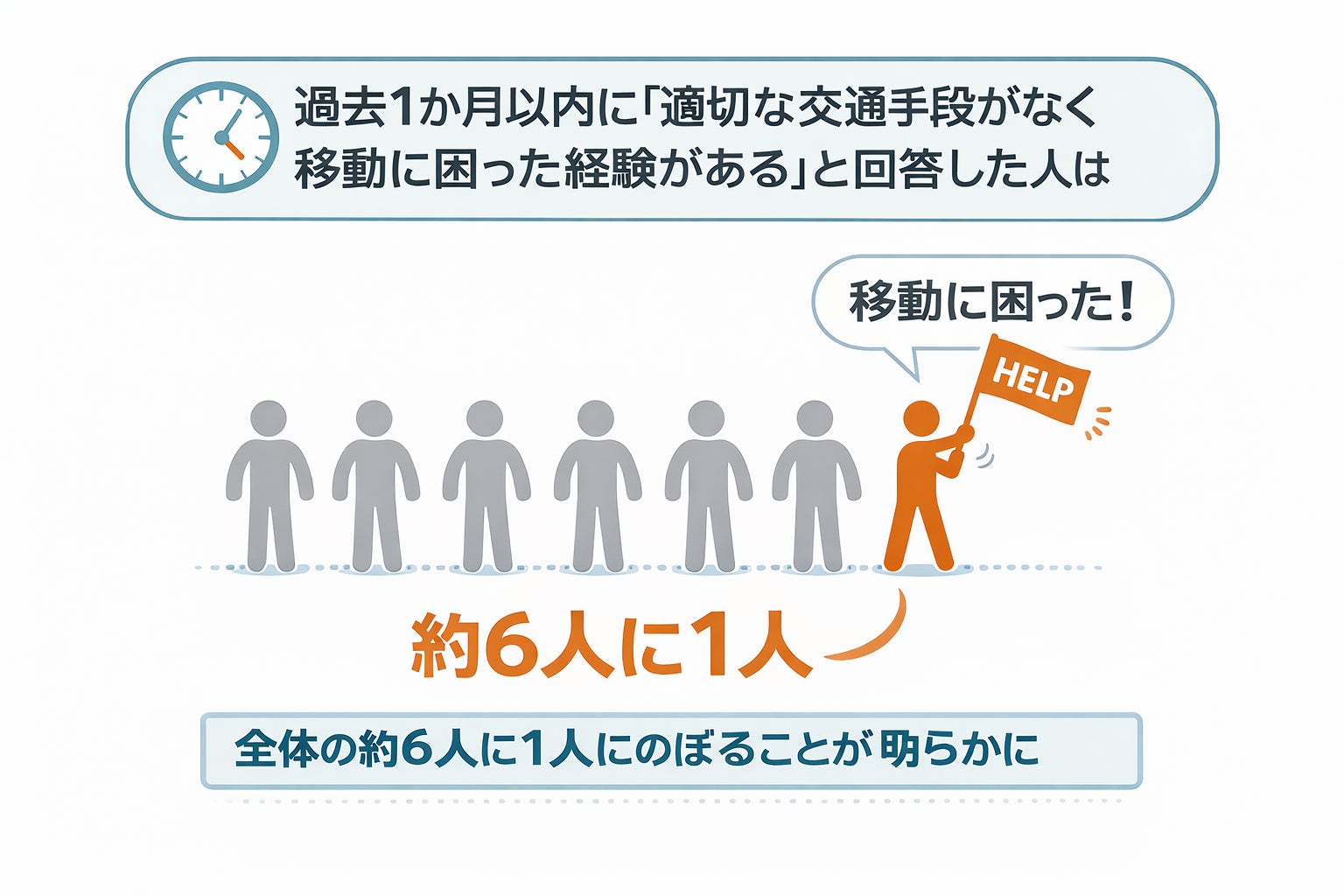
It was revealed that approximately 1 in 6 people overall reported having experienced difficulties with mobility due to a lack of appropriate transportation within the past month.
This indicates that mobility challenges are not limited to certain regions or specific demographics,
but are a significant issue spreading across society as a whole.
■ Frequency of Mobility Difficulties
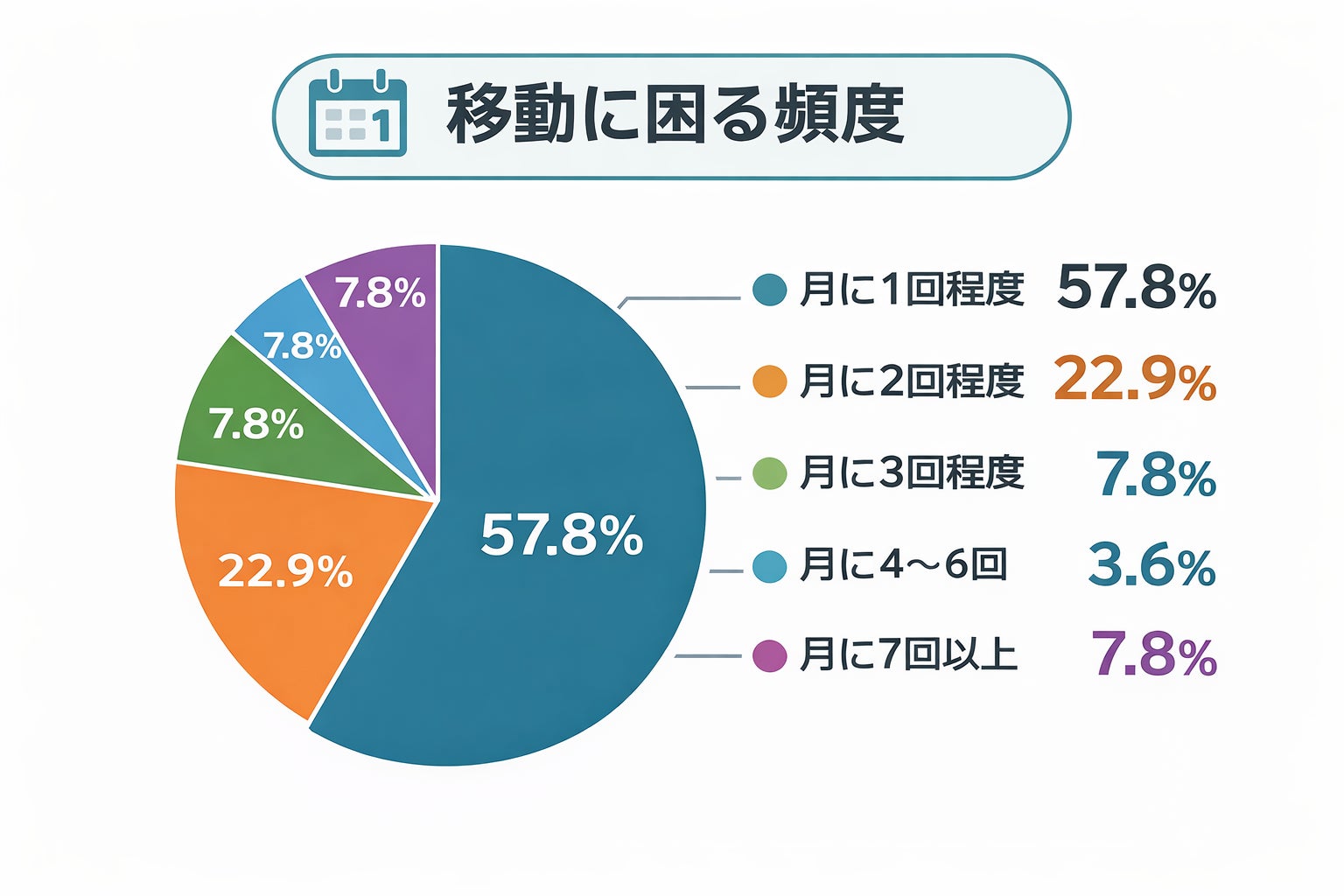
According to the survey results,
About once a month: 57.8%
About twice a month: 22.9%
About three times a month: 7.8%
4-6 times a month: 3.6%
7 or more times a month: 7.8%
This highlights the reality that many people experience daily inconvenience with mobility.
This survey was conducted under the following conditions:

|
Survey Target |
Residents in municipalities with a population of 50,000 or more |
|
Regional Classification |
・Small cities (50,000 to less than 200,000): 393 municipalities |
|
Valid Responses |
25,648 cases |
|
Survey Period |
February 22 - February 26, 2024 |
|
Survey Method |
Internet monitor questionnaire |
|
Survey Company |
Cross Marketing Inc. |
|
Survey Organizer |
Mobility Platform Operators Council |
Such large-scale surveys also reveal that challenges related to the maintenance and convenience of public transportation exist in each region.
■ Conditions Prone to Becoming Mobility Refugees
It has been revealed that people who experience difficulty with mobility tend to share several common characteristics.
In particular, the possibility of becoming a "mobility refugee" increases when the following conditions overlap:
・Long distance to the nearest station
・Frequent use of taxis
・Common among young people and those aged 80 or older
These results highlight the reality that individuals residing in areas where automobiles are essential for daily life, yet who "do not own a private car" or "cannot drive themselves" due to voluntary license surrender, face difficulties in securing means of transportation.
■ Relationship between Distance from Station and Mobility Difficulty
Furthermore, an analysis was conducted on the relationship between the distance to the nearest station and mobility difficulty.
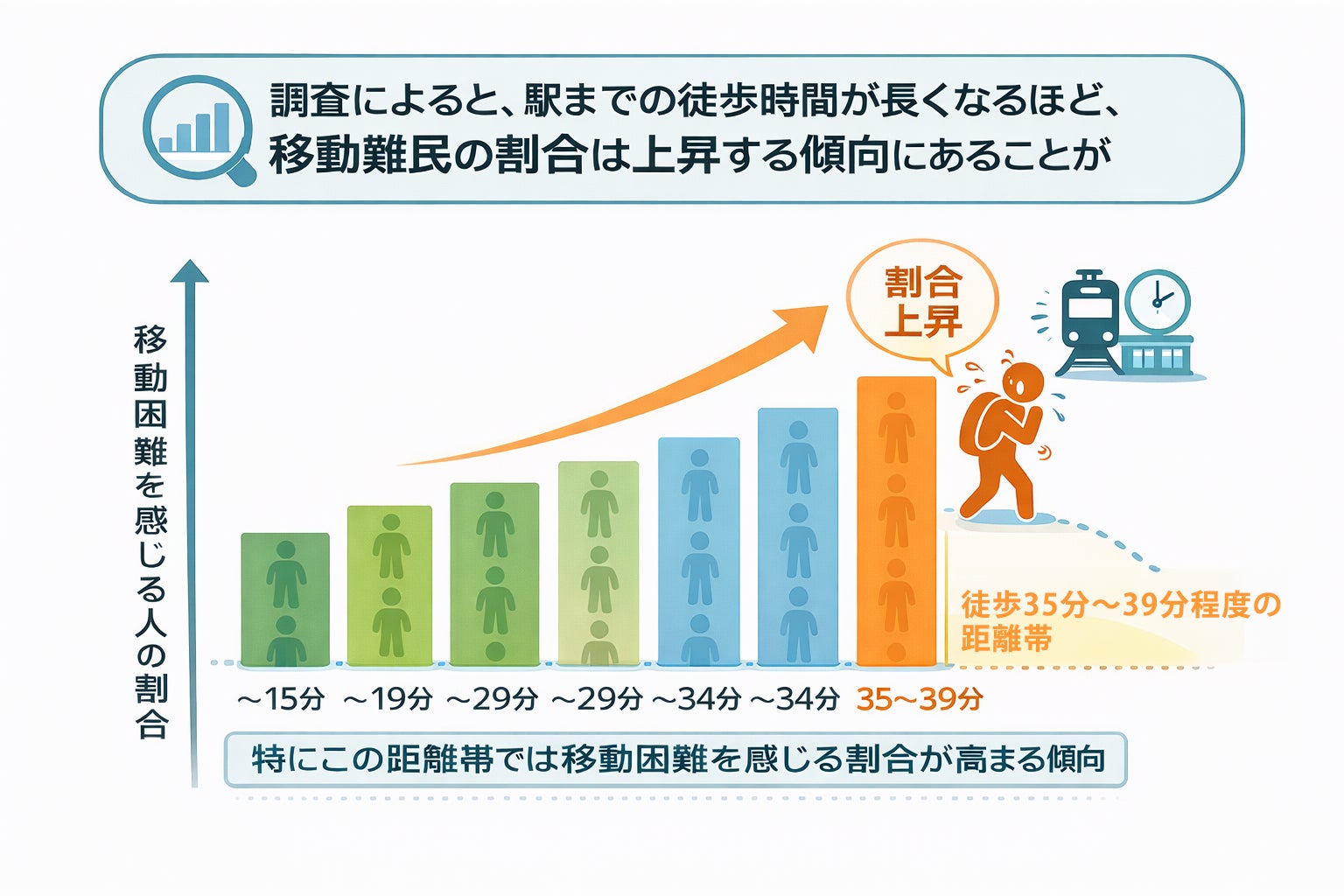
The survey confirmed that the longer the walking time to the station, the higher the proportion of mobility refugees tends to be.
Specifically, a tendency for a higher proportion of people experiencing mobility difficulties was observed in the distance range of approximately 35 to 39 minutes on foot.
On the other hand, beyond that distance, the rate of mobility difficulty tends to be suppressed to some extent due to the increased usage of private cars.
■ Identified Challenges
From these results, it is clear that mobility challenges in Japan are not merely a simple "lack of transportation," but a combination of multiple factors such as:
・Regional structure requiring cars
・Issues with licenses and physical strength
・Distance to access public transportation
Reference materials:
Cabinet Office "Survey Results on the Reality of Public Transportation Issues"
https://www8.cao.go.jp/kisei-kaikaku/kisei/meeting/wg/2310_05local/240311/local01_02.pdf
■ A New Option: "Safe to Ride" Specified Small Motorized Bicycles
Sun Emperor has been working to popularize a means of transportation that anyone can ride through the new category of "specified small motorized bicycles," which was added by the legal revision in July 2023.
What are Specified Small Motorized Bicycles?
This is a new vehicle classification established by the Road Traffic Act revision in July 2023, conforming to the following standards:
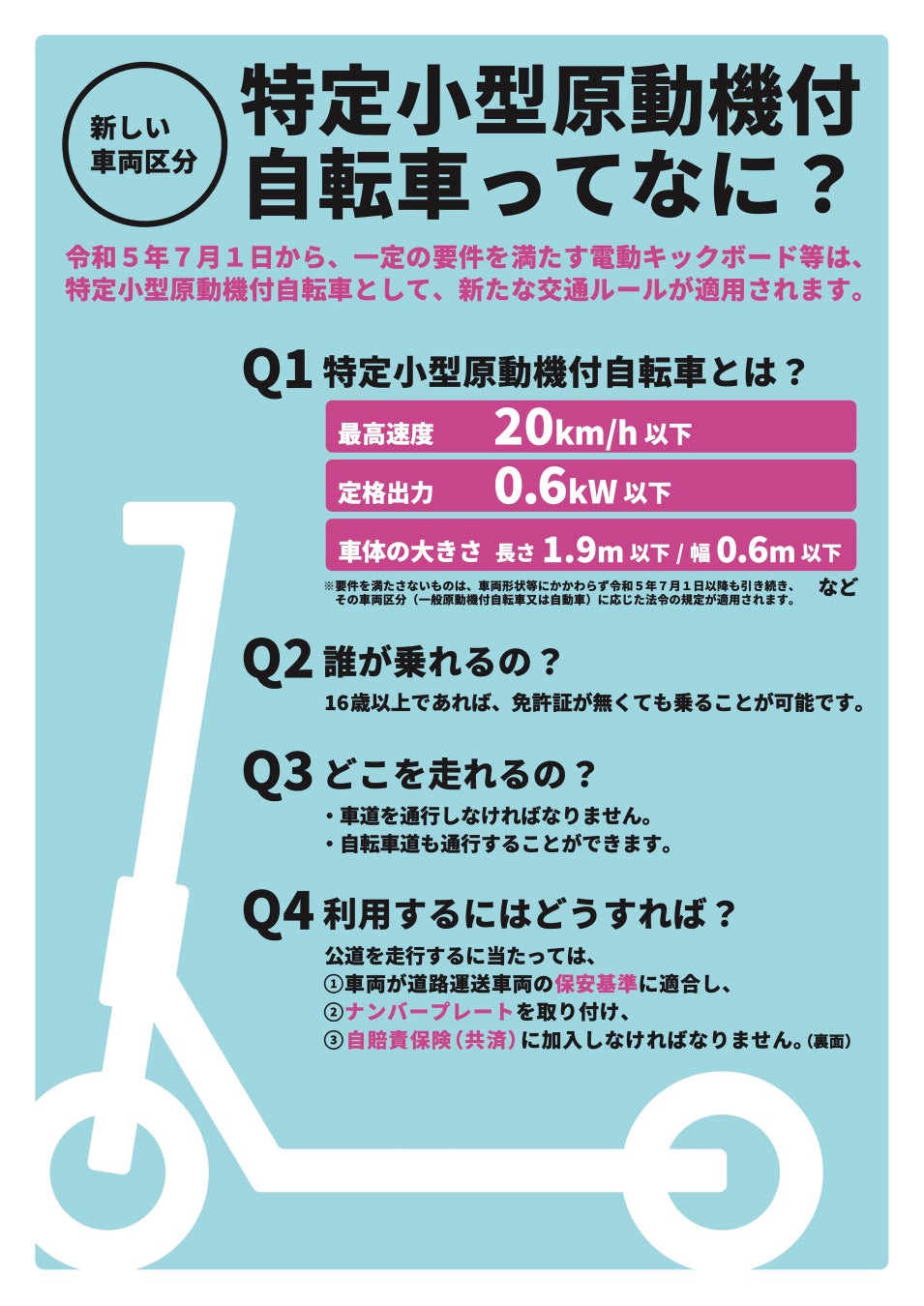
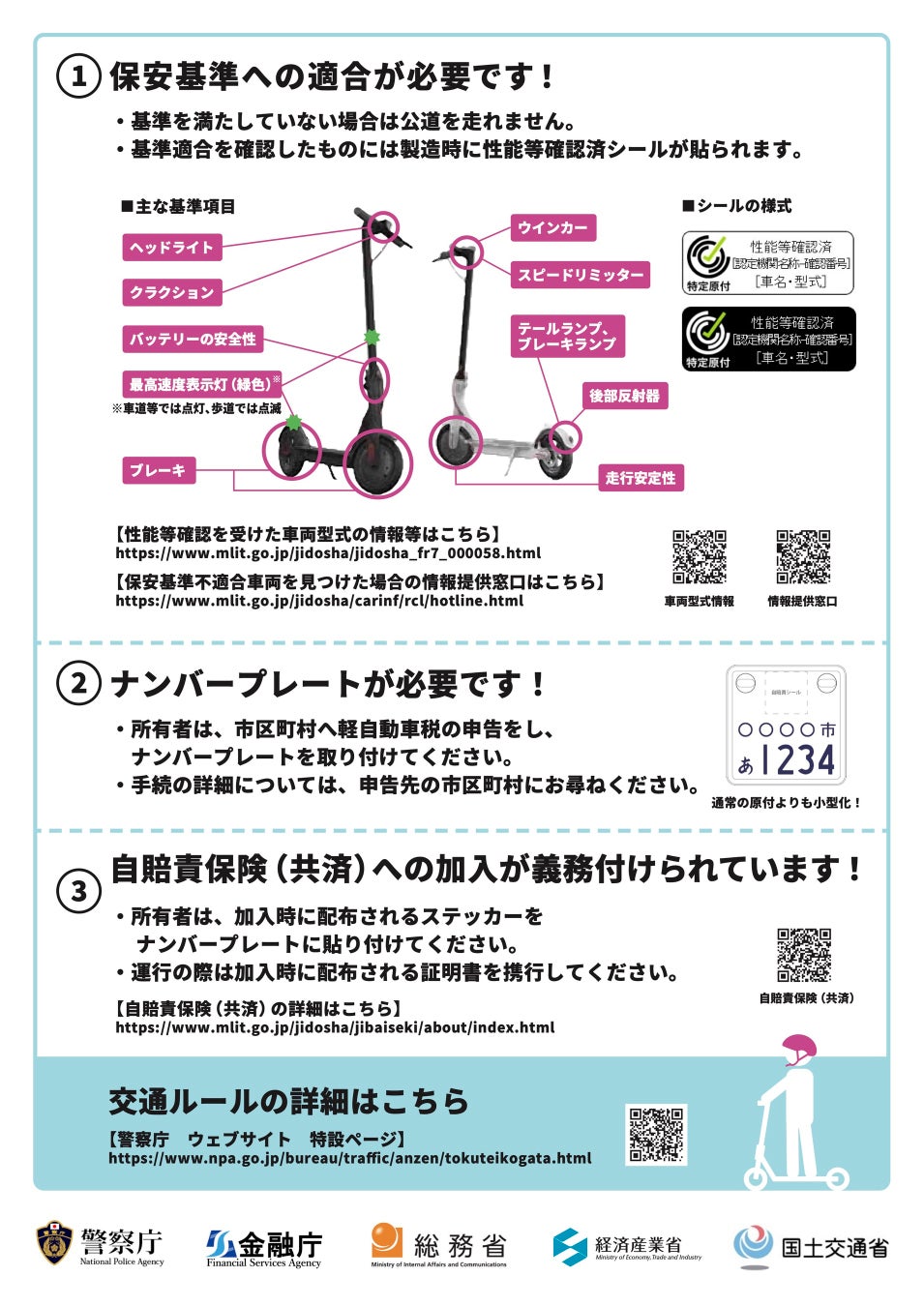
・No license required for individuals aged 16 or older
・Maximum speed 20km/h (6km/h when riding on sidewalks)
・Helmet use is encouraged but not mandatory (recommended for safety)
・Requires obtaining a license plate and joining compulsory automobile liability insurance for public road use
In response to the challenges indicated in the aforementioned survey, specified small motorized bicycles can play the role of:
Complementing public transportation, serving as an alternative to cars, and supporting daily mobility.
Reference: Ministry of Land, Infrastructure, Transport and Tourism "About Specified Small Motorized Bicycles"
https://www.mlit.go.jp/jidosha/jidosha_fr7_000058.html
Why are Specified Small Motorized Bicycles a New Option?
Examples of Current Mobility Challenges
As indicated in the aforementioned survey, a tendency for a higher proportion of people experiencing mobility difficulties was observed in the distance range of approximately 35 to 39 minutes on foot.
This is by no means a short distance in daily life and becomes a significant burden in situations requiring continuous movement, such as commuting to the station, shopping, or hospital visits.
However, with specified small motorized bicycles, which can travel at a maximum speed of 20km/h, a distance that takes about 40 minutes on foot can be covered in as little as about 10 to 15 minutes.
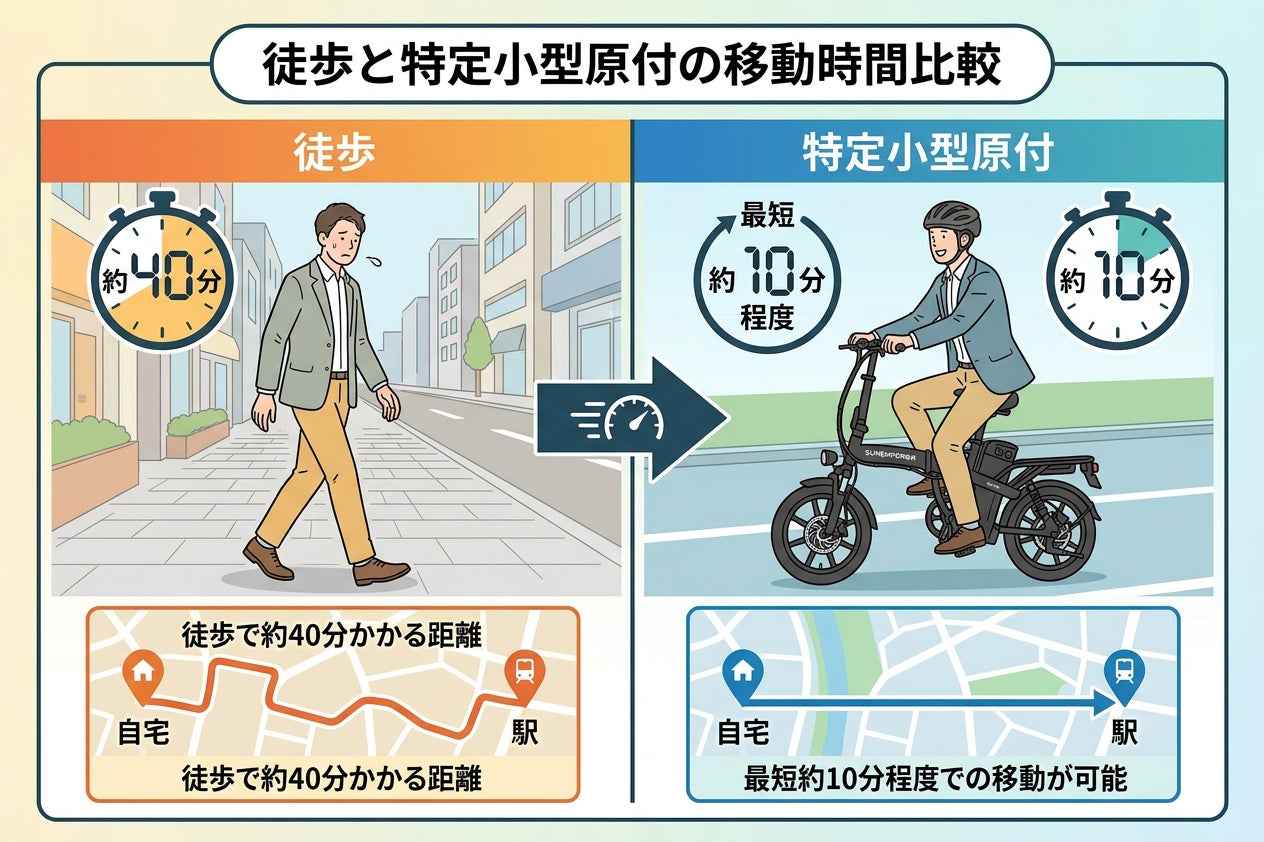
This allows distances previously considered "far" to be transformed into a range that can be moved within daily life without undue burden.
It is considered effective not only for shortening travel time but also as a means to lower the hurdle for going out itself.
Superiority in Target Age and Cost
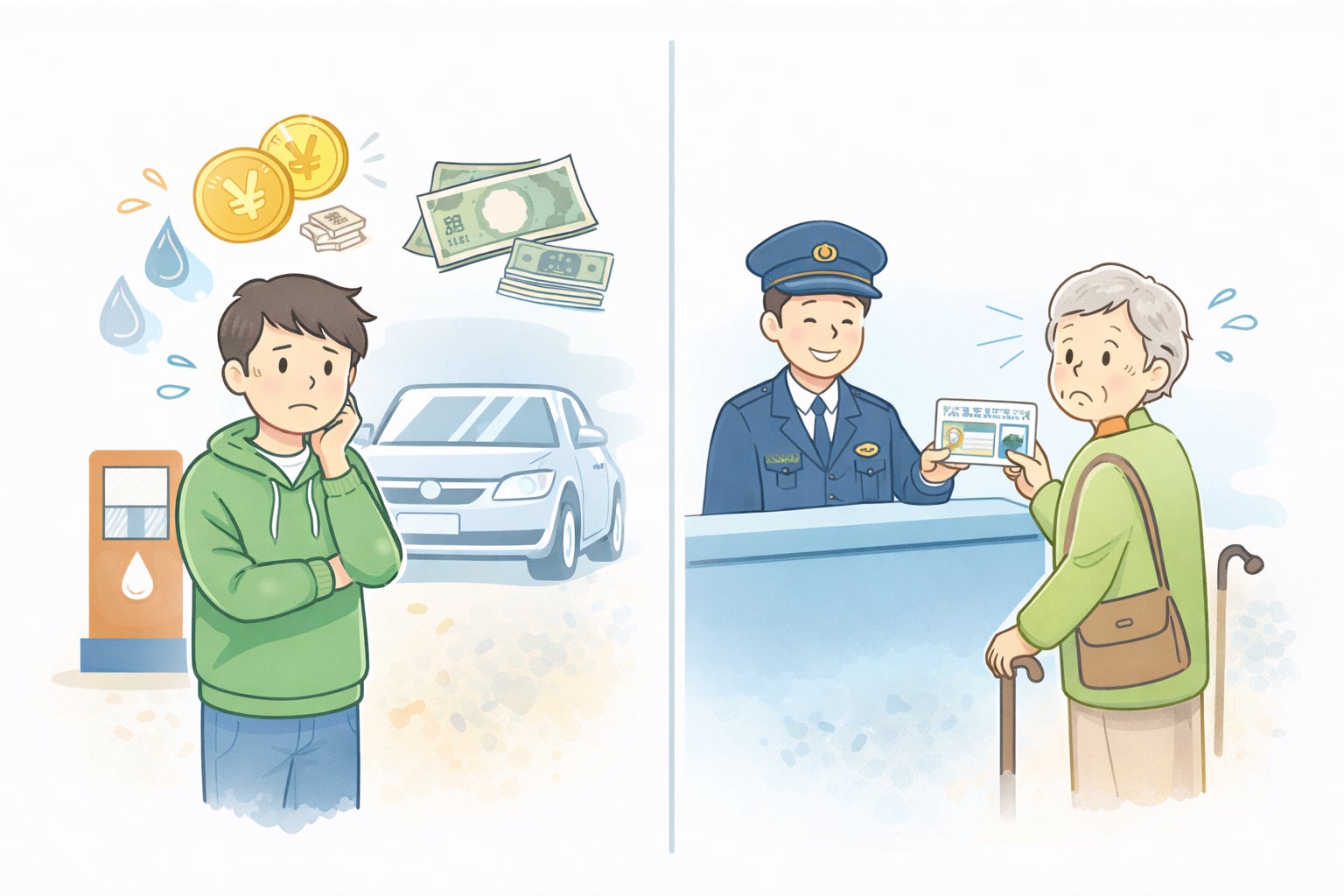
Young people and the elderly are cited as groups that tend to experience mobility difficulties.
FAQ
Who exactly are 'mobility refugees'?
They refer to people who face difficulties with shopping, hospital visits, or going out due to aging, license surrender, or inconvenient public transportation.
What are the benefits of specified small motorized bicycles?
They can be ridden without a license by those aged 16 or older, streamline short-distance travel, and serve as a complement to public transport or an alternative to cars.
What does Sun Emperor aim to achieve through this initiative?
Sun Emperor aims to eliminate the term 'mobility refugees' from Japan and realize a society where everyone can move around with peace of mind.