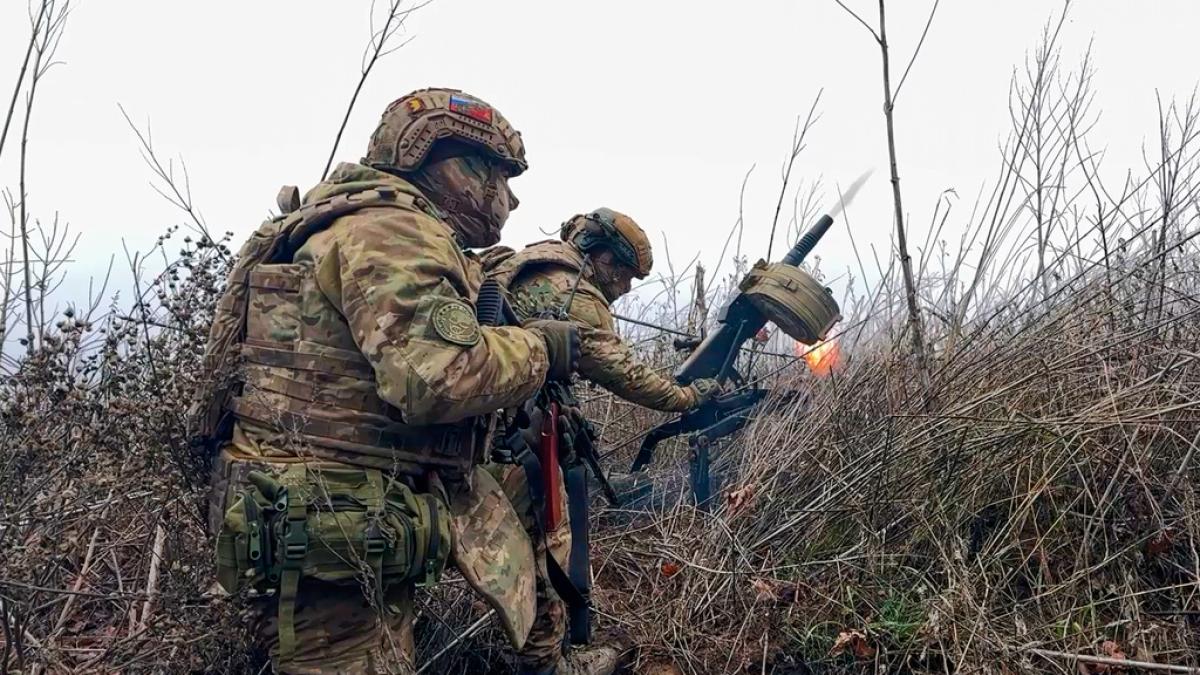
Technology is reshaping modern warfare in an extremely brutal manner across the Eastern European plains. John Ratcliffe, the current Director of the U.S. Central Intelligence Agency (CIA), recently disclosed shocking data during the Pennsylvania Defense and Innovation Summit to attendees: as Ukraine expands its network of AI-powered attack drones, the average survival time for a Russian soldier newly deployed to a frontline combat position has shrunk to just 20–30 minutes.
Director Ratcliffe emphasized that this horrifying intelligence aligns closely with reports from multiple think tanks. He further stressed that the reason this data is so ruthlessly stark is that drones equipped with artificial intelligence (AI) have evolved on the battlefield into specialized, round-the-clock autonomous killing machines capable of operating at extremely low cost. Even in increasingly complex battlefield environments filled with various interferences, Ukrainian military drones have completely moved beyond traditional reliance on human remote control or GPS satellite signals. Even when enemy forces cut off communications, onboard AI algorithms can autonomously lock onto targets and eliminate moving Russian armored vehicles or individual soldiers.
This hellish statistic is not an exaggeration. In fact, renowned scholar Peter Frankopan wrote in a June article for Foreign Policy, citing multiple Russian military bloggers, that large numbers of contract soldiers pushed to the frontlines as 'cannon fodder' survive only 10 days to three weeks from the moment they enter training bases until they are killed in action. Once assigned to frontline units, these soldiers’ average survival time is compressed to just 20–35 minutes by the relentless swarm of drones.
U.S. think tanks estimate, based on statistical data, that Russian forces suffer approximately 7,000 casualties per week due to 'human wave' assaults. Ukrainian President Volodymyr Zelenskyy recently boasted that over 80% of high-value enemy targets on the battlefield are now destroyed by drones.
Director Ratcliffe acknowledged that when he took over the CIA 18 months ago, Russia occupied 19% of Ukrainian territory, and today that figure has only marginally increased to 20%. This indicates that Russia’s massive military and resource advantage have failed to yield substantial results.
In his view, 'Ukraine’s use of drones, AI autonomous control, and asymmetric warfare technologies appears to preserve the possibility of turning the tide of war, which is why the United States and the EU must maintain absolute leadership in these fields.'
Currently, Washington, the EU, and NATO are deepening cooperation with Kyiv more actively than ever. The EU has even signed a series of 'drone agreements' with Ukraine, providing urgently needed air defense interceptors and funding in exchange for access to AI target acquisition and drone swarm control technologies honed through real combat experience.
FACT BOX
- Source: PR Times
- Category: Survey