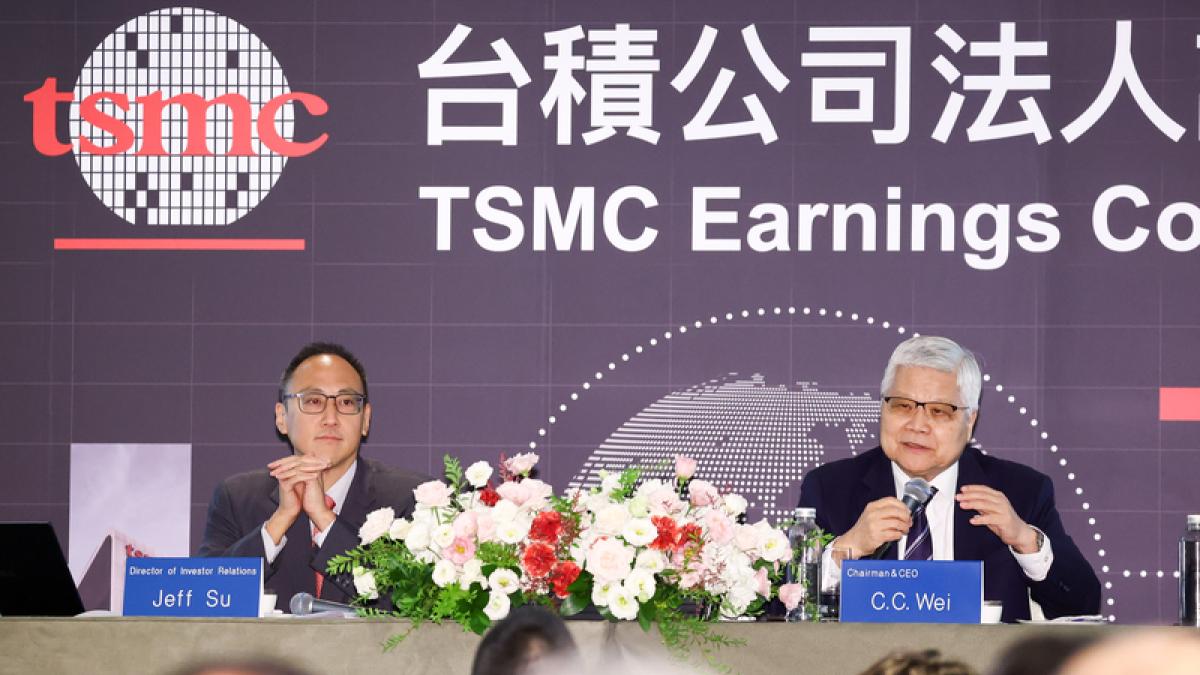
Global semiconductor leader TSMC announced on the 16th an additional $100 billion investment in the United States to expand its manufacturing capacity in the country, while also raising its third-quarter revenue forecast. The UK's Financial Times reports that this expansion investment in the Arizona facility brings TSMC's total investment in U.S. chip manufacturing to $265 billion, supporting the Trump administration's goal of bringing advanced manufacturing back from Asia to the United States.
According to the Financial Times, TSMC benefited from the rapid development of artificial intelligence and revealed during its earnings call on the 16th that its second-quarter 2024 profit surged 77% year-on-year. The company simultaneously announced the new U.S. investment. TSMC's net profit for the second quarter reached NT$706.6 billion, significantly exceeding analysts' expectations of NT$630 billion. Net sales also grew 36% to NT$1.27 trillion.
Strong demand from AI data centers has caused an overall chip shortage, pushing up purchase prices for consumer electronics manufacturers. TSMC expects third-quarter revenue to grow 37% year-on-year, reaching between $44.6 billion and $45.8 billion. The company has also raised its full-year capital expenditure forecast from $52–56 billion to $60–64 billion. TSMC CEO C.C. Wei stated, "Our confidence in AI as a long-term trend remains very high."
When asked by analysts how long the AI chip shortage might last, Wei predicted that demand for AI chips would remain very strong through 2029 to 2030, and that TSMC's capacity expansion plans would not face any bottlenecks. He also said the additional U.S. investment would allow TSMC to build four more factories, including facilities producing the most advanced "2-nanometer and below" chips and advanced packaging plants.
The Financial Times emphasized that despite foreign government support, establishing overseas factories has indeed impacted TSMC's profitability. The company said it expects its profit margins to be affected in the second half of 2024. However, TSMC did not make a clear commitment regarding the specific timeline for the latest U.S. investment, stating it will depend on "market conditions and customer demand." Wei said, "We will do our best to accelerate. Given the current supply-demand gap, which is simply too large, we are working hard to close it."
The Financial Times noted that TSMC's strong data release aligns with ASML's recent upward revision of its full-year forecast, indicating that major semiconductor companies are racing to expand capacity to meet the massive demand driven by AI.
Moreover, this AI boom is reshaping the semiconductor supply chain structure. TSMC reported that its High-Performance Computing (HPC) business, including NVIDIA's AI data center chips, grew 20% quarter-on-quarter in the second quarter, accounting for 66% of the company's total quarterly revenue. In contrast, smartphone chips, which were TSMC's largest revenue source in previous years, saw a 4% decline in revenue this quarter, with their revenue share dropping to 22%.
FACT BOX
- Source: PR Times
- Category: Funding
- Organizations: ASML / NVIDIA