Skapion, a technology startup headquartered in Washington, D.C., with a research and development center in Israel, has announced raising $36 million (approximately NT$1.15785 billion) in seed funding. The company will use this capital to advance a new R&D initiative aimed at building a dedicated anti-drone air defense system, allowing the Israel Defense Forces (IDF) and other national militaries to stop wasting expensive missiles on cheap yet numerous drone threats.
According to The Jerusalem Post, Skapion’s concept originated from domestic needs in Israel. As Hezbollah in Lebanon continues deploying low-cost drones to frequently attack IDF ground troops stationed along the border and critical military infrastructure, numerous frontline soldiers have been urging their superiors to provide a specialized anti-drone system to counter these persistent mechanical intruders.
While traditional air defense interception systems can accurately detect and neutralize aerial threats, systems like the widely used Patriot missile or Israel’s domestically developed Iron Dome struggle when faced with massive, low-cost drone swarms. Moreover, due to technological advancements, inexpensive drones have increasingly threatened military bases and critical infrastructure since 2022.
Ukrainian soldiers preparing to launch a drone. (AP)
The most pressing issue for defenders is the severe asymmetric economic burden created when adversaries launch large-scale swarm attacks. Defenders are forced to expend large numbers of expensive interceptor missiles to counter swarms of cheap drones. Groups like Hezbollah have exploited this weakness, identifying the fatal flaw in current air defense systems—their inability to simultaneously engage multiple targets at scale.
To address this blind spot, Skapion is developing a mobile defense system. This system not only features detection capabilities but can also simultaneously engage and destroy threats during a drone swarm attack. More importantly, it can operate independently under extreme conditions such as limited communication and harsh environments—precisely the battlefield conditions most exploited by drone swarms.
Gathering Iron Dome Veterans and Air Force Elites
Ido Bar-On, co-founder and CEO of Skapion, emphasized that the key to modern battlefield success is no longer just detecting or shooting down individual drones, but whether modern militaries can overcome the challenges of speed, scale, and cost-effectiveness to eliminate drone swarms en masse.
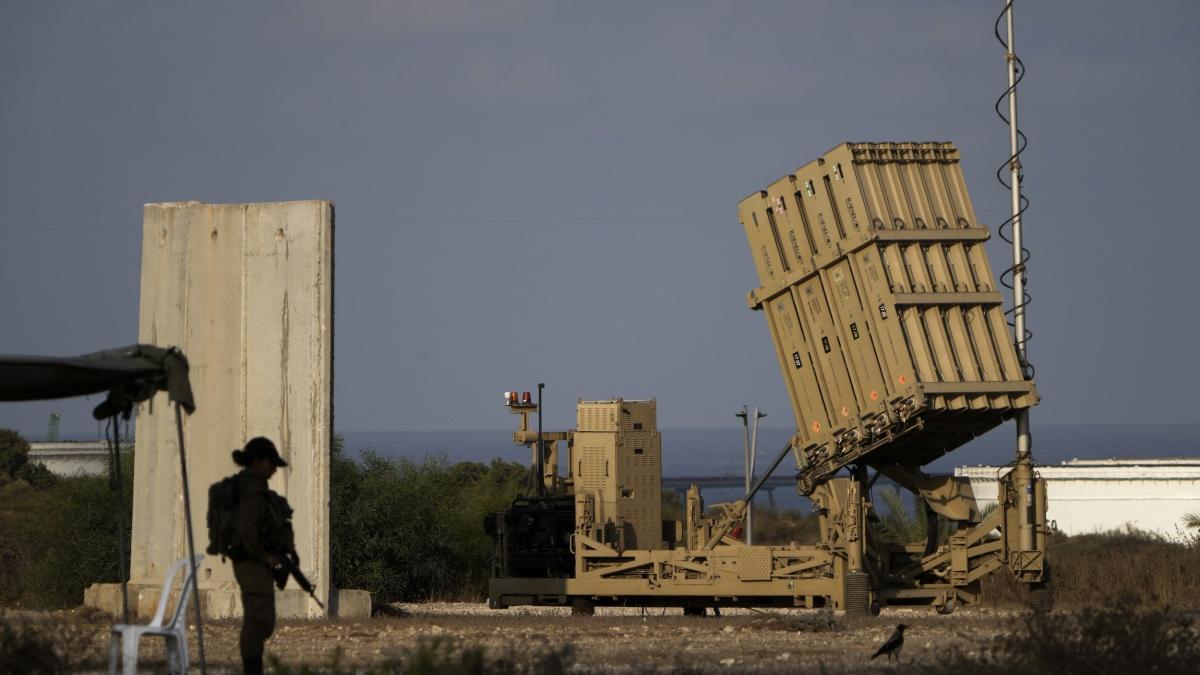
On May 11, 2023, Israel’s Iron Dome missile defense system intercepts rockets launched from the Gaza Strip. (AP)
He stressed that the newly raised $36 million (approximately NT$1.15785 billion) will be directly invested into technology development and expanding the engineering team. The company will continue recruiting top-tier talent to accelerate solutions for one of the most urgent global defense threats over the next decade.
Founded in late 2025, this startup boasts a legendary founding team composed almost entirely of retired Israeli Air Force officers with air defense combat backgrounds. One of the co-founders, Pini Yungman, is a retired brigadier general who previously served as General Manager of Rafael Advanced Defense Systems’ Air and Missile Defense Division. He was also a key architect behind Israel’s David’s Sling and Iron Dome air defense programs.
The aforementioned CEO, Ido Bar-On, served as a lieutenant colonel in special forces and previously led international and defense operations at drone manufacturer XTEND.
FACT BOX
- Source: PR Times
- Category: Funding
- Organizations: Rafael Advanced Defense Systems / XTEND