As tensions escalate between the European Union and China in an emerging trade war, the European Parliament recently adopted a report recommending that the EU strengthen cooperation with democratic partners such as Japan, South Korea, and Taiwan. The report highlights that peace and stability in the Taiwan Strait and the South China Sea are of strategic interest to the EU, and proposes establishing a comprehensive and structured cooperation framework with Taiwan based on mechanisms like the EU-Taiwan Trade and Investment Dialogue. It also reaffirms the importance of maintaining peace and stability across the Taiwan Strait.
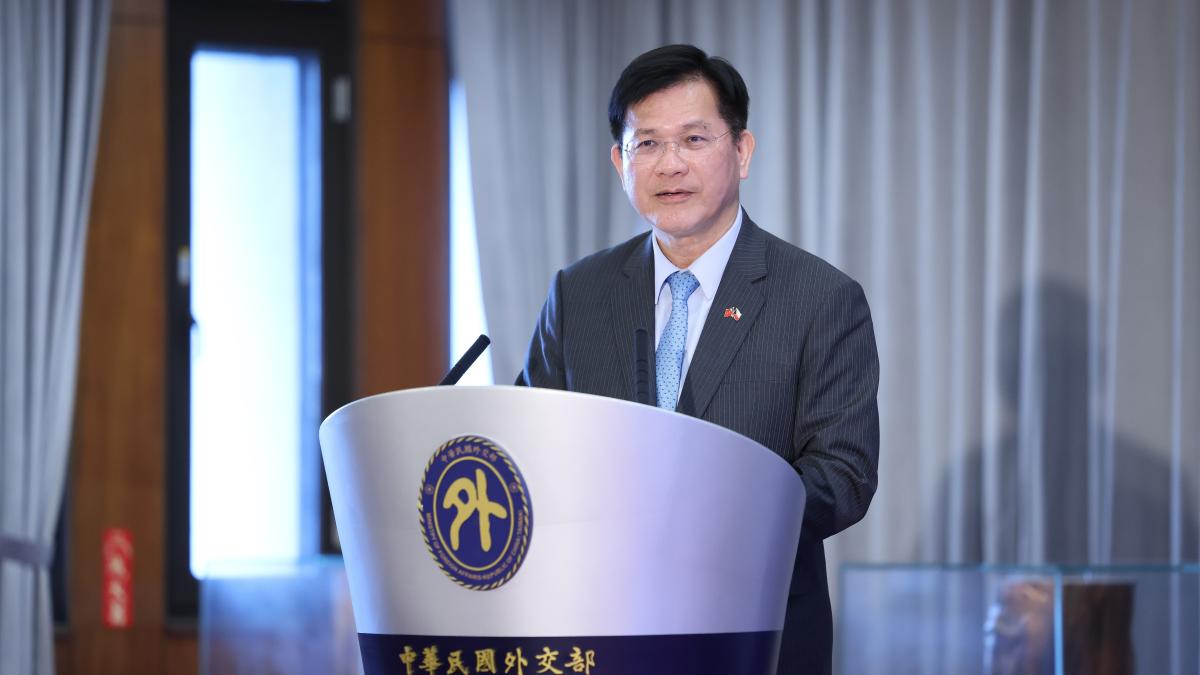
In response, Taiwan's Foreign Minister Joseph Wu expressed heartfelt gratitude for the European Parliament's concrete support. Taiwan's Ministry of Foreign Affairs stated that this report once again demonstrates the European Parliament's high regard for Taiwan and regional stability. It marks another significant action following previous resolutions in 2023 on EU-Taiwan trade and investment relations and in 2024 on China's misinterpretation of UN General Assembly Resolution 2758 and its ongoing military provocations against Taiwan.
Meanwhile, Hsieh Chi-ta, Taiwan's Representative to the EU and Belgium, analyzed seven key points of the report on social media. The report passed with an overwhelming majority and mentions 'Taiwan' 44 times. It repeatedly emphasizes the importance of robust cooperation among Japan, South Korea, and Taiwan for the EU. The report identifies peace and stability in the Taiwan Strait as strategically vital for regional and global security, noting that several EU countries have naval deployments in the Indo-Pacific, where maintaining the status quo directly serves EU interests.
The report calls for deepening practical cooperation with like-minded partners in East Asia—especially Japan, South Korea, and Taiwan—as the best way to safeguard EU interests and global security. It urges the EU to jointly address economic coercion and hybrid threats with these partners to enhance strategic autonomy and reduce dependency on China. It further underscores the importance of democratic systems in Japan, South Korea, and Taiwan as key balancing forces in the regional context.
Hsieh highlighted that the report recommends establishing a structural and comprehensive EU-Taiwan cooperation framework, building on mechanisms such as the Trade and Investment Dialogue. This would expand economic and trade cooperation, focusing on critical technologies like semiconductors and artificial intelligence (AI), supply chain resilience, cybersecurity, countering disinformation, and maritime security. The report identifies Taiwan as a key democratic partner for the EU in the Indo-Pacific and calls for further deepening the EU-Taiwan Trade and Investment Dialogue, as well as exploring negotiations on a bilateral investment agreement (BIT) or other trade frameworks.
Notably, the EU has recently taken protectionist measures to address its growing trade deficit with China, including investigations into electric vehicles and e-commerce platforms. Following actions on electric vehicles and solar panels, the EU has now launched an anti-dumping investigation into China's poultry industry, specifically targeting Peking duck and meat duck production and export chains. Despite ongoing dialogue efforts to avoid escalation, European Commission President Ursula von der Leyen has warned that the EU may impose retaliatory measures in the autumn if negotiations fail to yield satisfactory results.
FACT BOX
- Source: PR Times
- Category: News