MEN'S BIGI to hold a POP-UP event at Daimaru Sapporo!
MEN'S BIGI will hold a pop-up event at Daimaru Sapporo from April 1 to April 14, 2026.
📋 Article Processing Timeline
- 📰 Published: March 28, 2026 at 15:57
- 🔍 Collected: March 28, 2026 at 21:59 (6h 2m after Published)
- 🤖 AI Analyzed: April 15, 2026 at 06:03 (416h 4m after Collected)

MEN'S BIGI, a men's apparel brand developed by BIGI Co., Ltd. (Headquarters: Meguro-ku, Tokyo; President: Hitoshi Nakano), will be holding a POP-UP event on the 6th floor of Daimaru Sapporo.
The theme for MEN'S BIGI's '26SS collection is "Café West."
This collection fuses the spirit of the West, traveling across vast lands, with the practicality of American workwear, the functional beauty of café racers, and the classic elegance of British tailoring.
We are also featuring collaboration items with iconic workwear and western brands such as Lee, Dickies, and Pendleton.
Please enjoy the world of MEN'S BIGI in this sophisticated space.
We look forward to welcoming you.
■Store Overview
Daimaru Sapporo
・Address: 4-7 Kita 5-jo Nishi, Chuo-ku, Sapporo
・Floor: 6th Floor
・Dates: Wednesday, April 1, 2026 – Tuesday, April 14, 2026
・Business Hours: 10:00 – 20:00
■Novelty Campaign
The first 20 customers to purchase over 33,000 yen (tax included) will receive a "Café West Eco-Bag."
※Quantities are limited. The offer will end once supplies are exhausted.
■Featured Items
50th ANNIVERSARY TEE
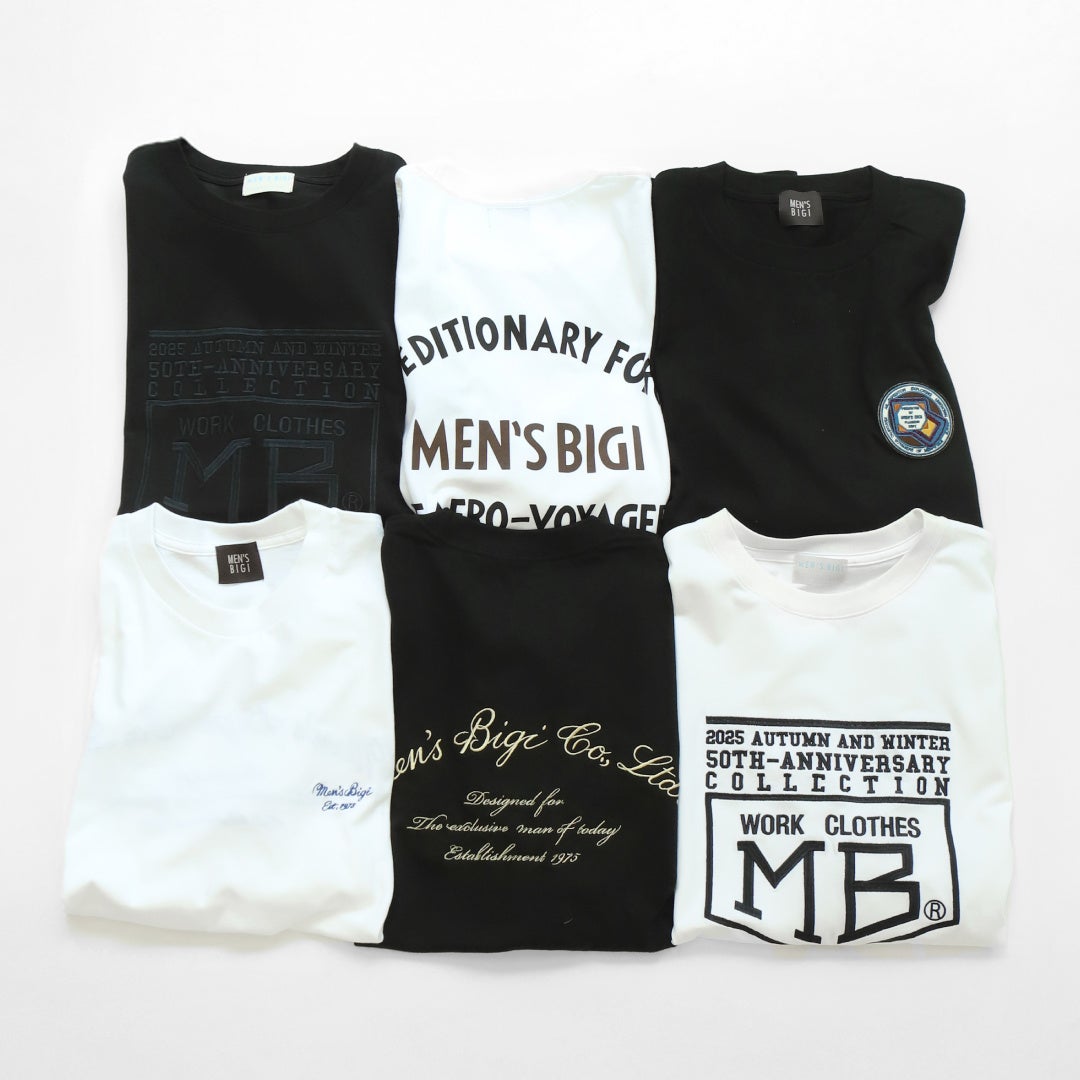
To commemorate the brand's 50th anniversary, we are releasing two special T-shirt styles that reinterpret archive graphics by founder Takeo Kikuchi.
Both are made from a cotton jersey material with just the right amount of thickness, offering a comfortable fit that is both soft and structured. Designed with a sophisticated, relaxed silhouette that is roomy but not oversized, these shirts are balanced for adults to wear naturally.
The first style features a dry touch that feels great against the skin and a straight-fit silhouette.
In celebration of the brand's 50th anniversary, archive graphics created by founder Takeo Kikuchi in the 1970s have been redesigned for the modern era.