Kyoto Seisu-Netsuke Museum: April Special Exhibition 'Nature: Seasonal Charms'
The Kyoto Seisu-Netsuke Museum will host the 'Netsuke Encyclopedia' exhibition from April to June 2026. April's theme, 'Nature: Seasonal Charms,' will feature netsuke that express beautiful landscapes and seasonal feelings, stimulating intellectual curiosity through the profound world of netsuke.
📋 Article Processing Timeline
- 📰 Published: March 31, 2026 at 21:00
- 🔍 Collected: April 1, 2026 at 13:39 (16h 39m after Published)
- 🤖 AI Analyzed: April 22, 2026 at 01:49 (492h 10m after Collected)
The Kyoto Seisu-Netsuke Museum, specializing in netsuke with a focus on contemporary works, holds monthly special exhibitions.
Netsuke are often likened to the 'myriad things in the palm of one's hand' because they incorporate various subjects born from human imagination. They cross all fields where human knowledge is condensed, encompassing all things that humanity can conceive. It is no exaggeration to say that they are like an encyclopedia of netsuke. Therefore, from April to June 2026, the museum will hold the 'Netsuke Encyclopedia' exhibition. This exhibition will systematically categorize the diversity of netsuke and introduce contemporary netsuke that stimulate intellectual curiosity, much like an encyclopedia.
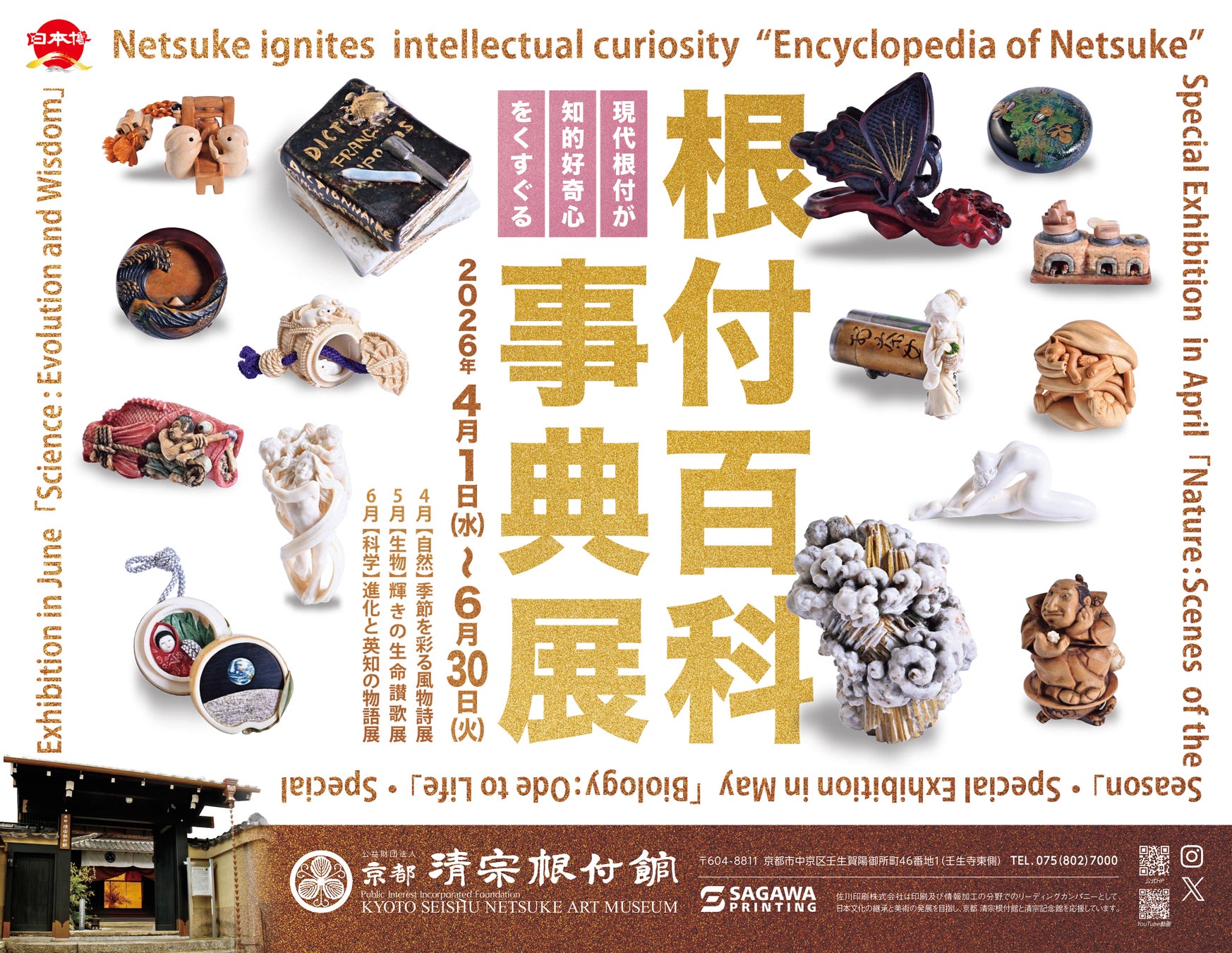
Introducing some of the netsuke on display at the April 'Nature: Seasonal Charms' exhibition.
Cherry blossoms, blooming in their full spring glory, are plants that announce the arrival of the season and have a cultural aspect deeply connected to the Japanese sensibility. While we interpret various flowers as beautiful, we also share a universal common perception. Flowers have been cherished since ancient times as symbols of the seasons, and many annual events are named after flowers. For seasonal festivals, peaches, irises, and chrysanthemums are used, and morning glory markets and ground cherry markets are seasonal traditions in various regions.
This special exhibition introduces various plants and flowers through netsuke, much like an encyclopedia. Furthermore, it explores the cultural spread of customs that draw upon the vitality of flowers and plants.
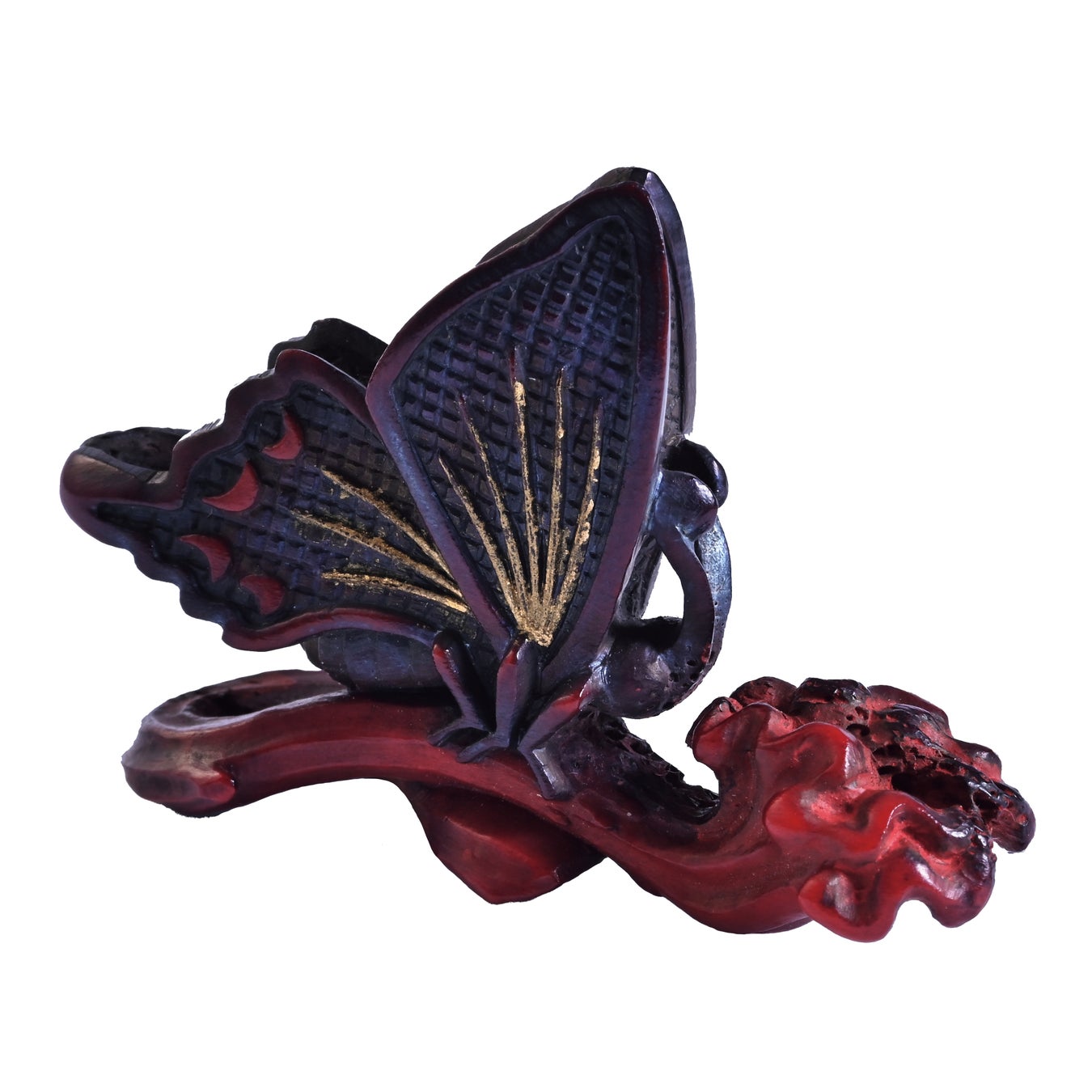
'Cockscomb'
Artist: Motomasa Kurita (1976~)
Size: Height 3.8cm
Material: Deer antler
Description: It arrived in Japan from the continent during the Nara period as a flower resembling a cockscomb. In this work, a swallowtail butterfly is also added, making the overall silhouette resemble a chicken's head.