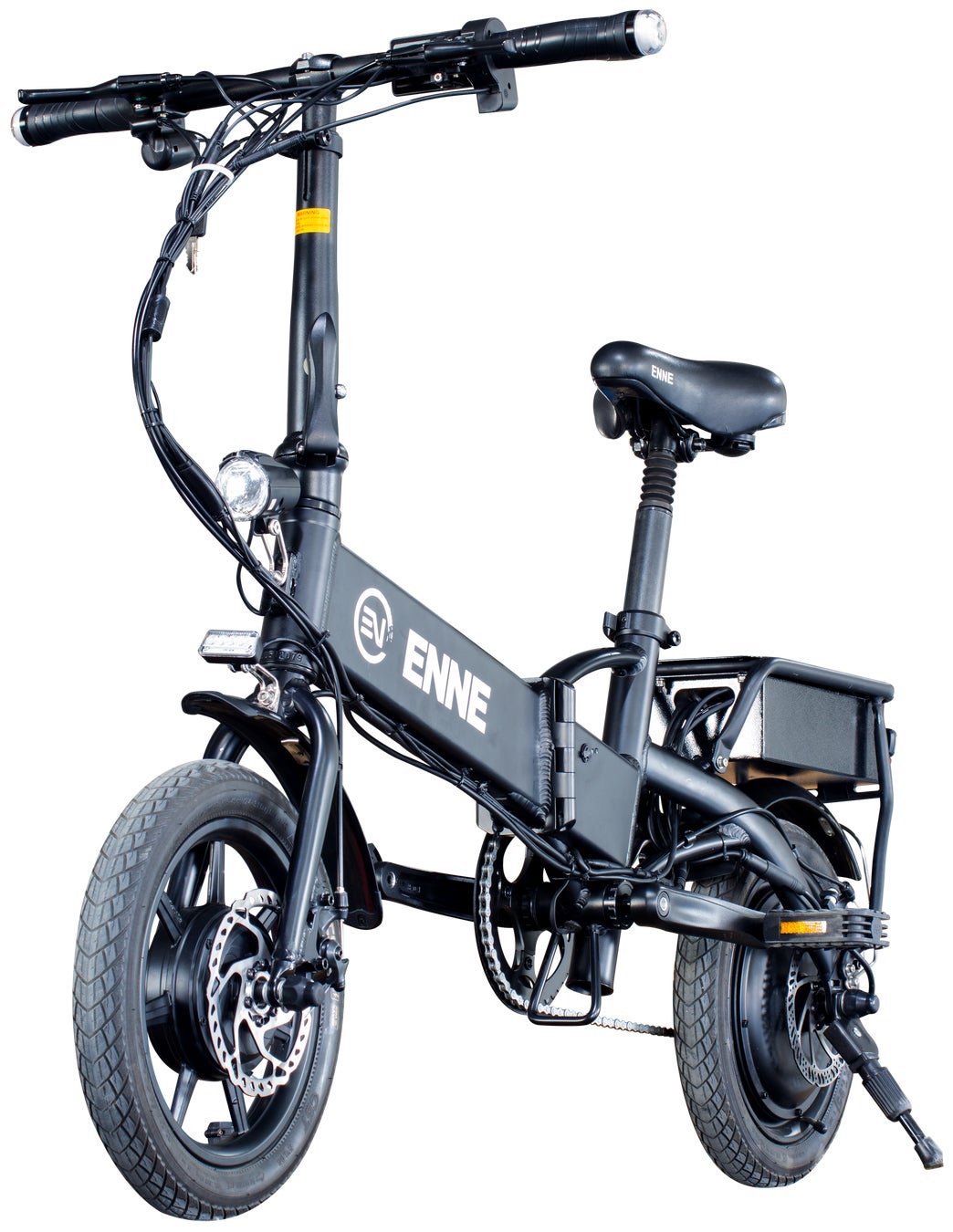
The ENNE ZERO is a new mobility solution that resolves the three major challenges of specified small electric mopeds – "climbing ability," "cruising range," and "running when the battery is depleted" – and is also designed as an alternative to electric-assist bicycles with a 1:5 assist ratio. The ENNE ZERO is the only vehicle that can be ridden without a license, allowing the use of both the accelerator and pedals. While equipping pedals presented significant technical challenges due to the 20 km/h speed limit for specified small electric mopeds, the convenience of having drive pedals is immeasurable, and we have succeeded in solving the three major issues that plague virtually all currently sold specified small electric mopeds.
Technical Challenges Solved by ENNE ZERO The pedals on the ENNE ZERO are not input devices for power generation. They are designed as a mechanism for driving, using the pedaling force directly for wheel drive. The key to making this configuration compliant as a specified small electric moped was how to achieve the 20 km/h speed limit with a drive system that includes running pedals. ENNE ZERO was developed with the policy of simultaneously designing the vehicle structure and control logic to address this challenge. For the current specifications of ENNE ZERO, dynamic braking is employed as one of the core technologies supporting the 20 km/h speed limit control. We prioritized not completing speed management solely on the motor output side. Because the drive pedal structure involves human-powered drive, the design of the speed limit must be achieved by including control on the braking side. ENNE ZERO adopts a vehicle design that incorporates dynamic braking based on this concept. The dynamic braking in ENNE ZERO is a type of electromagnetic brake. It smoothly and naturally suppresses speed at 20 km/h. Of course, it is not an uncomfortable structure that suddenly engages.
The AI installed in the ENNE ZERO system is responsible for controlling the dynamic braking. The AI performs the following roles: ・Judges vehicle speed, pedal rotation, running status, and power status collectively. ・Calculates the control amount necessary to maintain the 20 km/h limit. ・Optimizes the intervention amount of the dynamic brake. ・When the power is off, it activates the wake-up function based on travel detection and starts up necessary systems. ・Maintains the control status of functions required to comply with safety standards. Through the operation of this AI, it senses the rider's intent to accelerate and the strength of acceleration, calculates the optimal braking force, and performs smooth speed suppression. While it might sound like braking, it's not exactly that; it's more like an acceleration suppression device. For a typical rider's leg strength, it disengages almost instantly, so the vehicle speed hardly decreases. <figcaption class="pr-im
FACT BOX
- Source: PR TIMES
- Category: News