[New Book Announcement] 'THE CUSTOMER CENTRIC COMPANY: 10 Practices of Customer-Centric Management' to be Released on April 1st
Senkoku Co., Ltd., a specialized publisher in advertising and marketing, will release 'THE CUSTOMER CENTRIC COMPANY: 10 Practices of Customer-Centric Management' on April 1st. This book systematizes the practical knowledge of Customer Time, a consulting firm that has handled numerous corporate transformation projects. It organizes the overall structure of customer-centric management and concretizes it into '10 practices,' showing a path to transform ideals into business results. This book is for companies that want to redesign their management based on the customer.
📋 Article Processing Timeline
- 📰 Published: April 1, 2026 at 19:00
- 🔍 Collected: April 1, 2026 at 10:15
- 🤖 AI Analyzed: April 16, 2026 at 23:56 (373h 41m after Collected)
Senkoku Co., Ltd. (Headquarters: Minato-ku, Tokyo / Representative Director and President: Tomoya Takahashi), a specialized publisher in advertising and marketing, will release 'THE CUSTOMER CENTRIC COMPANY: 10 Practices of Customer-Centric Management' on April 1st at major bookstores nationwide and online bookstores. This book systematizes for the first time the practical knowledge of Customer Time, a consulting firm that has handled numerous corporate transformation projects. It organizes the overall structure of customer-centric management and concretizes it into '10 practices,' showing a path to transform ideals into business results. This book is for companies that want to redesign their management based on the customer.
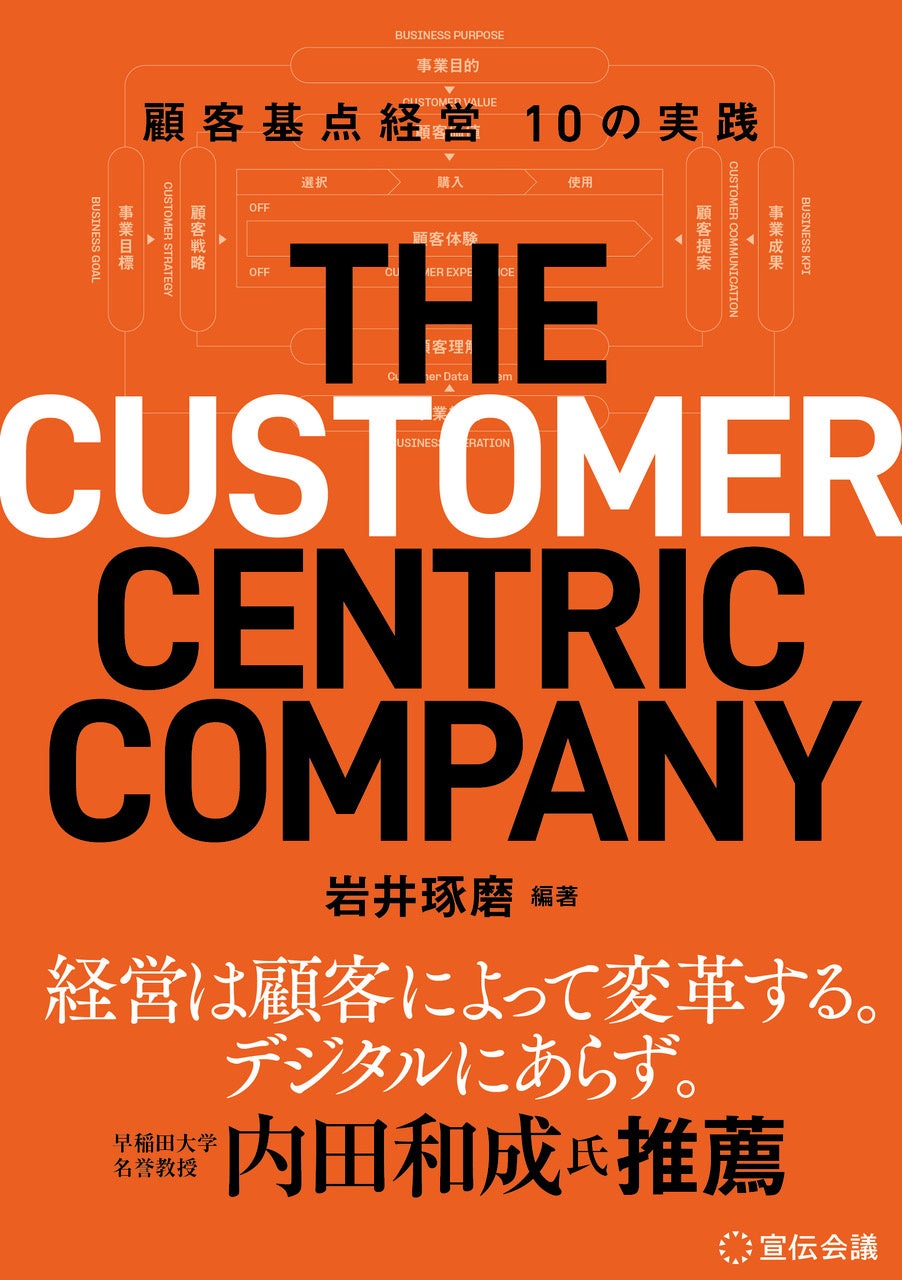
Released April 1, 2026 / Publisher: Sendenkaigi
Edited by: Takuma Iwai
Price: 2,420 yen (2,200 yen + tax)
ISBN: 978-4-88335-637-9
A5 size / 208 pages
Recommended by Kazunari Uchida, Emeritus Professor, Waseda University
"Management is transformed by customers, not by digital."
What is "Customer-Centric Management"?
It is a management style that integrally designs and operates a company's strategy, proposals, digital infrastructure, and organization towards the realization of customer experience as its starting point. The competitiveness of companies in the digital age, where constant connections with customers can be built, depends not on the amount of digital technology introduced, but on how deeply they understand changing customers and how they adapt their management actions accordingly. (From the book)
Author Profile
Takuma Iwai
Representative Director, Customer Time Inc. / Professor, Kumamoto Prefectural University
Joined Hakuhodo DY Group in 1993. After participating in corporate revitalization projects as an in-store planner, creative director, and brand consultant, he became Chief Project Manager. In September 2018, he established Customer Time Inc. and assumed the position of Co-CEO Representative Director. As Head of Management, he designs and supports CX transformation projects and business development projects in manufacturing, retail services, finance, and other industries, working with diverse specialists participating in Customer Time.
Completed Master's program in Commerce at Waseda University Graduate School (MBA). Belonged to Kazunari Uchida's laboratory. Appointed Outside Director of AgeWellJapan Inc. from January 2025. Appointed Professor at Kumamoto Prefectural University from April 2026. His books include 'The New Basics of Marketing' (Nikkei BP), 'World's Most Advanced Marketing: Channel Shift Strategies for Companies Connecting with Customers' (Nikkei BP), 'Competitive Strategy for Innovation' (Toyo Keizai Inc.), 'Competitive Strategy for Game Changers' (Nikkei Business Publications), 'Omnichannel and Current Customer Strategies' (Chikura Shobo), and 'Narrative Strategy' (Nikkei BP). He has received numerous awards, including the Japan Marketing Book Award.
Content Introduction
The digitalization of society, which has been progressing since the late 1990s, is predicted to reach maturity in 2040, approximately 40 years later. This change has significantly transformed people's behavior and values, corporate business models, and even the very nature of management. In response to these transformations, many companies have been working on "DX (Digital Transformation)." However, in many cases, these efforts have stagnated, merely replacing existing management styles with digital ones, without leading to the creation of new customer value or business results. This book points out that the cause of this is "the inability to envision the customer experience that should be the original starting point." What is now required of companies is to envision "a better life for customers" that changes with digital technology as a customer experience, and to redesign and operate their management style towards its realization. This book systematizes this concept as "Customer-Centric Management" and organizes its overall structure. Furthermore, it concretizes it into "10 practices," explaining the positioning of each area and the basic way of thinking. In addition, core members of Customer Time, who are professionals in each area, present methodologies for putting these into practice.
"10 Practices" to Re-examine Management Style
Practice 1. Business Purpose
Set or reconfirm "how to contribute to society."
Practice 2. Business Goals
Set or reconfirm "what state to achieve by when."
Practice 3. Customer Value
Set "what kind of 'better life' to realize for customers."
Practice 4. Customer Strategy
Set "what kind of customer base to achieve by when."
Practice 5. Customer Experience
Envision "what kind of experience will realize a 'better life'."
Practice 6. Customer Understanding
Design and operate "what kind of mechanism to understand customers."
Practice 7. Customer Proposals
Design and operate "what kind of proposals to make to customers using these."
Practice 8. Business Results
Design and operate "what metrics to use to measure these results."
Practice 9. Business Organization
Design and operate "what kind of organization to create to operate these."
Practice 10. Project
Design a "Project to promote the transformation to customer-centric management."
(From the book)
Table of Contents
Introduction
Chapter 0: Transformation to Customer-Centric Management: Beyond Digital Transformation
What is Customer-Centric Management?
Practice 1: Business Purpose - How to Contribute to Society
Positioning of Business Purpose: The North Star of Transformation
Thinking Method for Business Purpose: Reconfirming the Meaning of Words and Actions
The Reality of Practice ①: True Customer-Centricity is Not About Thinking from the Customer's Perspective
(Miho Tahara, Sustainability Marketer, Customer Time)
Practice 2: Business Goals - What State to Achieve by When
Positioning of Business Goals: Raising the Flag
Thinking Method for Business Goals: Showing Both Intent and Numerical Values
Practice 3: Customer Value - What Kind of "Better Life" to Realize for Customers
Positioning of Customer Value: What is a "Better Life"?
Thinking Method for Customer Value: Considering Three Values
The Reality of Practice ②: How to Assess Customer Value - Envisioning the Driving Force to Move the Organization, Not Just Ending with a Concept
(Yohei Fujii, Strategist)
Practice 4: Customer Strategy - What Kind of Customer Base to Achieve by When
Positioning of Customer Strategy: Envisioning the Target Customer Base
Thinking Method for Customer Strategy: Showing Customer Numbers and Annual Customer Sales
The Reality of Practice ③: Customer Strategy Drill
(Tetsuya Maeda, Customer Account Planner, Customer Time)
Practice 5: Customer Experience - What Kind of Experience Will Realize a "Better Life"
Positioning of Customer Experience: Envisioning a Better Life as an Experience
Thinking Method for Customer Experience: Envisioning Experience in Space and Time
The Reality of Practice ④: Practicing Life Flow Design
(Osamu Onishi, OMO Designer, Customer Time)
The Reality of Practice ⑤: Thinking About Core Interfaces
(Atsushi Shioda, Chief CX Designer, Customer Time)
Practice 6: Customer Understanding - What Kind of Mechanism to Understand Customers
Positioning of Customer Understanding: The Foundation of Customer-Centric Management
Thinking Method for Customer Understanding: Uniqueness in Customer Understanding Creates Competitive Advantage
The Reality of Practice ⑥: AI in CX - Three Areas Where Utilization is Advancing
(Kosuke Hamano, Marketing Technologist, Customer Time)
Practice 7: Customer Proposals - What Kind of Proposals to Make to Customers Using These
Positioning of Customer Proposals: Proposal Model Based on Customer Understanding
Thinking Method for Customer Proposals: Flexibly Combining 3Ps
The Reality of Practice ⑦: Practicing "Continuously Chosen" Customer Proposals
(Daijiro Ban, Chief Strategist, Customer Time)
Practice 8: Business Results - What Metrics to Use to Measure These Results
Positioning of Business Results: KPIs Considered from a Customer-Centric Perspective
Thinking Method for Business Results: Measuring the Progress of Transformation with Customers
Practice 9: Business Organization - What Kind of Organization to Create to Operate These
Positioning of Business Organization: What is the First Agenda Item of the Management Meeting?
Thinking Method for Business Organization: Chief Customer Officer, the Overall Responsible Person for Customer Experience
The Reality of Practice ⑧: Transforming Customer Understanding into Management Resources
(Shigeo Kitara, Evangelist, Customer Time)
Practice 10: Project - Project Management to Promote the Transformation to Customer-Centric Management
Positioning of Project Management: A Project is a Network Organization
Thinking Method for Project Management: The Style of a Project Manager
The Reality of Practice ⑨: Improvisation and Order
(Chihiro Tsuji, Project Management Office, Customer Time)
Conclusion

About Sendenkaigi
Sendenkaigi Co., Ltd. has been developing diversified businesses including publishing, education, events, awards, and consulting, starting with the monthly magazine 'Sendenkaigi' first published in 1954. Through the publication of specialized magazines such as 'Sendenkaigi,' 'Hansoku Kaigi,' 'Koho Kaigi,' 'Brain,' and 'Kankyo Business,' and the operation of the web media 'AdverTimes.', we disseminate the latest trends and practical knowledge related to marketing, creative, and environment. In addition, we provide courses and training attended by approximately 100,000 people annually, focusing on nurturing next-generation talent.