Spring Peonies at Sekkoji Temple in Katsuragi City, Nara, will be in full bloom in mid-April
2-3 sentences
📋 Article Processing Timeline
- 📰 Published: April 3, 2026 at 19:20
- 🔍 Collected: April 3, 2026 at 11:00
- 🤖 AI Analyzed: April 18, 2026 at 01:36 (350h 36m after Collected)
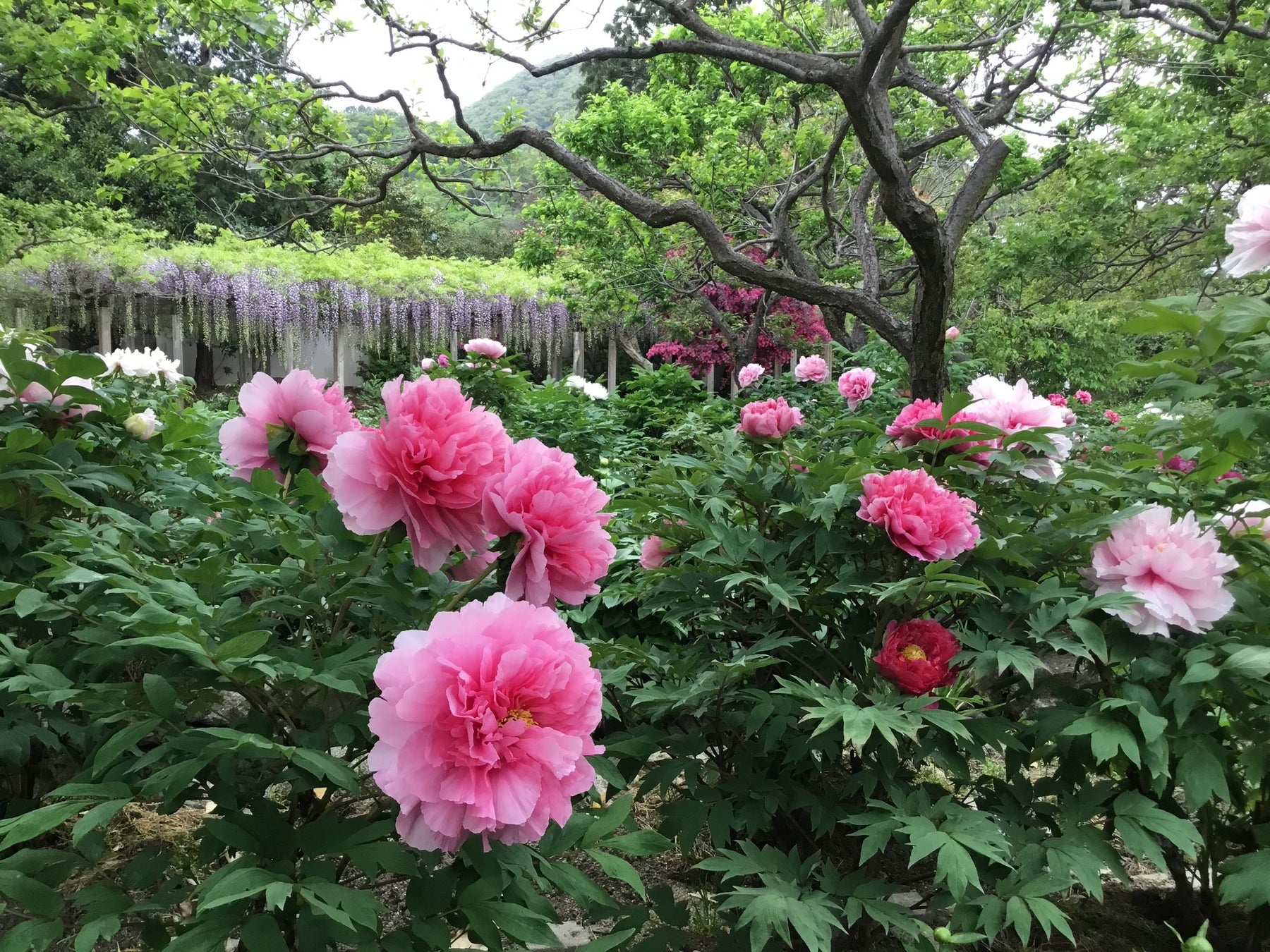
It is said that the history of peonies at Sekkoji Temple began over a thousand years ago when medicinal peonies, whose roots were used for medicine, were planted.
Although it was known as "Peony Temple" before the war, the peony garden was devastated when it was used as a military facility during World War II. As a result, the peony plants were moved to the parishioners' fields, but valuable varieties were lost in the confusion.
After the war, the previous chief priest started by propagating seedlings from the remaining trees as parent plants, but the peonies kept withering one after another, like dominoes. This situation was repeated many times. Therefore, he sought to learn how to cultivate peonies, visiting peony gardens in Tohoku, Kanto, Shimane, and other regions to research cultivation methods, and gradually learned about the adaptability of peonies.
After 40 years of such steady effort, the temple finally achieved its revival as the "Peony Temple."
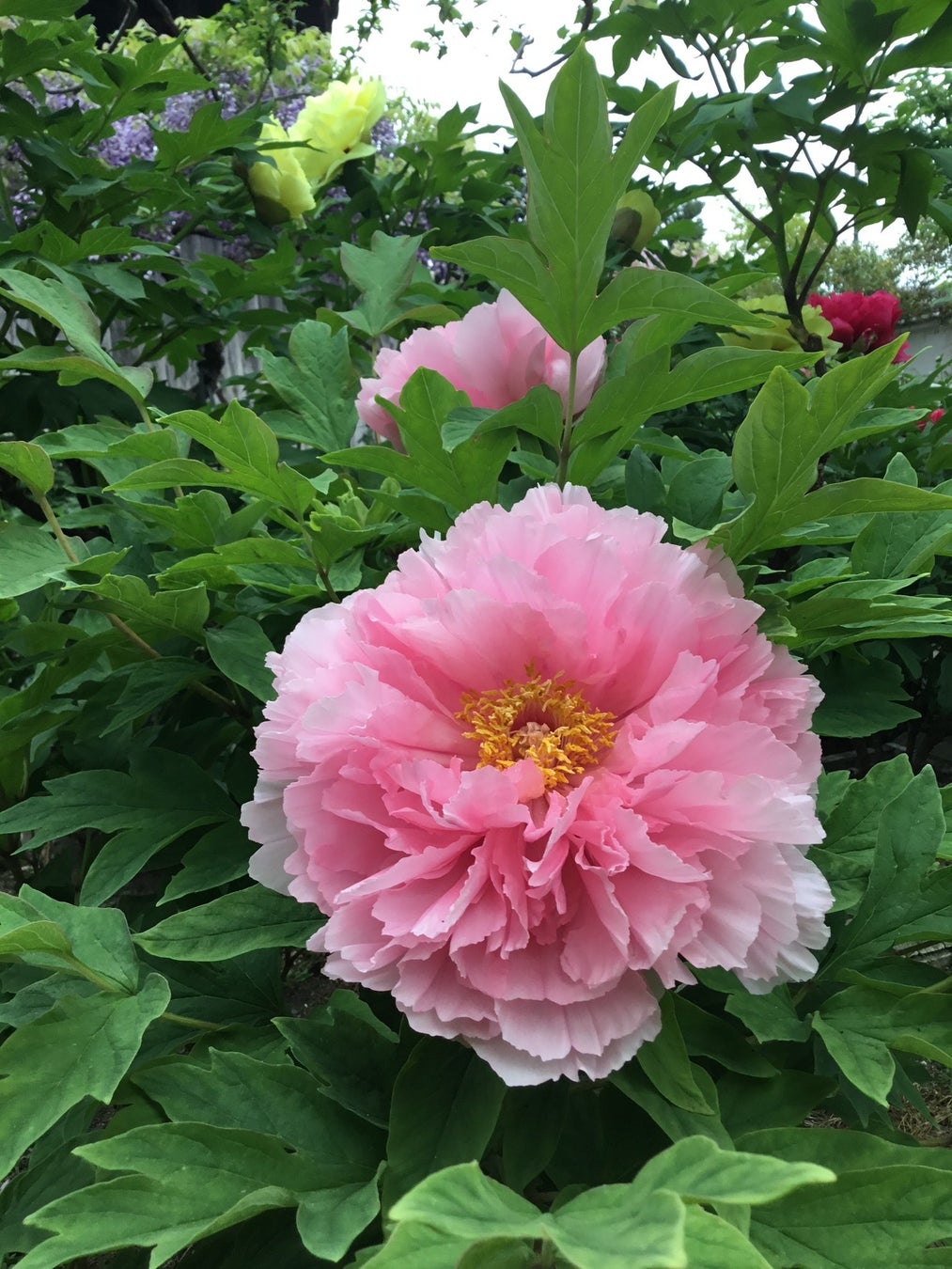
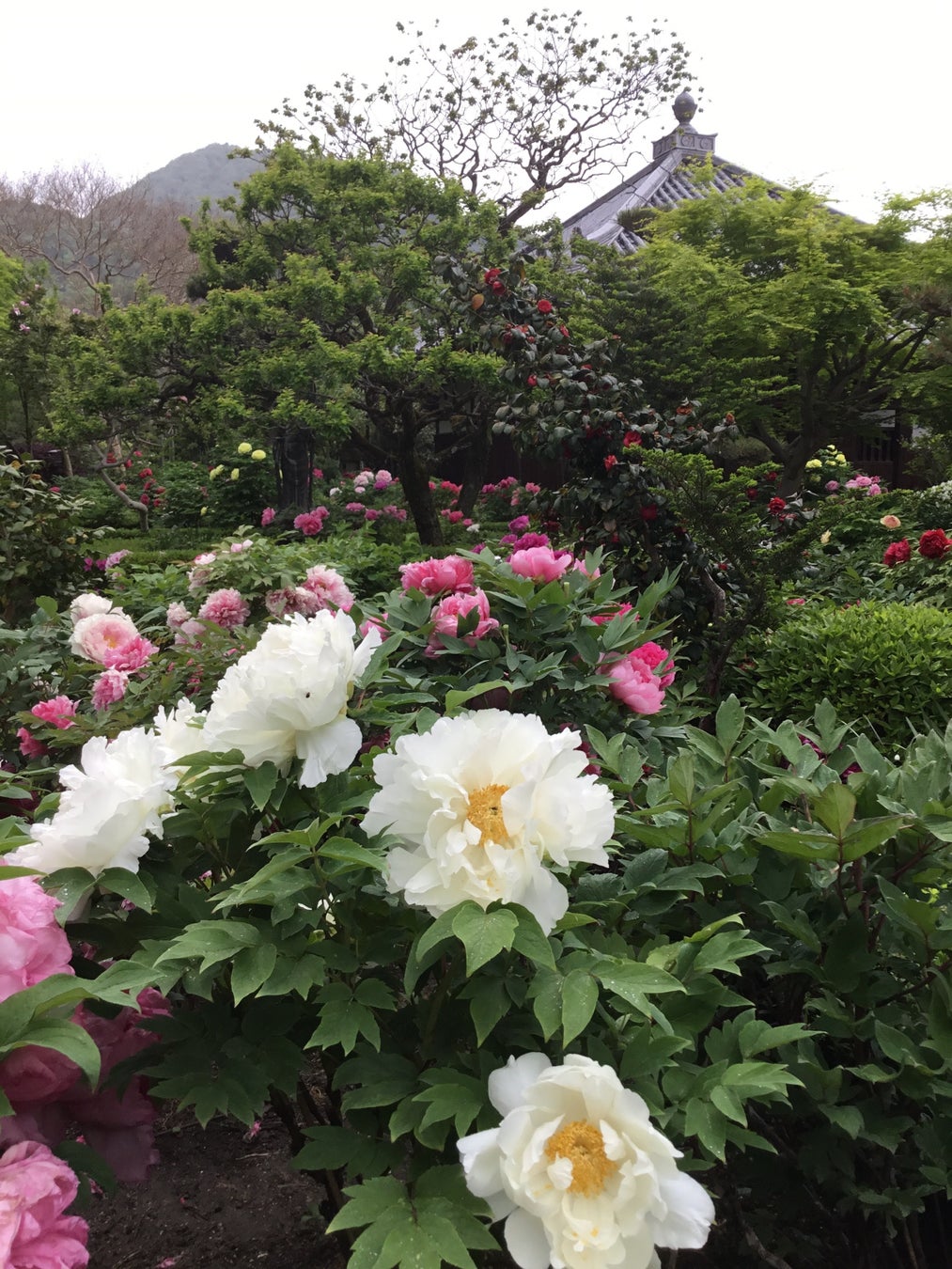
Spring Peonies at Sekkoji Temple
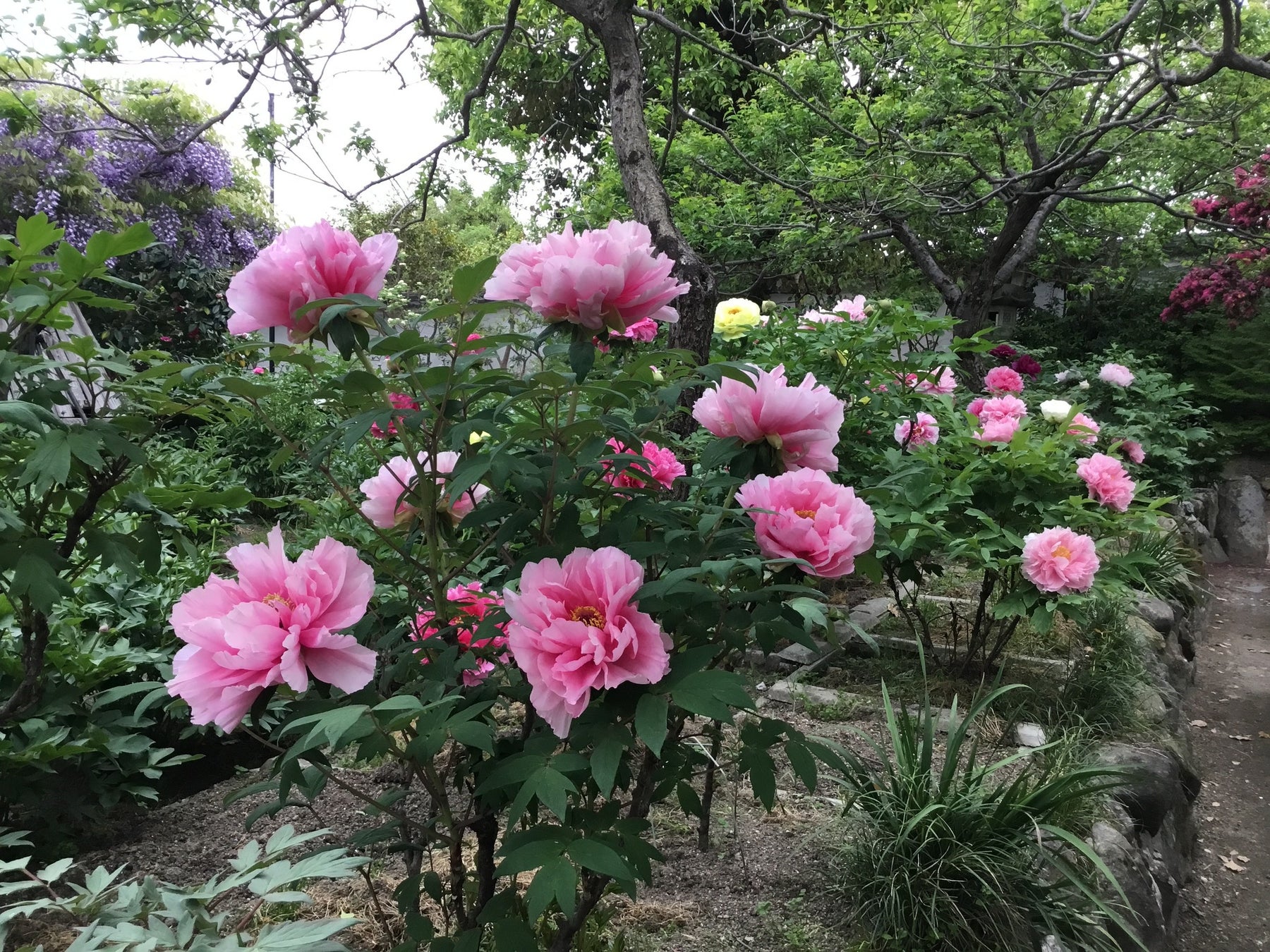
Peonies have a long history, and among them, famous varieties known as Kansai peonies, named after the gates and halls of the Kyoto Imperial Palace to commemorate Emperor Showa's enthronement, continue to bloom on the grounds of Sekkoji Temple.
In addition to the rich variety of peonies that can be admired up close, flowering trees such as wisteria, Rikyu plum, evergreen witch hazel, and rhododendron add color, and you will encounter various scenes each time you visit.
The temple grounds in spring are filled with the refreshing air of fresh greenery and the fragrance of flowering trees, giving a sense of peace as if enveloped by the breath of nature.
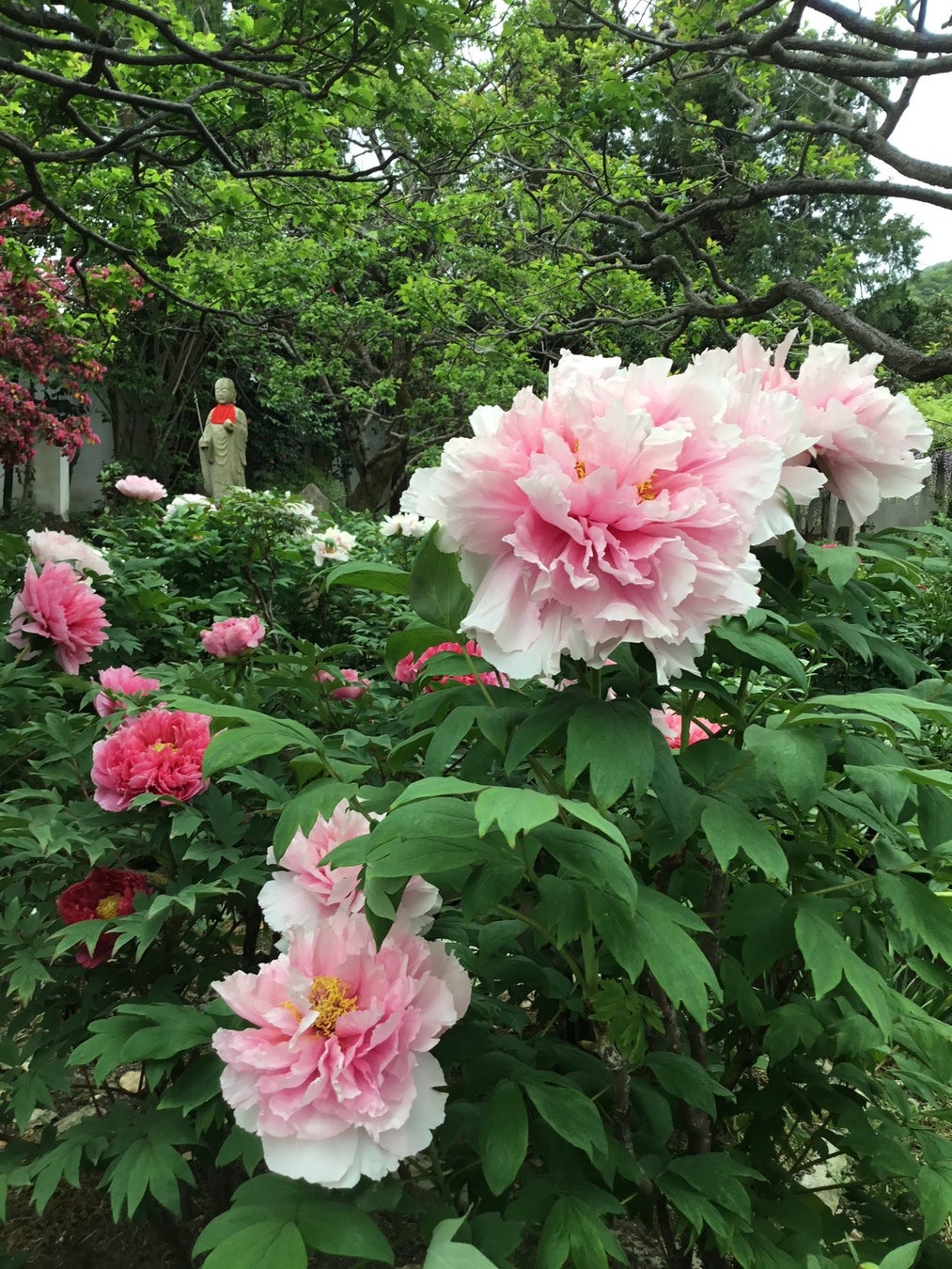
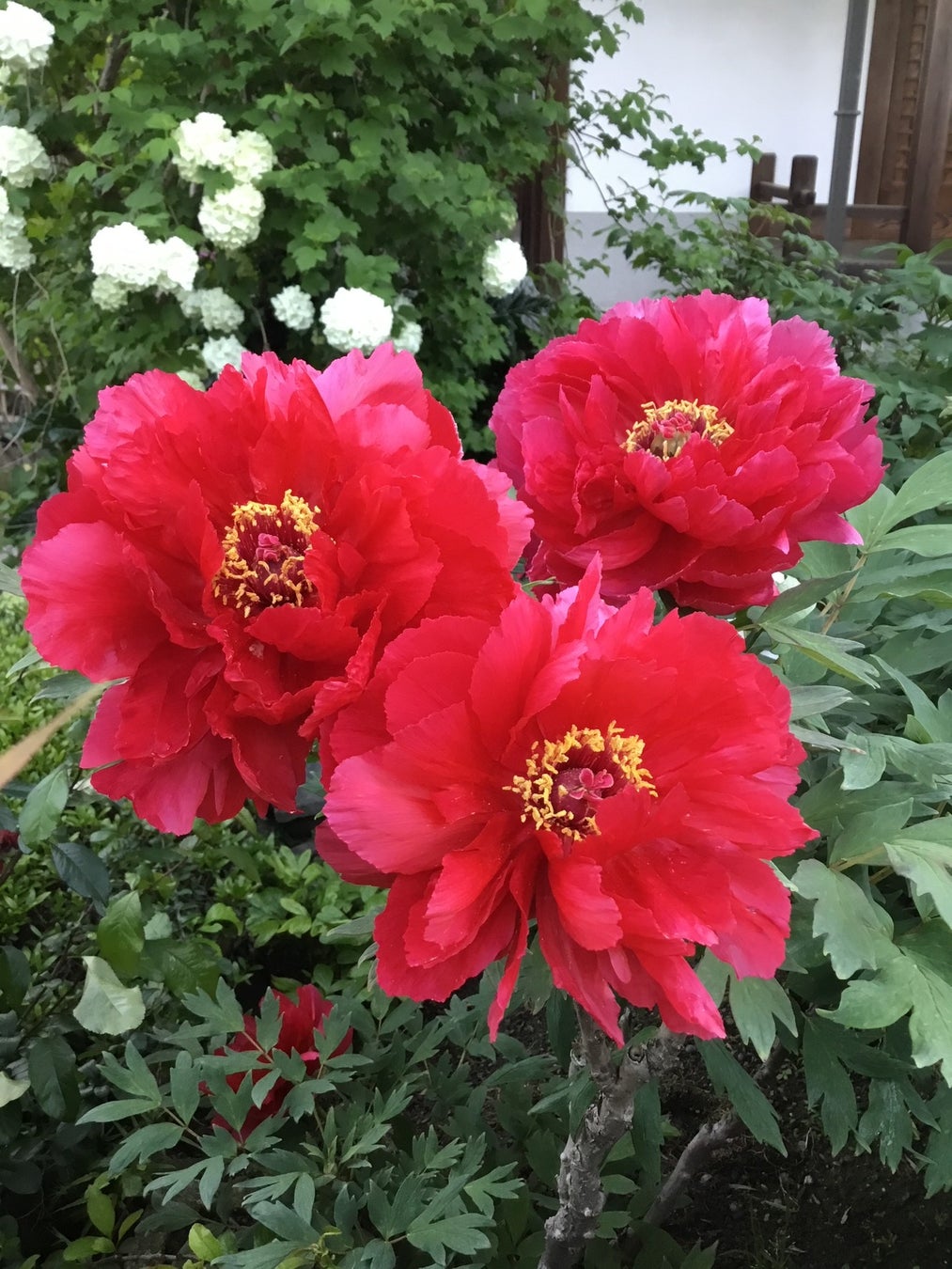
Amida Nyorai and Peony Goshuin (Red Seal Stamp)

In a world where the Buddha's teachings spread, there is peace and harmony under heaven (tenge wajun), the sun and moon are clear and bright (nichigatsu shōmyō), wind and rain come in due season (fūu iji), and disasters and epidemics do not arise (sairei buki).
This is a passage from the Jodo Sanbu-kyo (Three Pure Land Sutras), meaning: "The world is peaceful and undisturbed, the sun and moon shine clearly, wind and rain occur at the necessary times, and natural disasters and epidemics do not occur." We wish for such a world.
Peony Viewing Hours
Peonies, with their delicate petals, tend to wilt when exposed to strong sunlight and rising temperatures. For clear days, morning viewing is recommended. The blooming status is updated regularly on Instagram and the website.
For inquiries, please call 0745-48-2031.
Sekkoji Instagram:https://www.instagram.com/sekkouji/
Sekkoji Website:https://sekkouji.or.jp
[Cultural Property] Japan's Oldest Stone Buddha "Hakuho Miroku Stone Buddha" Mirokudo Hall Opening: April 14th - May 14th
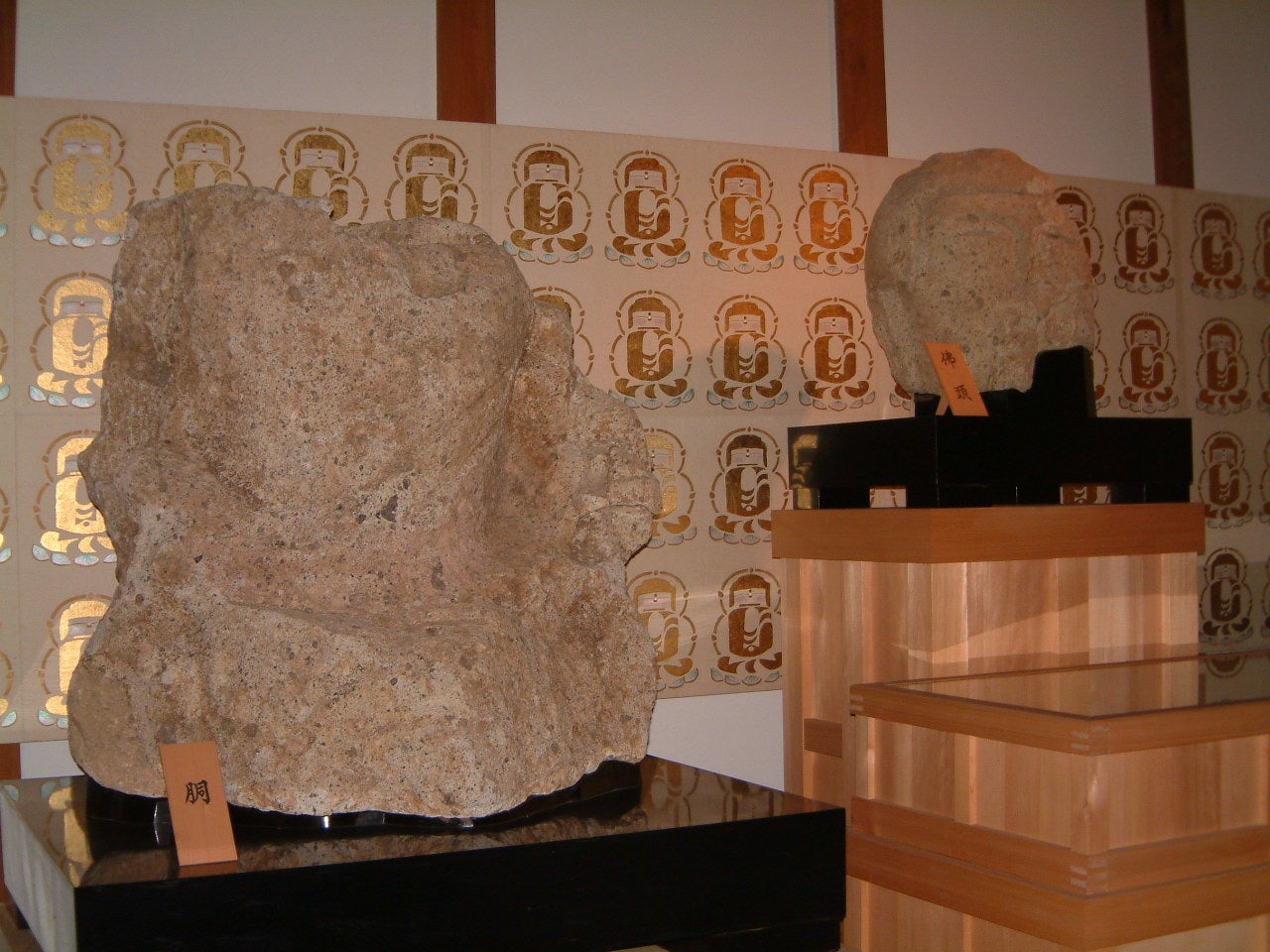
In 1991, a stone Buddha, whose whereabouts had been unknown for a long time, was excavated. If assembled, it would be over 2 meters tall, and the Buddha carved in the round from tuff is said to be "Japan's oldest stone Buddha" as there are no precedents from before the Hakuho period.
Sekkoji Temple
The temple was founded approximately 1300 years ago, by imperial command of Emperor Tenji (reigned 668-671), and is said to have been opened by En no Ozunu. On the temple grounds, there is a large foundation stone of a pagoda believed to be from the early Nara period. In 1991, as a result of excavation surveys accompanying the reconstruction of the Mirokudo Hall, Japan's oldest stone Buddha from the Hakuho period (the principal image at the time), along with roof tiles and clay Buddhas (senbutsu), were unearthed.
Legend of Chujo-hime and the Origin of Sometdera
This temple is also known as "Sometdera" (Dyeing Temple), and is associated with Chujo-hime (747-775), featuring the "Some no I" (Dyeing Well) and "Itokakezakura" (Thread-Hanging Cherry Tree). Chujo-hime, daughter of Udaijin Fujiwara no Toyonari (704-765), was known for her beauty. At the age of 17, she became a nun and, while secluded at Taima-dera Temple, received a divine inspiration. She collected lotus stems and extracted threads. Then, she dug a well in the garden of Sekkoji Temple and soaked the threads, which are said to have been dyed in five colors. That is the Some no I, and the threads were hung on the branches of the cherry tree next to it, which became the Itokakezakura. There is a legend that Chujo-hime wove the Taima Mandala overnight using these lotus threads.
Access and Inquiries
【Temple Name】Jodo-shu Jiunzan Sekkoji Temple (Sekkoji) Kansai Flower Temple Pilgrimage Site No. 20
【Location】387 Some, Katsuragi City, Nara Prefecture 639-0273
【Visiting Hours (Spring)】8:00 AM - 5:00 PM
【Contact】0745-48-2031
【Admission Fee】Adults 400 yen, Elementary school students 200 yen
【Parking】Free (7 spaces in front of the temple gate, 30 spaces in the second parking lot)
【Access】
Train: Approximately 15 minutes walk from Kintetsu Minami Osaka Line Nijōjinja-guchi Station
Car: Approximately 10 minutes from Minami Hanna Road Katsuragi IC
https://sekkouji.or.jp/access/