The Center for Advanced School Education and Evidence-based Research (CASEER), affiliated with the Graduate School of Education at the University of Tokyo, is now accepting applications from schools for the 2026 "Training Project for High School Teachers Instructing Individual Research-based Inquiry Learning"!
The University of Tokyo's CASEER center is launching its 2026 training project for high school teachers focusing on individual research-based inquiry learning. This project aims to support teachers in improving instructional methods and curriculum design, building on the success of the 2025 program. Recruitment is open until April 30, 2026, for approximately 15 schools.
📋 Article Processing Timeline
- 📰 Published: April 3, 2026 at 02:57
- 🔍 Collected: April 2, 2026 at 19:35
- 🤖 AI Analyzed: April 17, 2026 at 23:09 (363h 34m after Collected)
The Center for Advanced School Education and Evidence-based Research (Director: Yuki Honda; hereinafter "CASEER"), affiliated with the Graduate School of Education at the University of Tokyo, has launched a training project starting in the 2025 academic year. This project supports teachers in charge of instruction and institutional design at high schools promoting individual research-based inquiry learning, assisting them in enhancing student learning through improved teaching methods, curriculum design, and school-wide systems. We are pleased to announce that recruitment for participating schools for the 2026 academic year has now begun.
Expectations and Challenges of Individual Research-based Inquiry Learning
The "Period for Inquiry-Based Cross-Disciplinary Studies," introduced to high schools in the 2022 curriculum guidelines, is being implemented in various ways, such as students working in groups to solve local or corporate issues. Among these, "individual research-based inquiry learning"—where students set their own unique themes and questions and utilize various research methods—is highly anticipated for its benefits in career selection and the transition from high school to university. However, teachers are increasingly concerned about how to guide students' individual interests. Many teachers have reported that inquiry becomes a "forced task" for students, or ends up as superficial "lookup learning" without deepening the inquiry.
CASEER: Accumulating Evidence on Inquiry Learning at Japan’s Largest Research University
Since its reorganization and launch in 2017, CASEER has accumulated research results on the effects of collaborative and inquiry-based learning. This has been achieved through close collaboration with the Secondary School Attached to the Faculty of Education at the University of Tokyo (hereinafter "UT Secondary"), conducting a 10-year follow-up survey of all students and linking it with databases on academic ability and physical fitness. More than half a century before "inquiry-based study" was introduced to high schools by national curriculum guidelines, UT Secondary has been practicing inquiry learning across all subjects based on its own philosophy, with all students spending two years writing a graduation thesis as their final achievement. Empirical research based on this data has verified that UT Secondary’s inquiry learning is effective both in higher education after graduation and after entering society.
A book summarizing these practice and research results is scheduled for publication in May 2026. (https://www.utp.or.jp/book/b10159416.html)
In addition to these research results, CASEER staff, as researchers at Japan’s largest research university, engage in research within the academic community daily. Utilizing the actual state of research and the know-how gained from these activities, we launched this training project in 2025 with a grant from the Mitsubishi Memorial Foundation for Educational Excellence. Our goal is to improve the level of individual research-based inquiry learning in high schools and to resolve or alleviate the difficulties faced by teachers. In 2025, a total of 69 teachers from nine high schools across Japan participated in monthly online training sessions held from September to March. These sessions featured lectures by CASEER staff and discussions among all participants. Information and opinions were actively exchanged on topics such as how to utilize learning resources for individual research and how to provide feedback to students, leading to training outcomes that were specifically reflected in the following year's instructional plans.
▼**Feedback from 2025 Participating Teachers (from post-training surveys):**
・"Not only did my thinking deepen, but hearing other teachers' perspectives kept me excited. These regular meetings are extremely valuable for boosting motivation while being overwhelmed by daily work."
・"It was great to learn about other schools' initiatives and useful tools/literature."
・"I felt that the process of deepening a student's broad interests into a specific research theme and suitable research method seemed very enjoyable."
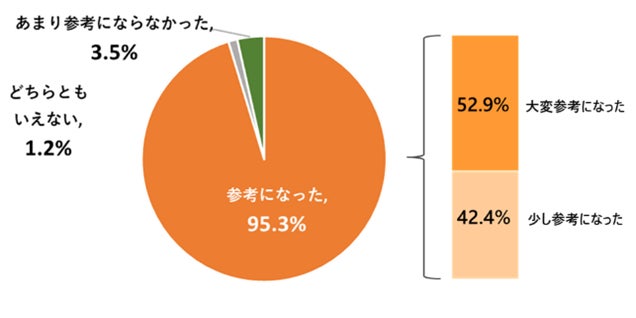
▼**Distribution of responses to the question "Was the content of the training session helpful?" in the 2025 post-training survey:**
▼**Reports on each regular training session in 2025:**
https://www.schoolexcellence.p.u-tokyo.ac.jp/mmpro/
Overview of the 2026 Training Project
The 2026 training project will further develop and expand the 2025 content. The first half of the year will be the "Basic Program," and the second half will be the "Advanced Program." Schools can participate in only the first half, only the second half, or the entire year.
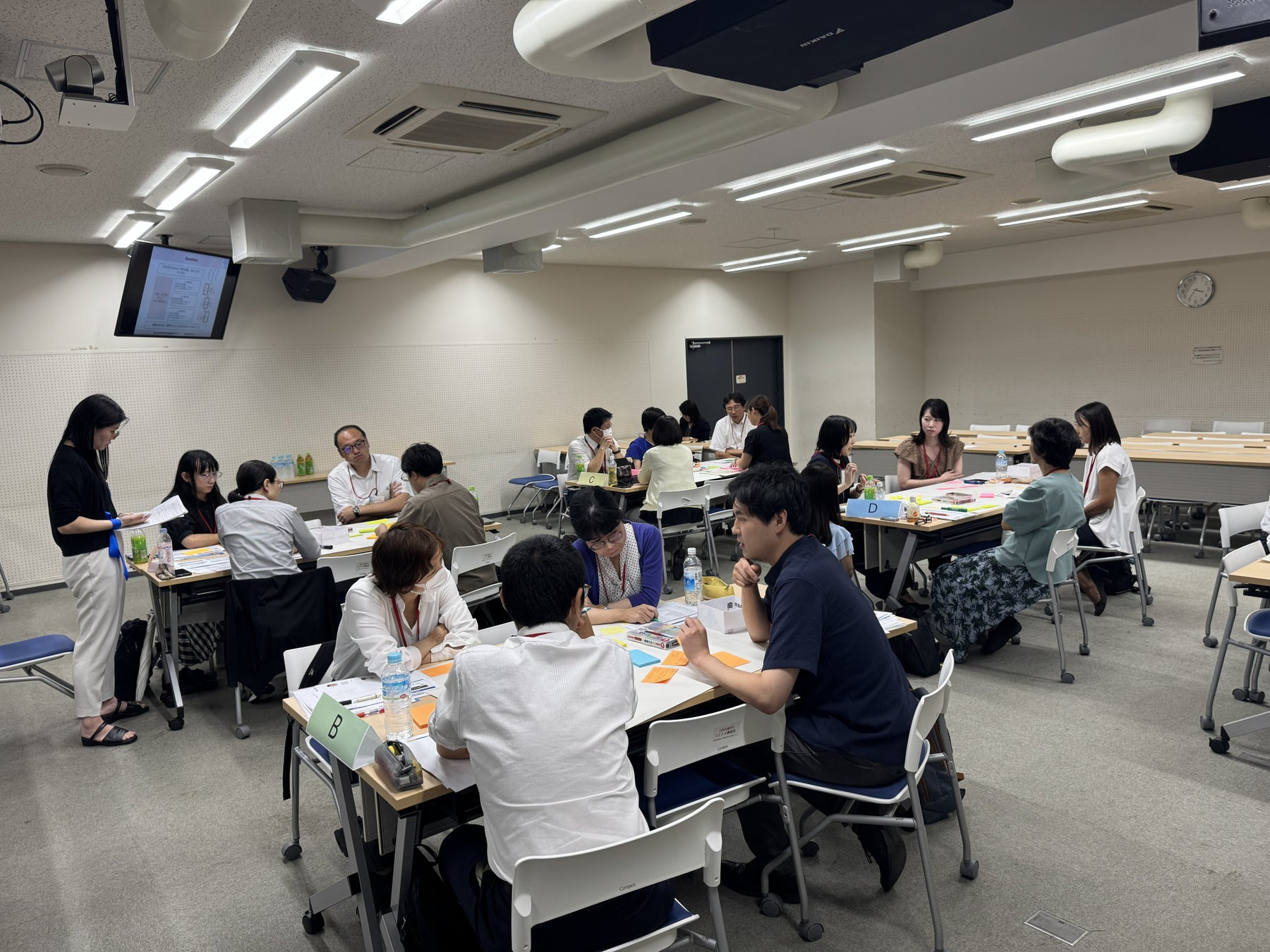
Regular training sessions will be held online once a month from 17:30 to 19:30, consisting of lectures, case studies, and discussions. After each session, an optional "Overtime/Free Chat Session" of about 30 to 60 minutes will be held for interested teachers.
■Program Flow (Tentative; subject to change):
Basic Program
Target: Schools that have just started individual research-based inquiry.
1. May - Kick-off: What is individual research-based inquiry learning? The vision of learning for students. Introduction of participating schools.
2. June - Setting Questions and Themes: Conditions for a good theme/question. Converting "interest" into a "question."
3. July - Methodology: Differences between qualitative, quantitative, and practical research. The range of realistic methods for junior and senior high school students.
4. August - Observation and Support: How teachers observe student learning. Drawing the line for support without over-assisting.
5. September - Evaluation: Formative vs. summative evaluation. Designing and operating rubrics. Student self-evaluation and peer evaluation.
Advanced Program
Target: Schools looking to deepen the quality of individual research or teachers aiming to improve their instructional skills.
1. October - Instructional Structure and School Management: Division of roles and school management systems to support inquiry.
2. November - Curriculum Across Grades and Relationship with Subjects: Connecting subject learning with integrated studies. Inquiry tailored to the school curriculum.
3. December - Deepening and Reconstructing "Questions" in Inquiry: How good questions evolve. Supporting the resetting/redefining of questions. Supporting students' cognitive leaps.
4. January - Information Resources, Research Ethics, and AI: Information gathering and utilization in inquiry. Research procedures considering research ethics. Precautions when using Generative AI.
5. February - Advanced Research Methods and Mixed Approaches: Combining methods (mixed methods). Handling data interpretation and limitations. Ethical considerations and research validity.
6. March - School Presentations: Reviewing practices and identifying challenges for each participating school.
Recruitment for the 2026 Training Project Now Open
We have begun recruiting participating schools for the 2026 training project. Please see the recruitment summary below for details. We aim for approximately 15 schools and 80 teachers. If applications exceed capacity, schools will be selected on a first-come, first-served basis.
[Recruitment Summary]
■Target: High school teachers involved in individual research-based inquiry learning.
■Requirement: Participation of 3 or more people per school, including management.
■Application Period: April 1, 2026 – April 30, 2026.
*Note: Recruitment may close early if the number of applications is high.*
■Cost: Free.
*Note: While regular sessions are online, participants are responsible for their own travel expenses if they attend in-person events like the kick-off or final session.*
■How to Apply: Send an email to caseer@p.u-tokyo.ac.jp with the subject line "2026 Teacher Training Project Application [School Name]." Include the following in the body:
1. School Name
2. Names and email addresses of participating teachers (designate one as the "Contact Person").
3. Preference for participation: First half, Second half, or Both.
■Information Session: April 11, 2026 (Sat), 16:00–17:00 (Online).
Please register in advance via the following form to receive the Zoom URL:
https://forms.gle/vWjSq8ZNYc5dgtct6
★Apart from this training project, CASEER also conducts paid support projects for individual school inquiry learning issues under the University of Tokyo's "Academic Guidance" framework. For details, please refer to:
https://www.schoolexcellence.p.u-tokyo.ac.jp/supportprojectspaid/
[Operating Organization]
Organizer: Center for Advanced School Education and Evidence-based Research (CASEER), Graduate School of Education, The University of Tokyo.
https://www.schoolexcellence.p.u-tokyo.ac.jp/mmpro/
Grant: Mitsubishi Memorial Foundation for Educational Excellence.


