Visualize Inventory Status at In-house and Consignment Sites to Eliminate Reliance on Individual Expertise. Approximately 30 Million Yen in Purchasing Cost Reduction in the First Year of Introduction.
Key facts
- Visualize Inventory Status at In-house and Consignment Sites to Eliminate Reliance on Individual Expertise. Approximately 30 Million Yen in Purchasing Cost Reduction in the First Year of Introduction.
- SmarTmat Inc. announces a case study of Tokyo Denki Co., Ltd. utilizing its IoT inventory management system "SmartMat Cloud" to visualize inventory, eliminate reliance on individual expertise, and achieve approximately 30 million yen in purchasing cost reduction in the first year.
- Source: PR Times
- Date: April 2, 2026
Direct answer
SmarTmat Inc. announces a case study of Tokyo Denki Co., Ltd. utilizing its IoT inventory management system "SmartMat Cloud" to visualize inventory, eliminate reliance on individual expertise, and achieve approximately 30 million yen in purchasing cost reduction in the first year.
- Citation
- Visualize Inventory Status at In-house and Consignment Sites to Eliminate Reliance on Individual Expertise. Approximately 30 Million Yen in Purchasing Cost Reduction in the First Year of Introduction. (April 2, 2026), PR Times
- Source
- PR Times
- Date
- April 2, 2026
SmarTmat Inc. announces a case study of Tokyo Denki Co., Ltd. utilizing its IoT inventory management system "SmartMat Cloud" to visualize inventory, eliminate reliance on individual expertise, and achieve approximately 30 million yen in purchasing cost reduction in the first year.
📋 Article Processing Timeline
- 📰 Published: April 2, 2026 at 19:00
- 🔍 Collected: April 2, 2026 at 14:30
- 🤖 AI Analyzed: April 17, 2026 at 07:09 (352h 38m after Collected)
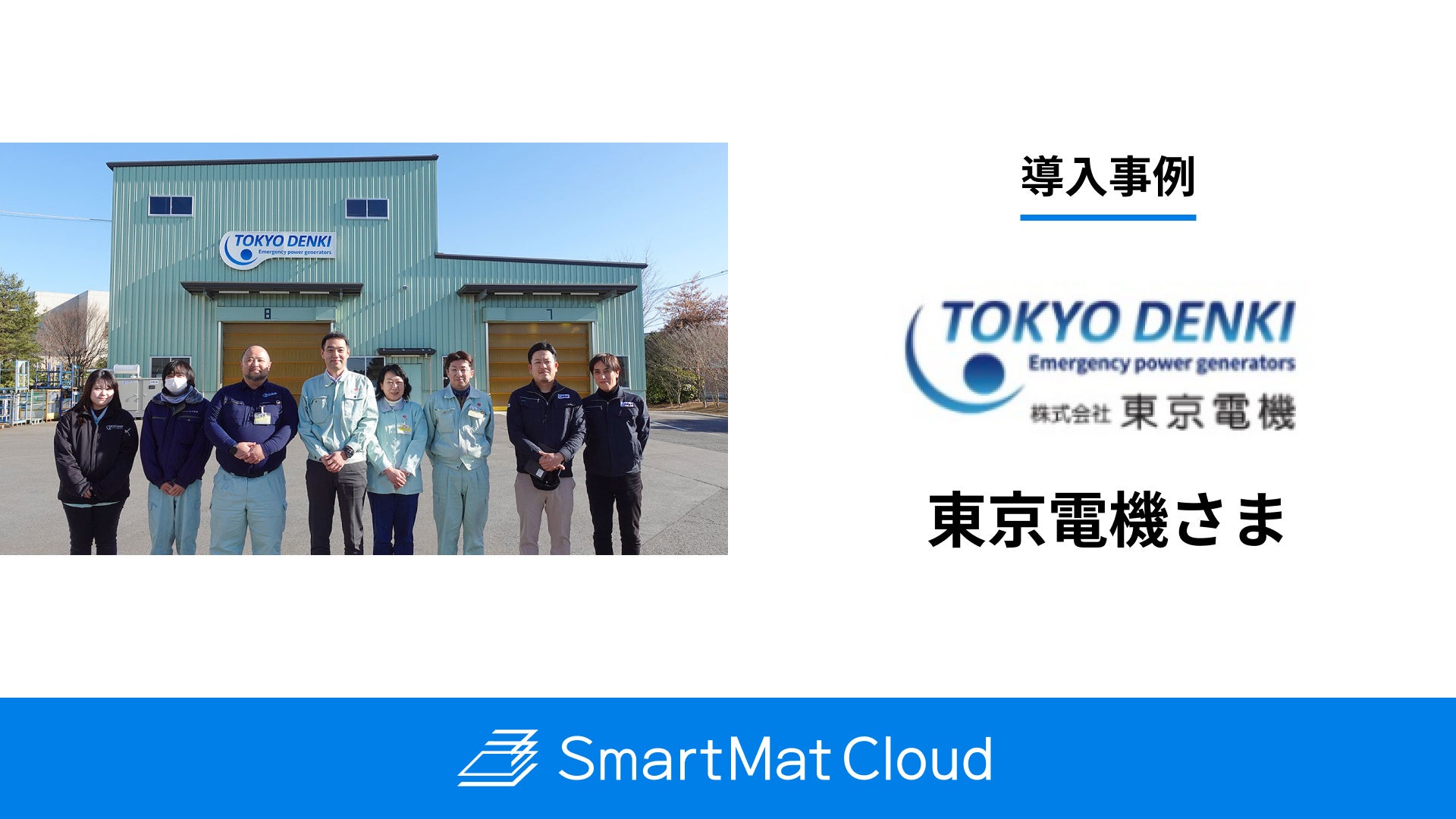
SmarTmat Inc. (Headquarters: Shinagawa-ku, Tokyo; Representatives: Takayuki Shiga / Hidetoshi Hayashi), which operates the IoT inventory management system "SmartMat Cloud," has released a case study of Tokyo Denki Co., Ltd. (Headquarters: Tsukuba City, Ibaraki Prefecture; Representative: Tomohiko Shioya).
This case study introduces initiatives that solved challenges such as the occurrence of excess inventory and business stagnation risks due to material management relying on the experience and intuition of individual staff, leading to inventory information being siloed, and the difficulty in grasping the inventory of supplied parts, including those at consignment sites, which increased confirmation tasks. These issues were resolved by visualizing inventory with SmartMat Cloud, resulting in an approximately 30 million yen reduction in purchasing costs in the first year of introduction.
Click here for the case study article ▶ https://www.smartmat.io/case/machinery/7763
■ Background of Introduction
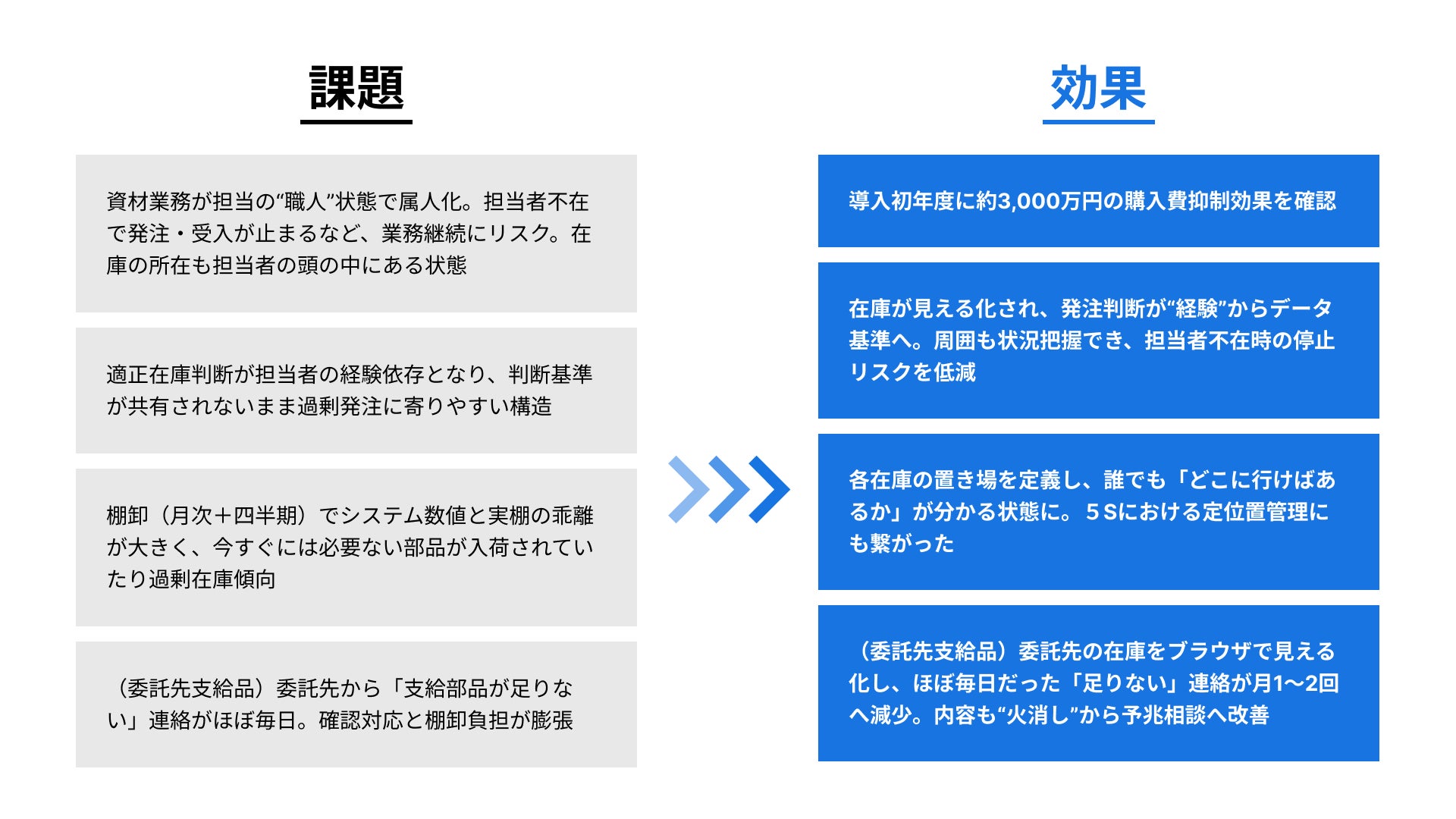
At Tokyo Denki Co., Ltd., material management for electronic components necessary for manufacturing emergency power generators was handled by individual staff members, leading to a challenge of "reliance on individual expertise" where inventory status and ordering decisions depended on the experience and intuition of the person in charge. While the situation could be understood by asking the person in charge, there was a risk of business continuity, such as ordering and receiving operations stagnating when the person in charge was absent.
Furthermore, during inventory counts, discrepancies were observed between the system's inventory figures and actual inventory, with cases of excessive parts arriving, making it difficult to optimize inventory. The criteria for determining optimal inventory also varied among staff, leading to a structure prone to overstocking.
In addition, the company partially adopted a system of supplying parts to subcontractors for processing and assembly, but it was difficult to grasp the inventory status at the subcontractors in real-time, leading to almost daily reports of "insufficient supplied parts." This resulted in significant man-hours for inventory confirmation and counting both internally and at subcontractors, creating challenges in terms of operational efficiency.
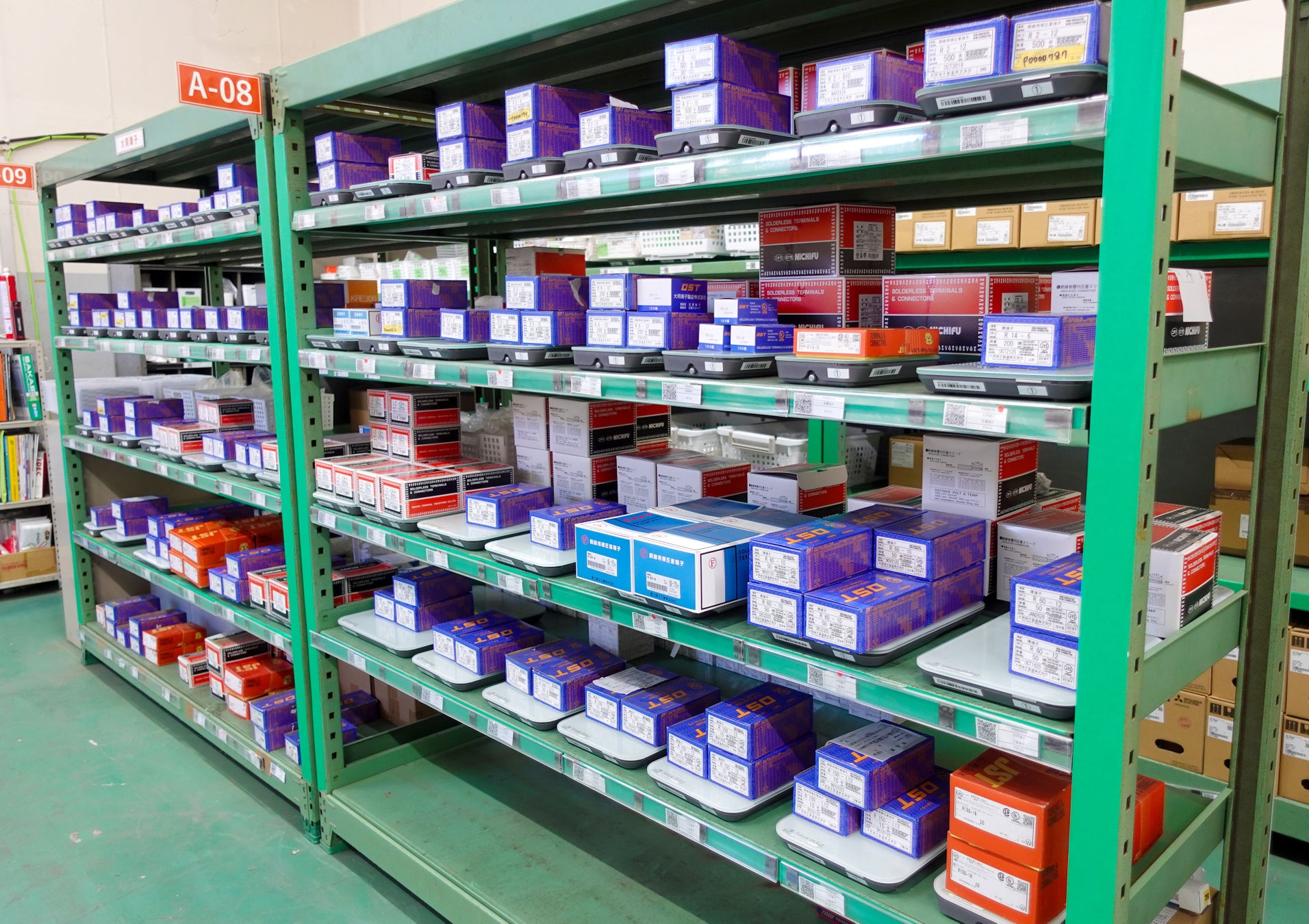
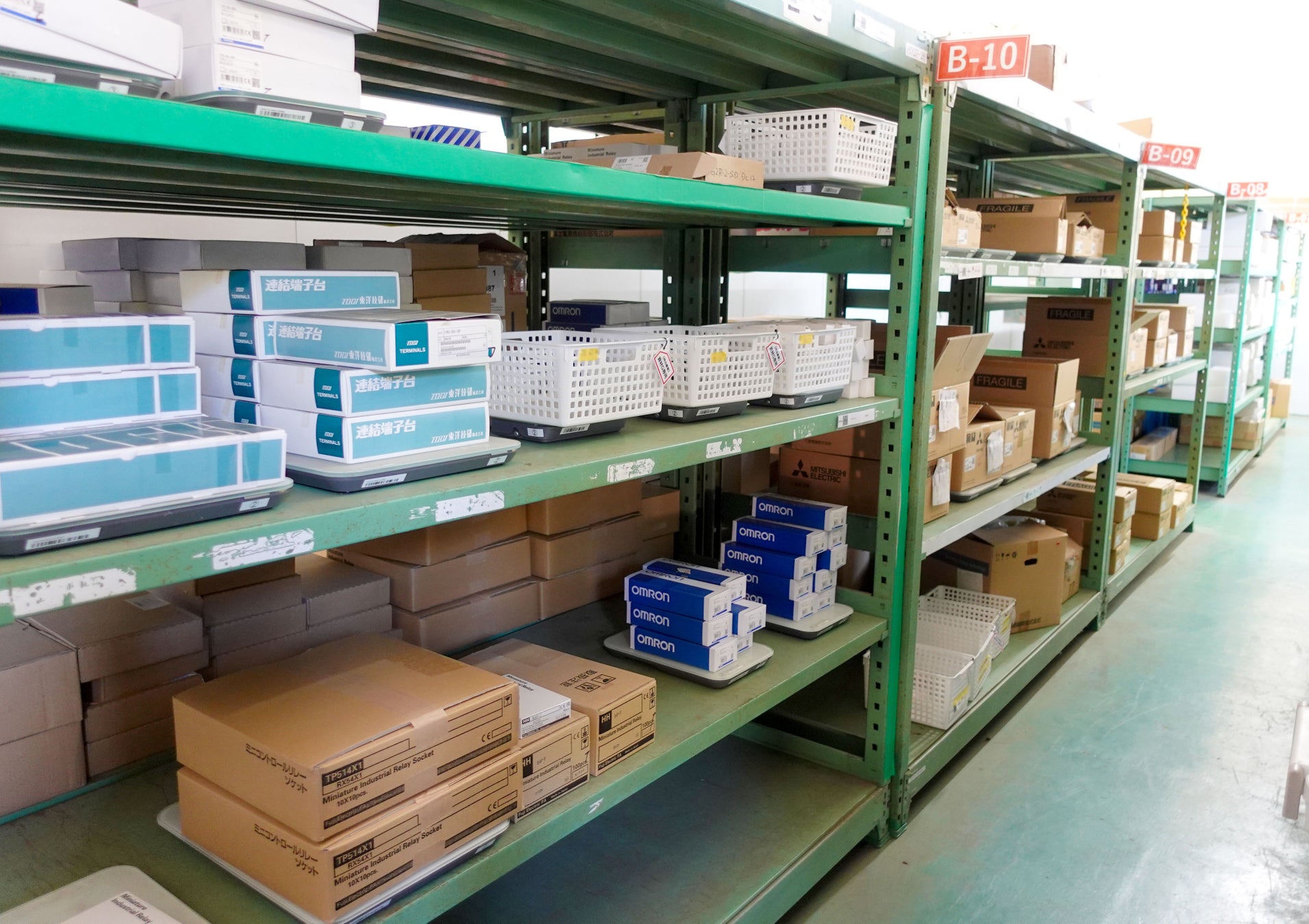
Against this background, the company decided to introduce "SmartMat Cloud," an IoT weight-based inventory management system, with the aim of visualizing inventory status through data, establishing a material management system that does not depend on individual staff, and optimizing inventory.
■ Results After Introduction
With the introduction of SmartMat Cloud, the company can now grasp the status of parts inventory both in-house and at subcontractors in real-time. Ordering decisions, which previously relied on the experience and intuition of individual staff, have shifted to operations based on inventory data, creating an environment where inventory status can be understood by anyone. As a result, the risk of business stagnation when staff are absent has been reduced, and inventory management operations have been standardized.
Furthermore, by being able to confirm inventory trends as data, the review of optimal reorder points has progressed, resulting in an approximately 30 million yen reduction in purchasing costs in the first year of introduction. By curbing the outflow of funds that were previously tied up as excess inventory, room for fund utilization has also been created.
Moreover, by installing SmartMats at subcontractors, both parties can now confirm the inventory status of supplied parts. Before the introduction, reports of "insufficient supplied parts" occurred almost daily, but after the introduction, they have decreased to about 1-2 times a month. The burden of inventory counting and daily inventory confirmation has also been reduced, leading to more efficient communication both inside and outside the company.
Thus, inventory visualization not only improves operational efficiency on-site but also generates results that extend to management aspects, such as improved capital efficiency and effective utilization of human resources.
◾️ Overview of SmartMat Cloud

SmartMat Cloud is a DX solution (SaaS) that visualizes the actual inventory of all items on-site using IoT, enabling easy automation of inventory management and process improvement. It achieves labor savings and sophistication by fully automating inventory counting, which traditionally required significant human effort, advanced quantity management such as real-time actual inventory tracking that was impossible manually, and even ordering. Since its launch in the winter of 2018, it has been adopted by a wide range of customers, including manufacturing, service industries, and medical institutions, and is currently utilized by over 1,400 companies.
◾️ SmarTmat Inc.
Aiming to make "the daily flow of goods ultra-smart," SmarTmat Inc. develops IoT weight-based inventory management automation and DX solutions. For B2B customers in manufacturing, medical institutions, etc., it offers "SmartMat Cloud" (https://www.smartmat.io/), a SaaS that automates the management, counting, and ordering of all types of inventory.
Company Name: SmarTmat Inc. (formerly SmartShopping Inc.)
Location: South Wing Higashi-Gotanda, 2-9-5 Higashi-Gotanda, Shinagawa-ku, Tokyo
Representatives: Takayuki Shiga / Hidetoshi Hayashi
Established: November 2014
FAQ
What kind of system is SmartMat Cloud?
It is a SaaS system that utilizes IoT weight scales to visualize on-site inventory in real-time and automate inventory management and ordering.
What specific results did Tokyo Denki achieve by implementing SmartMat Cloud?
They achieved approximately 30 million yen in purchasing cost reduction in the first year, eliminated reliance on individual expertise in material management, and streamlined inventory confirmation with subcontractors.
Which types of companies are suitable for SmartMat Cloud?
It is suitable for companies in manufacturing, service industries, medical institutions, etc., that face challenges such as reliance on individual expertise in inventory management, excessive inventory, and risks of operational stagnation.